Dear Ben Gone to the Sea

Featured

A Letter From Shrewsbury on the poetry of Ben North, who died 18th October 2020, aged 49.

We never met. And now you are gone.

Twitter introduced us. Your final Tweets: some algorithm brought them to me. It told me that you were dying of a brain tumour. Two in fact.

In this strange, garbled age of unfiltered sharing, your words cut through.

Image
Ben North, poet.

You left behind a trail. It’s clear that you were very well loved. Successful. Creative. And I see that you were noble and angry; brave and gentle in your suffering.

The algorithm led me to discover your book of poetry: ‘Thirty-Three Poems: some of which are about death‘. Dying shared. Poetry shared.

They are beautiful. This one, for example, about a clear, crisp night:

Ben North

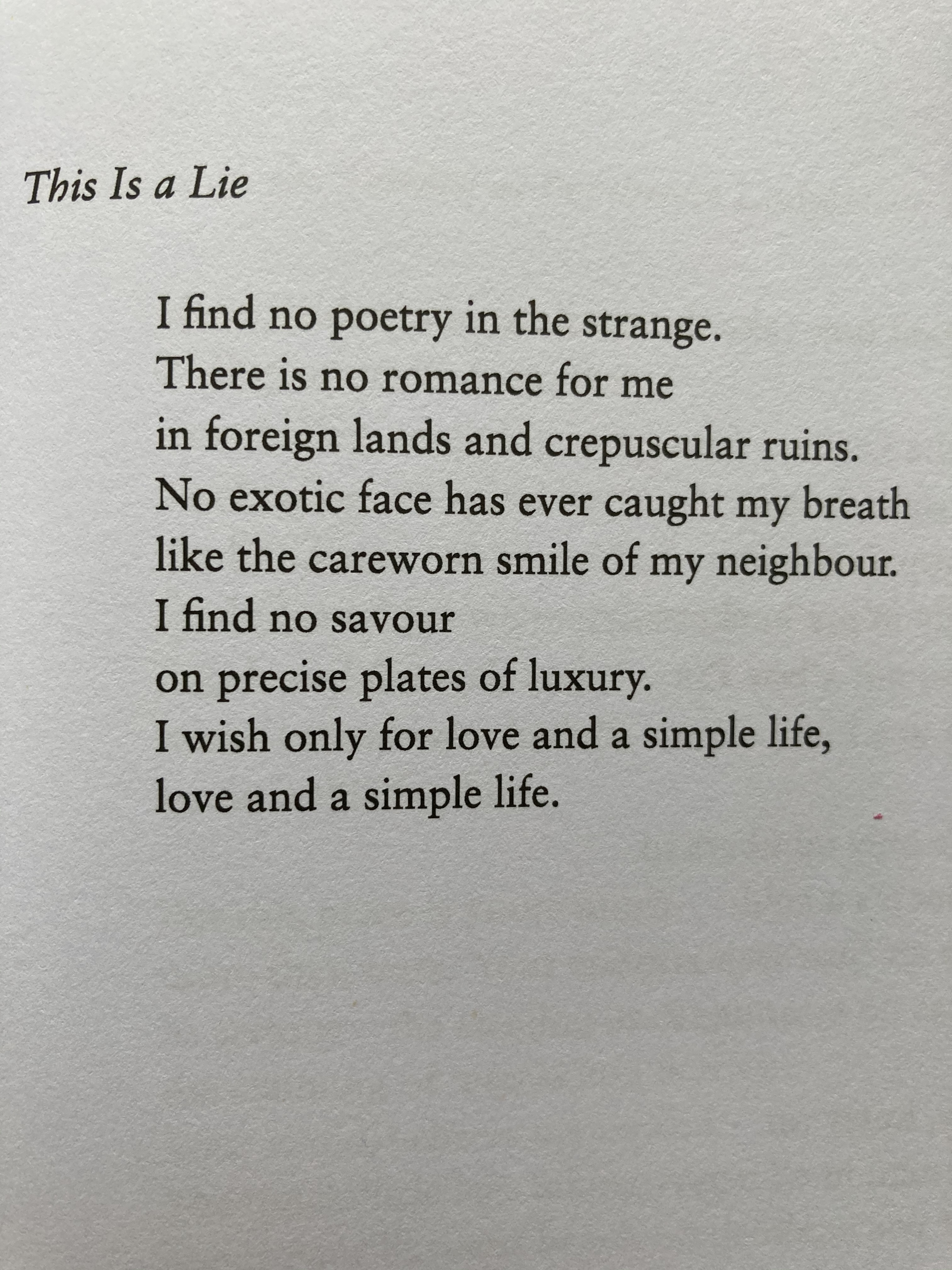
Or this one, clever and wise – ‘This Is a Lie‘:

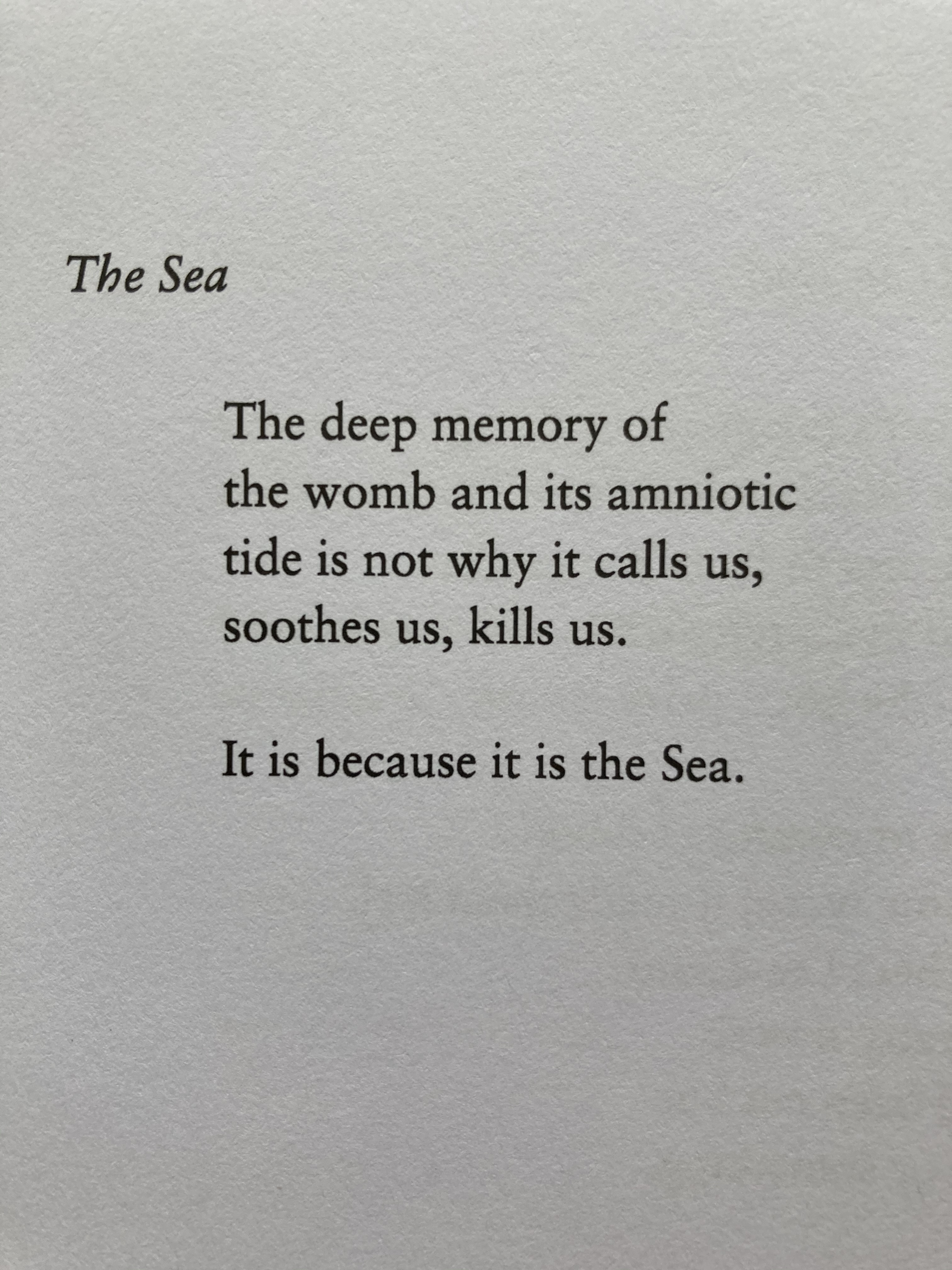
The final poem in your collection is called ‘The Sea‘. As I write this short letter, I am looking at the slate-grey waters of the North Sea. It is five days on from the day you died. I read it again and consider its simplicity, which is its power. It was not, I think, your last poem. But it is an ending:

‘The Sea’ by Ben North

Your poems are not brilliant because you were dying. They are brilliant because they are brilliant.

It’s hard not to wonder what else you might have written. As it is, you are gone; and you leave us 33 poems. A slim volume, you said. Yes, short. But full of wisdom and humanity.

What is the end of a poet? To leave something that endures? To connect? To look at the Sea and put it to words. Before the end of the poet.

Thank you, Ben. We never met – but I feel that I would have liked you very much.

Ben’s volume of poetry is priced £2.99 and available from Amazon.

Dear Minister for Exams

Featured

There is something in the air. In fact, everything seems to be up in the air just at the moment.  I’m not only talking about the logistics of the Summer 2021 exam session – though some good sense and clarity on that would be good. I really hope that you listen to the experts: those who teach and support children.

It’s the whole thing, really. It feels as though it’s time you took a long hard look at yourself.

You’re probably way too busy to read letters. I’ll bet you get a lot. Such as this one; or the one I sent to the paper the other day, suggesting that we have a golden opportunity to re-think how pupils’ learning and wider skills are assessed. 

Daily Telegraph, 7th October 2020

This is a big picture discussion that would need to be held across the width and breadth of education.  When GCSEs were invented, the school leaving age was 16.  Children in England are assessed by written test more than most others on the planet.  As we all know, written tests are not the only measure of a person. Time for a re-think, surely?

Rethinking assessment – a cross-sector alliance

I should perhaps emphasise that Shrewsbury pupils do very well indeed on the current diet.  Our GCSE results are excellent. We prepare our pupils well and they succeed in these examinations. In that narrow sense, nothing’s broken from our point of view.  These assessments are a significant part of the story but our teaching extends beyond the set curriculum; we aim to explore and instil a true love of learning.  Character strengths, skills and aptitudes are developed outside the classroom: through sport, music, drama, expressive arts, leadership, enterprise and adventure, to name a few. 

Learning cross-fertilises and our pupils are recognised and developed not just in the exam hall but across a wide field of activity.  This is what we call ‘whole person education’: the intellective development, which is in part measured by examinations, is allied to active, expressive and reflective learning.  The process is about becoming fully human and developing Salopian virtues that will last a lifetime.

Shrewsbury has a long history of asking difficult questions and being willing to challenge the status quo.  Is our examination system fair?  Can we influence it to be fairer, more holistic, more responsive to the teachers’ knowledge of the children– more fully human. How can we exercise our independence to provide a broad and holistic curriculum?  Recent history shows that we are seizing opportunities here: the introduction of the Institute of Leadership and Management Young Leaders Award and the creation of Shrewsbury U, for example.

I know we’re all struggling day to day. Big thinking takes time and effort – and genuine will to address issues. At a national, system level, there is a debate to be had. This feels like the time.

I have two questions for you, the fictional Minister for Exams:

Question 1: Is there a better, fairer, more human way to assess our children?

Question 2: Read Brian Patten’s great poem, The Minister for Exams? And discuss.

Brian Patten
Brian Patten
‘How shallow is the soul of the Minister for Exams?’

Is there are better, fairer, more human way to assess our children?

Dear Earth-Creeping Mind

The turn of the month was marked by National Poetry Day in the UK.  One of our great alumni, Sir Philip Sidney, stands immortalised in statue form above the war memorial at the Moss Gates entrance to the School.  Sidney was enrolled at Shrewsbury School at the age of 9. 

In his day, lessons were conducted almost exclusively in Latin; and began at 6am.  He was an exceptionally diligent and gifted scholar.  His untimely but dignified death on the battlefield at Zutphen, at the age of 31, sealed his legend as an epitome of the Elizabethan gentleman-scholar-soldier.

Sir Philip Sidney

Centuries on, and Shrewsbury School is of course a very different place.  But Sidney’s zeal for learning and his apparently immaculate manners still provide a helpful, if historic, role model to boys and girls alike. 

Sidney’s famous work, The Defence of Poesy, argues for the power of well-crafted verse.  He disdains the reader who has “so earth-creeping a mind that it cannot lift itself up to look to the sky of poetry”.  That’s us told!

On National Poetry Day, and indeed throughout the year, I take solace and inspiration from poetry.  In fast-moving and challenging times, a moment spent in the reflective mind of another can do us the power of good.  Or as Sidney put it: “Poetry, a speaking picture to teach and delight”.

Dear Dr Johnson

Featured

As one of the most quoted figures in English literary history and the creator of the most famous English dictionary, I wonder what you would make of current times. What words would you have for us?

By current I mean 2020. 236 years have elapsed since you passed away. Your dictionary has been updated and updated. Language doesn’t stand still; it flows. And is a mirror of its time.

2020 is certainly re-shaping the daily dictionary. The word ‘unprecedented’ is enjoying unprecedented use. And terms such as ‘self-isolation’ and ‘social distancing’ are now in the daily narrative. I wonder how you would define a ‘hand sanitiser’? I suspect that you would probably apply a verbal sanitiser to the expression: ‘new normal’.

Was ‘lockdown’ in your first dictionary? (I know that ‘aardvark’ wasn’t. Nor any word beginning with X). Or ‘Zoom’? ‘Quarantine’? ‘Outbreak’. ‘Pandemic’?

Yes, you would take great interest in the words of our current world.

A genuine celebrity of your time, your sayings resonate as strongly as ever. Your witticisms, take-downs and one-liners are legendary. One for almost every situation.

Integrity without knowledge is weak and useless, and knowledge without integrity is dangerous and dreadful“, you warned. And elsewhere quipped that “A fly, sir, may sting a stately horse and make him wince; but one is still an insect, and the other is a horse still“.

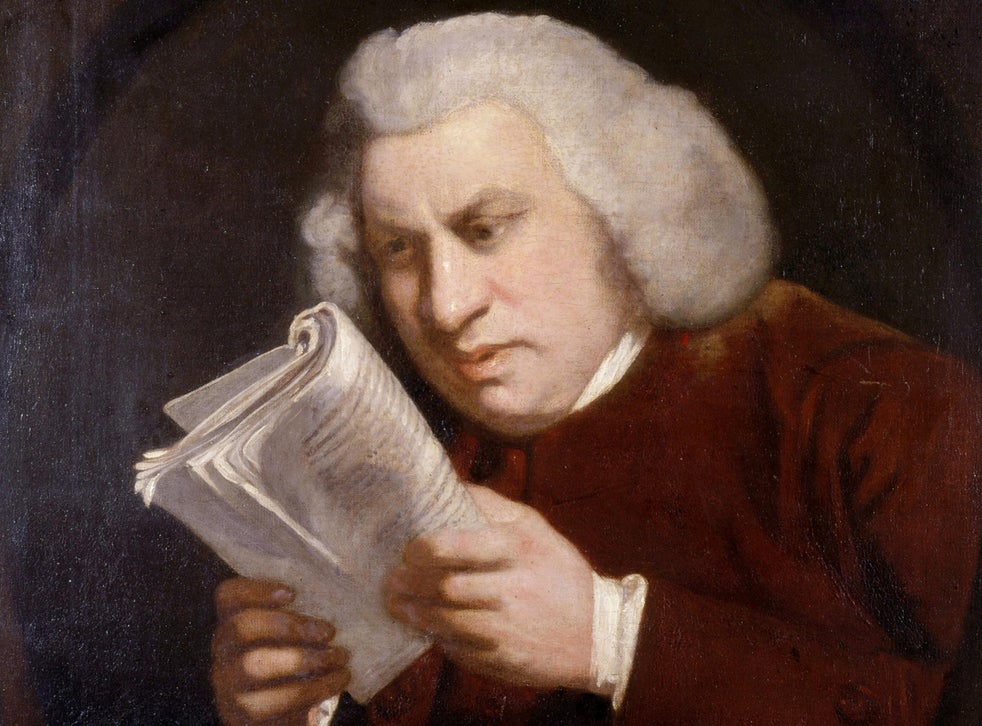
Samuel Johnson: Who was he, and why is he so important to the English  language? | The Independent | The Independent
Dr Samuel Johnson

As we travel in unsteady times, I remember your encouragement:

Life affords no higher pleasure than the surmounting of difficulties”. 

These are difficult times, for sure. And, in our corner of the world, we are having to find solutions to new challenges every day. The children in my school continue to display wonderful energy, as well as good-hearted acceptance of the measures we have in place to keep them, and our staff, safe. Equally, there is abundant positivity. My colleagues do wonders daily – and defy words at times.

As you wisely observed, “A man’s [by which you meant person’s] mind grows narrow in a narrow place.”  I see Shrewsbury as a place of breadth in all things. And these times demand wide thinking, not narrow minds. 

The word most used in 2020 is a new one. Coined by the World Health Organisation – something that certainly didn’t exist in your day. Covid. So far this year, this new word has been used in print more than any other in the English language.

You wisely advised: “None but a fool worries about things he cannot influence”.  As we move through difficult times, we will heed your call to focus on the things that are within our control.  In my case, that is giving the pupils in our care the best environment and challenge that we possibly can. And urge them as you did:

“Curiosity is one of the permanent and certain characteristics of a vigorous intellect”.

Curiosity and stickability. (Another word for your dictionary, Sir.)

Yours in words.

Leo

Letter written on 18th September 2020 – your 311th birthday.

Dear Jeremiah

Featured

You and your kind seem to be everywhere.

If we spend any time following the news media, we know how much has been said about education.  About the process of awarding grades; about the fairness or otherwise of our education systems; about the process of re-opening schools.  So much of it negative.

More broadly, the reality of COVID-19 in the UK and across the world has utterly dominated.  Understandably. And with good reason. But, this dominance has meant that we have all got used to living with some very negative narratives.    

We have been living with a pervasive language of limitation; a language of blame; and a language of fear.  This must have had an impact on even the most upbeat of people. I think we need to work hard to reclaim a language of possibility; a language of responsibility; and a language of hope.   

The language we use – the way we frame things – will have a direct effect on the children in our care and indeed all with whom we spend our time.  We need to find a way back to more positive language.

To illustrate: let’s consider the example of a child who has climbed a tree.  And got stuck.  She is getting panicked; holding onto a branch.

There is an adult below who calls up to the child. He thinks about what to call out: “Don’t let go!” or “ Hold on tight!”

Which is more likely to encourage child to cling on until she can be reached and brought safely down to earth?

  • Don’t let go!
  • Hold on tight!

Surely it’s the latter: Hold on tight!  Because negative commands and prohibitions can become fixating – paralysing even. In this particular case, ‘Don’t let go!’ reinforces the fear of falling. ‘Hold on tight!’ reinforces the hope of staying safe.

Hold on Tight!
Photo by Valeriia Miller on Pexels.com

The news media will continue to frame its language as it chooses. I suspect that the negativity, the fear and the blame will continue for a while yet. Of course, there’s a lot to think about and we need to be conscious of risk. The world needs its mixture of pessimists and optimists. We need the optimists to build the aeroplanes; and the pessimists to design the parachutes.

This is a simple but necessary point about the negative effect of negativity; and the positive effect of positivity. It’s time to lift the mood, Jeremiah.

In schools, as we welcome the children back from a long time of separation, it is important for us to assume a language that is responsible – but is framed as positively as possible. Things are getting better; we are more in control. It is vitally important for the children in our care that we are affirmative in how we present and interpret daily life. 

This doesn’t mean having our heads in the clouds.  It is a matter of affirmative presentation. In education, we should be holding on tight to the excitement and optimism that flow freely at the start of a new academic year.  Even if we are starting in a time of limitation, we should focus our talk on all the possibilities ahead and let go of the negativity.

Dear Upper Sixth Leaver

Featured

A message to the U6th (Year 13) pupils at Shrewsbury School, June 2020

Dear Upper Sixth Leaver

This is not how we planned it.  None of us imagined that your final term would be spent in bubbles of isolation.  None of us thought you would be saying goodbye to the school through a screen.  None of us thought that when you went home in March, you were leaving for good.  There is no way to dress this up and make it look nice.  This is not how we wanted it to be for you; and it is really very sad.

Some of you have been Salopians since joining the School in Third Form; others joined in Fourth Form; and others still became members of this community in the Sixth Form.  Each one of you is valued; each of you has had experiences here that will shape and stay with you for life.  Each one of you has been part of a house, teaching sets, sports teams, activities, ensembles, friendship groups.  Each one of you has contributed to the richness and vibrancy of this School.  Each one of you is a Salopian.  Each one of you deserved a better ending.

This year, you have shown extraordinary qualities and never more so in this last term.  You have embraced the new normal.  You had to absorb the news that the public exams to which you had been working for 18 months were not going to happen.  You had to decide how to play the summer term in remote.  You could have disengaged.  You could have been half-hearted; cynical; dismissive.  Instead, you chose to be positive.  You chose to turn a disappointment into an opportunity. 

You kept going with your academic learning, running a race knowing that the finish line had been removed.  You showed a proper love of learning.  Then, we launched Shrewsbury U and the ILM course for Young Leaders.  Again, as a year group, you seized this with both hands and the vast majority of you have participated, engaged and kept your minds active. This will stand you in great stead for whatever comes next. Well done indeed and thank you for all your endeavours.

We are now entering the final fortnight of the term.  Normally, for the Upper Sixth, this is a twilight zone of post-exam fun, communal relaxation, soaking up the place before the finale.  This has been denied to you.  Again, there is no way of making this anything other than it is: a huge disappointment.  None of us wanted you to be living out your final two weeks of school from home. 

The Housemasters and Housemistresses, your tutors and your teachers, are thinking of you.  They are in touch and wanting to do all they can to connect with you share memories of your time here and to celebrate with you.  There is no way of replicating the kinds of real experiences they would like to offer, but they are doing their best and I know you appreciate this.  And, as we move towards the end of term, our Virtual Speech Day aims to give you the very best send-off that we can right now.

Beyond that, you know that we have made a commitment to give you all the chance to be together here at Shrewsbury for a social gathering at which you can share memories with fellow pupils and staff.  We don’t yet know when that will be; the Heads of School have taken your views, and the message we have is that you want to wait until we can do something properly.  We will honour this commitment.

I often say that it is the Upper Sixth who set the tone of the School for the pupils.  This is so true this year – you have done it brilliantly.  Even in remote, this positive tone cascades and permeates through the year groups.  You have been real leaders in so many spheres of school life.  

The Heads of School and their Deputies have continued to guide and shape this term with their dedication, positivity and generosity of spirit. 

Each leaving year group hands on the torch to the one that follows it. Your year group will have a unique place in Shrewsbury history. You have lived through unprecedented times: ‘the year they didn’t do exams’; ‘the year they weren’t at school for the summer term’.

But: we will not remember you as the year that ‘did not’. We will remember you as the year that ‘did’.  You did manage the most exceptional of times.  You did stay together.  And you did the School and yourselves proud.

As each of you prepares to leave Shrewsbury, remember that the School is here for you – for life.  We are all proud of you. You are the year group that did.  And you will go on to be people who do. 

Once again, thank you for all you have given to Shrewsbury. 

See you again soon. 

LW

Dear Myrtle and Maud

Featured

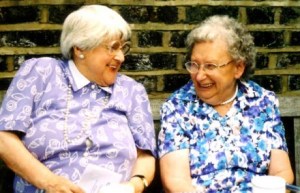
You don’t know me – but you met my wife recently.  You probably won’t remember.  She came to see you in the care home you share with about 30 others.  She was wearing greens and a mask.  You made her feel very welcome: you offered her a cup of tea which she couldn’t accept.  She told me a little bit about you when she got home.  Nothing personal or confidential, of course.  She just said that you were wonderful friends.  And told me how you kept each other going.

One of you is 92 and the other is 94.  I can’t remember which way round.  You sit together most of the day, in comfy chairs in a large sitting room with a decent view of the garden.  You tell each other stories and share memories.  You are not the best listeners, if we’re honest.  But you are great story-tellers – and the best of friends.  You cackle at each other’s jokes; you make mischievous comments about your fellow residents; you play little tricks on your carers.  So they say, anyway.  All to pass the time, which you do cheerfully, and always together.

Truth be told, you seem to have a lot of the same conversations.  If one of you goes out of the room, and returns ten minutes later, you greet each other like long-lost relatives.  And loop back into a familiar conversation.  Like an old juke box on free play.

Like an old juke box on free play.

It seems that you both struggle to remember things from the here and now; from this hour to the next.  But longer-held, deeper memories abound.  And you share them with each other freely.  And often.  The past is more present than the present.  Who knows how much of it is real memory; how much is made and re-made in the telling?

There is a danger here.  I am treading a very thin line.  I want to go somewhere that threads its way safely between the ankle-breaking rabbit holes of sentimentalism or pity or projection or just being condescending.  I may get my foot stuck and be guilty of these and more.  I hope not.  But if I am, I sense that you would forgive – and forget.  

You see, I imagine your talk as a kind of charm.  I picture it casting a safety spell around you.  I see your joyful daily endorsement of one another turn solid; a talisman against – whatever.  Are you aware that there is threat outside the enchanted circle of your chat?  Who can tell?  You don’t seem to be fearful.  Not of anything.  Instead, maybe the diurnal rituals of shared remembering insulate you from the harder truths of the present.

Others around you are exposed.  By their knowledge or their ignorance.  You are exposed too.  Yet, you seem to move together in a different place.  One of dignity and innocence; of knowing insouciance.  In this state, I see your vintage minds shining bright with hope and love and laughter. 

Are you sheltering in some woozy, magic kingdom?  Are you hiding there together?  No.  If you are hiding, it is in plain sight of extinction’s alp.  There: I see you rambling on together – equipped with all the careworn kit of the years – cheerfully talking your way across the rocky ground beneath that final incline. 

The phrase ‘Extinction’s Alp’ is taken from from Philip Larkin’s ‘The Old Fools’

This is guesswork, of course.  After all, you were just a 30 second comment.  But you lit up my mind in that short time. 

What I imagine, from this brief window, is two lives wound around each other in a shared present; two friends bound by talk that is potent with memory.  I imagine the two of you together in your chairs side by side.  I picture you laughing.   

And I wish you protected. 

Leo

PS I hope you don’t mind that I changed your names.

Dear Video-Conferencing App beginning with Z

Featured

A few months ago you were quite something – but mostly quite something that Fortune 500 companies, management consultants, international businesswomen and tech dudes did.  Born in 2011, massively profitable in 2019, you certainly moved fast.  Z by name and Z by nature. Now, everyone seems to be talking about you – and through you.

I’ve got used to your sign-on routine; learned the rules of engagement.  Using you for work has become second nature in these days of remote working. For me, work is school. You’ve rapidly become indispensable to us: teachers can teach; pupils can learn.  Pastoral care in remote is so much more meaningful if you can see you tutor group; your year group; your housemistress.  Headteachers can do the mysterious things we do: and we do love a meeting.  I can host and attend meetings to my heart’s content; keep in touch with colleagues across the country who are facing the same questions that I am; I can connect across the world. 

A rather handsome chap doing a Z… meeting

Through your neatly-squared gallery, families and friends are quizzing, celebrating, catching-up, checking in, keeping an eye out for each other.  What greater service can you offer than a means to connect people in these disconnected times? 

Yet, your detractors (rivals?) called you malware.  I’ve been called plenty of things in my time, but never malware.  That must hurt.  Seriously, we did need to check this out and put sensible risk assessments and safeguarding measures in place for use in schools.  This is to protect children and teachers alike.  So, we use your excellent record facility for all our live lessons, for example.  Everything is open to misuse, but we think what you can help us do is well worth the carefully mitigated risk. 

Teaching works well enough if the lesson is well planned and the teacher throws endless energy at it.  We’ve found that short and sweet is better.  And don’t try to collaborate: you seem to work best in a formal, bilateral, conch-holding kind of way. 

The main thing you’ve given us is a way of keeping in contact face to face.  For those of us who live and work in boarding schools, the sense of community, the reality of being together, these are the things that fuel our purpose.  Inevitably, these times in remote have pushed us apart.  You help us to be together apart.

Can I be honest with you, though?  You can have too much of a good thing…  Reading non-verbal signals is exhausting.  Seeing my face talking back at me is unnerving.  Going seamlessly from one session to the next is frazzling.  The ‘celebrity squares’ on the screen make the eyes boggle.  There’s so much to read and interpret in miniature. One day I used your excellent services for 14 different meetings.  All I could manage at the end of that was a sub-verbal grunt. 

Overall, I’m a big fan: a convert.  Like most things in life, you work best in moderation.  Thank you, Z….  You’ve been a revelation. 

And the most cathartic feature of all your many qualities?  The ability to put all your participants – let’s say a collection of headteachers, for example – on mute.  What a blissful silence that is

Thank you, Video-Conferencing App Beginning With Z.  Now, it’s ‘Leave Meeting’ from me.  I need to catch some screen-free Zzzzzzs.

Dear Cricket

Featured

This is a love letter.

You know the old saying: ‘Out of sight, out of mind”?  Well, that couldn’t be further from the truth for me.  The longer you are away, the more I miss you.  Every saying has its opposite.  With you, it’s definitely a matter of ‘Absence makes the heart grow fonder’.

It’s just not the same without you.  Summer is on its way and the stage is set.  And yes, of course, I completely understand why you can’t be here.  It’s not your fault.  You are a stickler for the rules and are rightly taking your responsibilities seriously.  I know we need to do the right thing and stay apart.

My head tells me this.  Of course, it does.  But my heart?  It longs for you.

I miss the sight of you.  The theatre of green in which you play out your many acts.  The drama of each moment, rich with potential, as something might happen, or not, with the very next ball.  The eager mobilisation of the players, white-clad on the green grass, at the end of the over.

I miss the sound of you.  The thud of ball on ‘deck’; the solid ‘thock’ of willow on leather that sets off a soothing ripple of applause.  The charged, low rev, anticipatory silence between balls.  The slow-moving silence of quiet overs, where sleep seems just around the corner.  The eruption of a wicket.  The sporting greeting of seeing a new adversary to the crease.  The push and pull of players calling to each other.  ‘Come on buddy’.  ‘Next ball’.  ‘Nice areas’.  You can be quite noisy too.  Remember Saturdays at Headingley.  Quite the party animal…

I miss the shape of you. Whether it’s the Friday night friskiness of T20 or the sedate Sunday best of a test.  Or on your days off, casually attired in the back garden.  You look great in anything, really.  I was looking forward to seeing you in your new Hundred get-up. 

I miss the smell of you.  Cut grass.  Linseed oil.  The occasional waft of beer or ice cream on a gentle summer breeze.  Other people’s fancy picnics.

I miss the way you talk.  All stats and facts; and poetry and jokes and random diversions; the idle chat; the shared speculation. 

And, your greatest charm: uncertainty of outcome.

View of the playing fields at Shrewsbury. A perfect setting in which to watch and play cricket.

It’s true, I’m remembering the very best of you.  The perfect days we had together.  You do have your moments: rainy days when the covers stay on and you refuse to come out to play; dull days when you can’t find a way to make life interesting.  Honestly, though, those grey days don’t linger in the memory. 

And until you do, I’m going to read your old love letters.  I shan’t dwell on the difficult days.  I’m going to look at photos and films of what we did last summer.  Lord’s, then Headingley.  Wow.  Or our trips to Australia – say, Melbourne 2010?  Other happy times at home: Edgbaston or Old Trafford in 2005.  Or back again to Headingley, in 1981, when we were just starting out together.  Ah, those early days… 

And so on, I’ll keep playing back the memories until you’re back here by my side.

A summer without you?  It’s just not cricket.  So, please, come back soon. 


[Written during the first COVID-19 Lockdown of 2020. A summer when there was no cricket in England – even though it is a game well-suited to social distancing!]

Dear Candidate

Featured

Watch out for the Columbo question!

You have to be pretty old to remember the detective show ‘Columbo’. A legendary police procedural that revolved around a shabby and dishevelled looking detective – Lieutenant Columbo – whose sharpness of mind was in direct inverse proportional relationship to the sharpness of his dress. Columbo used a negative first impression to his advantage, fooling the suspect into writing him off as a bumbling idiot. He would then reel his quarry in as they underestimated him; they grew casual, over-confident, sloppy. His interview technique was crafty – and highly effective.

Columbo’s best trick was to appear to have ended the interview, saying something like, “Well, I’ve taken up plenty enough of your time already”, and turn to leave. And then, just as he is shuffling off, Columbo would turn round and say, “Oh – just one more thing”. This was always the killer question – the one that caught the suspect off guard. So, watch out for the Columbo question…

Oh, congratulations on getting short-listed. Now, the interview. Could I offer a few words of advice for you to take or leave?

First up, it’s worth remembering that every moment is part of the interview – how you enter the building, how you interact with Reception and other staff, how you say goodbye and take your leave, how you communicate before and after the interview. It all feeds in.

Lieutenant Columbo: a master of interview technique?

Whilst I wouldn’t hold Lieutenant Columbo up as an example of how to dress for interview, I would certainly look out for and respect his type on an interview panel. In my experience, the ones who come over as tough, searching, probing, penetrating with very specific and clever questions – they are not the ones to fear. The more specific the question, the more obvious the answer they are seeking. You simply have to make a judgement as to what kind of angle they are on, and play it accordingly.

No, the ones to be very careful with are the open-enders, the ‘can you give me an example of a time when you…’; the smiling, friendly question that will give you the scope to say anything you want. This is where preparation and anticipation come in. You need to have thought of examples that show what you stand for, what makes you different, what shows that you care and are serious about your chosen course or career.

I recently spent a day interviewing candidates for a headship. It was absolutely fascinating. It’s always interesting meeting people at interview. Not just because different people take the same questions in such differing directions. You learn a lot about people even in 45 minutes in the admittedly formal and controlled circumstances of an interview. Some people make a fantastic first impression and then gradually fade away; others make a slow start and really grow into the interview; the best will start strong and keep getting better.

The reality that struck me once again is the old cliché that ‘first impressions matter’. As the saying goes, you never get a second chance to make a first impression. This doesn’t mean that our first assessments of people we meet are spot-on accurate. In fact, we are often wildly off-beam. But the fact remains that the way we present ourselves to others at the first encounter will either help or hinder us. Whether it is in the context of a university or job interview, or – most excruciating of all – meeting a girl or boyfriend’s parents for the first time, first impressions count.

Given that everyone will, at some point sooner or later, be interviewed, I thought I might share a few thoughts on the subject with you. Let’s start with some things not to do:

• Avoid being over-familiar or chatty. Two of the six people I interviewed yesterday said “How are you doing?” or “Hiya” when meeting the interview panel. It was not the right register to hit. We all need to be able to adjust our tone to the context we are in. That doesn’t mean putting on an act or being a fake. It’s possible to be yourself whilst also being respectful and formal.

Avoid fancy dress – I don’t mean Disney outfits – rather, avoid anything that is likely to trigger a negative value judgement. I’m all for individual expression and being yourself, but the interview is not the place for ground-breaking fashion statements. You want your appearance to convey who you are, for sure, but also to reinforce your sincerity and professionalism. Comedy ties are great – but not for interview. Wacky jewellery, humorous socks, political slogan badges: none of these is a good idea. Dark suits, simple single tone ties (not crazy colours) are certainly safer for interview. Shoes matter. Unless you are being interviewed by Vivienne Westwood – or you really want to make a point – you should aim to look conventionally smart – not too wild or wacky – and certainly not scruffy.


• Avoid cliché or platitudes – “I’m a people person”; “I have a passion for…”; find new ways of saying things.


• Avoid being negative about other people, institutions, systems – anything really. Nobody likes to hear negativity.


• Never lie or over-embellish – you’ll most likely get found out or have to embroider more or sound unconvincing. The best interviewees are determinedly themselves. If you feel you have to lie, you will sound inauthentic.

It’s also important to look closely at what the interviewer is doing; how they are dressed; the tone of question and the way they are responding to what you are saying. Read them as they read you. Fundamentally, it is about making a connection. This brings me to things that many experts say you should try to do (if you are able1) to establish a strong connection at interview:

• Aim for meaningful eye contact – but not in a fixed or challenging way
• Smile/show humour/enjoyment – in a way that is relevant and sincere – not loony or fake
• If there’s more than one person interviewing, scan and keep people involved – sweep the room occasionally, but try not to seem like an automated lighthouse
• Sit as still as you are able2 – plant yourself but not too rigidily; convey a sense of calmness and stillness – aim to be a swan rather than meerkat
• Be concise – don’t ramble – but do elaborate when asked; let there be silence – don’t try to fill it
• Answer the questions – don’t be a politician but do steer them to areas of strength and enthusiasm
• Give examples – ideally, think of them in advance – how have you shown initiative, leadership; learned from mistakes; helped change things etc – and make sure they are both true and positive
• Take your time when the curve ball or surprise question comes – and keep your answer to that brief

Right, my dear Candidate. I think I’ve taken enough of your time. Thank you. No, no – please, I’ll show myself out….

Oh – and just one more thing: don’t use The Apprentice as your guide for interviews. That’s entertainment, not real life. True, some interviewers seem more interested in proving their own brilliance than establishing yours, and some can be combative or spiky, but most interviews are open-ended, polite, undramatic and probably wouldn’t make great TV.

A good interview will aim to put you on a stage and allow you to perform. And in order to perform you need to prepare, to practise, to think about what you want to convey to your audience, and to work out how to be true to the best version of yourself. Because, when it comes down to it, it is you who will have to do the course or the job or impress those parents or whatever this interview is all about. You don’t want the interviewer or interview panel to choose some phoney, invented you. Just the best you.

Good luck!


  1. Note: All selection processes should always take into careful account – and make reasonable adjustments for – the genuine needs of neuro-diverse candidates; of course, we should always cater sensitively and respectfully for the specific needs of all individual interviewees ↩︎
  2. Note: As above. ↩︎

Dear 2020 – Day 82 (Mothering Sunday Update)

Featured

Well, 2020. You certainly turned out to have a nature only a mother could love. Fires, floods and now this.

I write now at the close of Mothering Sunday. Reading now what I wrote then, when you were 9 days old, I wince. I wished you dull. I wished you fairer, kinder, more happy than your siblings 2019 and 2018. Look at you now? 82 days old and so hard to love.

Recalling my wide-eyed, new-year wish-making, I find myself curating a curious mix of shame, defiance and hope. Like a parent, I can see that you are not living up to expectations; like a parent, I fear for you; like a parent, I regret the way things are going. And yet, like a parent, I cannot give up on you. Even as you continue to behave so badly. Or so it seems.

You are far from ordinary and the big stories of your life so far have been nothing but horror. You have a lot to answer for and there is so much you could do better. But, there is so much about you that is admirable and good. So much ordinary kindness and extraordinary courage that your acts and errors are requiring from people across the globe.

Yes, you are far from dull. And you have a very dark side. Below is what I said back when you were tiny, just 9 days old:

Welcome to the world, new-born thing. I hope you find your feet quickly. And I have some other hopes for you too. Your older sister, 2019, was a fiery one. Capable of so much good, but full of contradictions and often quite disagreeable. That’s teenagers, I suppose. Mind you, she was nowhere near as confounding and unpredictable as her older brother 2016. You never knew what was coming next with him. I wonder how he looks now, four years on.

Anyway, after 25 years of teaching, and 16 years as a parent, I know not to judge one sibling by another. Each child is wonderfully, bracingly different; unique individuals with promise and potential; needs and demands; fears, expectations and hopes. The poet Philip Larkin wrote a poem to the newly born daughter of his friend, Kingsley Amis. He wishes her something “none of the others would”. Instead of wishing her beauty, talent and love, he says: “May you be ordinary […] In fact, may you be dull.

My hope for you is like that of Larkin. You’ll have your moments, for sure, and as with all your family, there will be sadness, despair, loneliness – horror even, sad to say. But… I hope that the weight and volume of all the unseen good, and the plain day-to-day ordinary that you think and do, all this stuff will be the thing that truly defines you. I hope you are fair: or at least, fairer than your forebears – gradually but meaningfully fairer. And kinder too.

There are lots of other things I hope for you, new-born thing. But Larkin’s odd and surprising incantation says it so much better. He wishes balance and ordinariness. A life more ordinary: “If that is what a skilled, / Vigilant, flexible, / Unemphasised, enthralled / Catching of happiness is called”.

Having re-read these words, despite all the chaos, confusion and despair you’re causing 2020, I still have hope for you. Alongside the awful, there is still the wonderful. There is even some unintended good coming from your most troubled acts.

Life with you is anything but ordinary, 2020. For so many, it must feel like day after day of creeping horror. This is a crushing truth: you are doing so much harm.

And yet; and yet. Despite everything you’ve done so far, I stand by my hopes for you. There is good to you. And, like a parent who can somehow always see the good in its errant teenager; can still sense the virtue amongst all the vice; the kindness in the carnage: I’m sticking by you.

Still hoping, 2020.

Leo

Dear Detectorist

Featured

Can I set the scene? It’s a beautiful English summer’s day.  We’re on a sandy beach in North Yorkshire.  It’s one of those rare, ultra-calm, windless days when sound travels with exceptional clarity and everything feels close, and yet distant, at the same time.  

There are several families on the beach, climbing on the rocks, building sandcastles, skimming pebbles into the sea.  The air is perforated with the shrill cries of children on the beach and those of the circling seabirds overhead. 

A group of canoeists paddles into the bay and beach their canoes.  About 10 of them sit down on the beach and produce a lavish and unlikely picnic, cracking open bottles of beer and reclining in wet-suited splendour, looking, from a distance, half-human, half-seal.

On the cliffs we can see nesting gulls.  There are bird-watchers toting binoculars and draped in bits of kit. There to spot anything with feathers.  Crowds of twitchers along the clifftop, angling their necks and pointing their bins to capture the plummet of the gannet; the serene arc of the curlew; the rock-hopping of the oyster-catcher; the busy aeronautics of distant puffins. 

The tide is at its lowest, so you can clamber all the way through some of the caves and reach the open see the other side.  The rock pools are populated with anemones and seaweed.  There are barnacles aplenty on the craggy rocks.  With a firm stab of a booted foot, you can dislodge a stubborn little arthropod, inspect its inner workings, emit a noise of fascinated disgust, and carefully reinstate them on the rock.  You can look for crabs in the rock pools. 

Then, a new couple comes down the steep steps carrying two metal contraptions.  Those of us already established on the beach are giving them the once over. Gently sizing up the new arrivals, as they rattle their way onto the strand. We reckon that they are mother – probably in her 60s – and grown-up son – around about 40.  We surmise that he’s single, quite possibly still living in the maternal home.  Something about his clothing suggests that: the saggy luminous orange kagool zipped up despite the clement weather.  Beige trousers that are just a bit too short in the leg.  And, the footwear: a frightful public union of sandals and socks, so often the preserve of the unattached.

Saying very little to one another, each puts on a pair of chunky red head-phones.  They plug the lead into their devices.  And off they go.  Pacing – slowly, methodically – up the beach.   Sweeping their instruments before them.  Immediately engaged in their work.  Immersed.  Listening intently for a ping – a ping that would signal the confirmation of metal. Occasionally they stop; put the metal detector to one side; and dig with a small trowel in the sand.  And turn up something, nothing.  Something and nothing.

They do this for an hour and a half.  Gradually, the pair becomes the object of most people’s attention.  As we all keep a casual eye on them, questions gently mount in the mind, like sand passing through an hourglass.

Eventually, idle curiosity grows into something more urgent and we have to break the silence.  Someone goes over to address the pair.  “Have you found anything yet?”.  The man, to whom the question was directed, jumps in surprise.  “Sorry!”, we say.  “Didn’t mean to shock you….  Have you found anything?”.  Probably an annoying question to poke into this unwelcome break in his focus.  “Not yet”.   It’s clear that conversation is not high on his agenda for the day.  “What’s the best thing you’ve found?”, we persist. “Found a Roman coin once. Gave that in.  Mostly it’s ring pulls ‘n shot gun cartridges”.

So, let’s get this straight. You spend all that time looking and you only get to keep the things that aren’t worth anything. “Yes, that’s about it”.

All pass-times can seem a bit clubby, a bit geeky to the uninitiated. But it’s fair to say that metal detecting would probably come in quite low on a league table of activities that command instant respect. Adrenalin sports would top that table: base-jumping; parkour; free-climbing. These are high impact activities where adventure, movement and risk are the chief gods.

Your deities are different.  The gods of metal detecting are method, patience and luck.  It is a ritual of hope.

An archaeologist will likely bristle at the sight of you.  Others might disparage you as funny, slightly deluded individuals grubbing about in largely fruitless isolation.  I’ve never done any metal detecting but there’s something rather wonderful about the sight of you.  The undiluted focus, the obsessive fascination, the hermetic zeal of the activity.  Something meditative about the gentle hovering of the detector disc above the ground, its faithful attention fixed on the floor, as you guide its slow, sweeping motion. 

You and your metal detector are bound in a mutual and private search.  You seem so focused on the detecting work, so insulated from other events, that I could easily imagine you walking with steady confidence off a cliff – still listening for the jubilant beep.

Why do you do it?  Is it because you’re looking to find that special find?  Or because you are part of a citizen scientist movement, democratising knowledge and encouraging a love of heritage. Or, do you do it because the process of looking is, in itself, a pleasant, addictive, even life-enhancing state? Metal detecting, like fishing, is about waiting. 

So, I’m putting aside any sniggering assumption that people who use metal detectors should be pitied or even derided for their dodgy clothing and apparent lack of social skills. I’m going to park the idea that your type are acquisitive Golums, addicted to antique shiny things; or rural bounty hunters methodically stripping the land of its precious little secrets. Maybe you detectorists are ok. Oddly cool. Maybe even role models.

As an activity, metal detecting requires patience and method.  It encourages the constant readiness for discovery; the acceptance of simple labour in the pursuit of some ecstatic moment, a chance unearthing of something really interesting, really valuable.  Like all the best hobbies, metal detecting stands on a central foundation of futility.  And the infinite resurgence of hope over experience.

If I’m feeling poetic, I could see your metal detectors as instruments of hope. Ok, they may not be style magnets but, viewed in this way, they are images of the human being’s desire and determination, to search out truth and beauty, and to continue to hope that truth and beauty do indeed lie out there.  Truth and beauty are often to be found buried, obscured by the accumulated silt of other, less remarkable things.

All the great thinkers and spiritual leaders have emphasised the need for hope.  We know that human beings are capable of acts of ugliness, cowardice and falsehood.  These thinkers hold us firm to the belief that, as individuals and as communities, human beings are capable of great beauty, courage and truth.  And that these great universals can be unearthed in all kinds of places; in all kinds of interactions with others. 

Presumably, detectorists are afflicted by finite disappointment on a routine basis.  It’s part of the process.  But you seem to be powered by infinite hope. Maybe you detectorists aren’t that odd after all. 

Maybe I’ll follow you up the beach and see what I might find. Or not find.

Leo

Dear Gerald

Featured

News of your passing has reached me.  You went out smiling, I’m told, and at the very decent age of 81. 

You worked all your life at the same school.  As a caretaker, odd-job-man and general lifter-and-shifter.  You spent over 50 years serving the same school community.  Same in name, but – like a river – always changing and flowing forward into different times with different people.  Yet, you were a constant. 

I remember you from when I was a child, growing up with a teacher for a Dad, in a boarding school where the staff children roamed free in the holidays.  And during term-time, our teacher parents were busy looking after other people’s children.  You were one of the benign constants that held us gently in place.  You were an ever-there. 

With your trademark greeting, unerring in your cheerfulness, you would say to all you met: “Lovely to see you!”.  You’d bellow that greeting in advance from a distance; or boomed it as a valediction – a validation – as you rolled along to your next task, your next greeting.  You were utterly indiscriminate – in the best way.  You showed no judgement.  Yet this greeting did not feel cheap or empty.  It was a simple, joyful affirmation. Your famous wheezy laugh fizzed with gentle mischief.

You wore blue workman’s dungarees, with splashes of paint and oil and grease, over a white string vest (have I made that up?) and always, whatever the weather, a bobble hat.  Yellow, was it?  And lacking the bobble.  

One time, you dropped a large metal radiator on your foot.  It landed like a heavy blade, taking one of your toes off in your shoe.  You wrapped and carried it like a little bug in your huge hands, searching for someone to help you.  The first person you met was my Dad.  He drove you to the hospital and kept you talking.  Something you did willingly, as if you were sharing a routine trip to the shops.  They patched you up somehow.  And you never forgot the kindness. 

From time to time, some of the children at the school would try to find fun in you.  You defused their nuisance with your constant greeting and undefended heart.  Soon, everyone knew that there was no fun to be had in setting traps for you.  Rather, they saw that you were a treasure; an institution; a legend.  Your loyalty; your appetite for hard work; your unearthly strength; your trustworthiness; your sheer reliability: these were qualities that even the most bone-headed of us could see were golden virtues. 

Love came from what you did; and love was the source of it.  And you were loved for being you. 

Rest in peace, Gerald.

Lovely to see you.

Leo Winkley

Dear 2020

Featured

Dear 2020

Welcome to the world, new-born thing. I hope you find your feet quickly. And I have some other hopes for you too.

Your older sister, 2019, was a fiery one. Capable of so much good, but full of contradictions and often quite disagreeable. That’s teenagers, I suppose. Mind you, she was nowhere near as confounding and unpredictable as her older brother 2016. You never knew what was coming next with him. I wonder how he looks now, four years on.

Anyway, after 25 years of teaching, and 16 years as a parent, I know not to judge one sibling by another. Each child is wonderfully, bracingly different; unique individuals with promise and potential; needs and demands; fears, expectations and hopes.

The poet Philip Larkin wrote a poem to the newly born daughter of his friend, Kingsley Amis. He wishes her something “none of the others would”. Instead of wishing her beauty, talent and love, he says: “May you be ordinary […] In fact, may you be dull.

Well, 2020. You are 9 days old as I write this and there is no danger of you being dull. At least, that’s what the news suggests. Of course, there’s lots about you that will be mundane, ordinary. And, indeed, good. Particularly when lived and viewed from this safe corner of the world in Shrewsbury.

My hope for you is like that of Larkin. You’ll have your moments, for sure, and as with all your family, there will be sadness, despair, loneliness – horror even, sad to say. But… I hope that the weight and volume of all the unseen good, and the plain day-to-day ordinary that you think and do, all this stuff will be the thing that truly defines you. I hope you are fair: or at least, fairer than your forebears – gradually but meaningfully fairer. And kinder too.

There are lots of other things I hope for you, new-born thing. But Larkin’s odd and surprising incantation says it so much better. He wishes balance and ordinariness. A life more ordinary: “If that is what a skilled, / Vigilant, flexible, / Unemphasised, enthralled / Catching of happiness is called”.

May you be dull, 2020. May you catch more happiness.

Yours in hope

Leo Winkley