Dear Practice

I passed my driving test in the summer of 1989.  At the second attempt. It was a great day.  Banishing memories of the first time round – the crushing disappointment of first-time failure at this liberating rite of passage.

My first attempt at the driving test met with unqualified failure (in every sense).  It came at the end of a five day residential ‘crash’ course (unfortunate term) in North Wales.  This entailed five days of intensive driving practice with a fellow learner and a world weary driving instructor called Dave. We pootled along the sea-front and down the quiet roads of Llandudno and Rhyll , negotiating the gentle traffic and sedate one-way system with fellow drivers whose average age was closer to 100 than 17. The week ended with a driving test on the Friday afternoon. My mother had found the driving school, whose advertising literature promised a 100% pass rate for 17 year old drivers. I was 17: and I was about to ruin their stats.


After five days of driving experience and four nights of driving talk, I failed the test on several key faults. Undue hesitation. Speeding in a 30 mile an hour limit (I was going 34 miles an hour). Failing to check my mirror before performing a manoeuvre. Stalling at a junction. It was a tragedy of motoring errors. I was a 17 year old menace on the roads, most of all because the course had given me a false sense of confidence. Luckily – for other road users – I fell apart under test conditions and failed. And with this failure, I reluctantly entered the Hall of Fame of the Llandudno School of Motoring. I was the first 17 year old to fail.

Ten months later, I took my test again in Winchester.  And passed.  This time round I was successful – and my efforts met with success because of three important reasons.

  1. One – I had practised over a longer period with a focus on becoming a decent driver, rather than getting through the test.
  2. Secondly, I had more varied, and more genuine road experience.
  3. Thirdly, I was wearing my lucky trainers.  And my lucky pants.

It also happened that the driving test examiner was studying an Open University degree in Theology – the same subject that I was about to study at University – and he had a cat called Leo. There was a sense of alignment. This is often the case with our successes. Things click into place: if you’ve put in the hours.


I’m lucky that I have a very short commute to work. On foot. This means that I don’t drive as much as some people do. But, I now have miles of driving experience. Indeed, I calculate that I must have racked up 200,000 miles of driving since 1989. I’ve put in lots of practice.  And yet, strangely, I am certainly not a world-class driver. In fact, I’m probably a worse driver than I was about 12 months after passing my test. Why?

The reason is this. I have developed bad habits; I’m crossing my hands when steering; driving with one hand; checking my mirror insufficiently often. I’ve gently forgotten aspects of the highway code. And, crucially, I am not striving to improve. I am simply carrying out a series of automatic actions, performed from muscle memory. My mind is not as sharply focused on the multiple tasks of driving well. It slips onto other things: I’m thinking about work, day-dreaming or talking. When my children were younger, I would be swivelling my head around to issue reprimands and unenforceable threats. In terms of driving, I worry that I am too often on autopilot. This is particularly the case when on a familiar route. Miles can drift by and suddenly I think – ‘I can’t remember anything from the last 10 minutes of driving’. I don’t think I’m dangerous! But, my mastery of driving has stopped growing. Habit has deadened the alertness I had when I was a newly qualified driver.


I collect quotations. In my little book, I have two favourite ones on the subject of habit. They totally disagree with each other. Pupils and staff at Shrewsbury will know well my regular quoting of Aristotle on this subject:

“We are what we repeatedly do. Excellence, then, is not an act, but a habit.”

I use this to promote the idea of practice and routines – towards success and becoming fully human, virtuous, good.

On the other hand, Marcel Proust once remarked pithily:

“Habit weakens everything”.

Both are correct. If our practice, our habits, lose mindful attention, they may weaken in the performance. However, if we apply full attention, our habits of excellence become – more excellent.


In his book, ‘Bounce’, Matthew Syed explored the difference between practice that demands deep concentration and application. The activities and occupations in which we truly grow are those which stretch us, demand more each time. The path to mastery is one with no clear end – there is no such thing as the perfect round of golf, piece of art, musical performance. Even finite tasks with finite answers can be performed more elegantly or more quickly: if we’re motivated by challenge and view practice as an infinite game.

Research across many domains shows that it is only by working at what you can’t do that you turn into the expert you want to become. What this implies is that it is not just the quantity of the practice, but also the quality of the practice and the challenge it exposes us to.

This applies to our academic work as much as it does any other activity in life.  Working hard is not the same as working smart. This crucial difference is one that we, as teachers and educators, need to help learners fully to understand. ‘Practice makes perfect’, the saying goes. Or rather, practice inches us closer to the unachievable goal, the Zeno’s paradox, of perfection. And in this pursuit – whether academic, artistic, moral or any other type of growth – we become more fully human.

In this sense, we are all still learning to drive.

Dear School Photo

Every couple of years, like most schools across the land, we carve out a little chunk of time for a major collective manoeuvre: the whole school photo.  Why do we do it? 

This is a question that the Senior Deputy Head may ask themselves as the meticulous hours of planning add a further metaphorical crease-line to their nobly furrowed brow.  It is a major piece of choreography to manage successfully.  And an investment of around 100,000 minutes of collective time. (Multiply the time taken to get ready, lined up, loaded on the staging, photographed, safely down and back into lessons by the number of pupils and teaching staff in the school).  All those hours to prepare and yet, as was the case in our recent whole school photo, it is all over in just over an hour.

Why do we do it?  Well, we do it because it’s important.  And curiously uplifting!


It’s important to capture a moment in communal time.  Schools are places of belonging.  A whole school photo is one of those most tangible expressions of collective belonging on the fullest scale.  Team photos, house photos – these too capture vital parts of the whole.  But, the whole school photo is every pupil and every teacher.

Marketing teams rightly get twinkly-eyed at the opportunity to send up the drone to follow this rare gathering from above.  Time-lapse footage fascinatingly accelerates the intricate process of loading up the multiple tiers of the staging.  Colleagues parade like peahens and peacocks in magnificent flowing gowns and technicolour hoods. 

It’s a barometer of school culture.  Can you get 850 teenagers to stand cheerfully, obediently in a confined and unusual formation; can the photographers capture the moment when all 1000 humans are at their personal bests.  Can we ensure every single name is rightly attached to every single individual pupil and colleague involved?  Can we get everyone in?  Can we get everyone up, set and down – and how long will it take? Last time round we managed to complete the whole process in 59 minutes – this time, with a few more pupils on the roll, we crept just over the hour mark.


And a key question for a Head… Do I take a selfie with the whole school massed behind me?  Some do; some don’t!  It’s certainly an opportunity…  Fair play to those more extrovertive Heads who have the necessary ‘riz’, the hutzpah, to take a selfie in front of the assembled whole school photo.  For me, it doesn’t quite feel like a moment for one individual to stand out in front of the rest.  Maybe I lack the gumption to take that shot.  And, admittedly, the Head does get the centre spot – there is some expression of hierarchy.  But, above all, it’s a total community moment.  It’s about us.  So, selfie opportunity declined on this occasion.  Maybe next time?

Parentally, a whole school photo is a lovely thing to have – to keep – to revisit.  For the family.  As a Shrewsbury parent myself, I can see the special smiling speck in the throng of Salopians that is my own.  It something that, years on, will be looked at by children, friends, future partners, grandchildren and on through the generations.  It is a formal record of school days – the formative years of an individual life. 


Institutionally, the whole school photo is an archival snapshot.  Set side by side, tracking back through the decades, you can see the shape of the school.  You can trace trends in hairstyles – the ignoble rise of the mullet in the 2020s; the shaggy locks of the 1970s; the apparently mandatory whiskers of the teaching staff in the 1860s.  In our case, school photos record the journey from all boys’ school; to co-educational in the Sixth Form (2008), to fully coeducational in 2015; to being over 40% girls in 2025.  In this way, the whole school photo helps chart the progress and nature of the school.

——-

When I was at junior school, in the late 1970s and early 1980s, the whole school photo was a wholly different creature.  In those days of black and white, the camera would roll slowly from left to right to complete the image.  In those tensely elongated seconds, we all held still.  But, before the dawn of photo shop and instant capture, many things were possible.  The gust of wind raising a fringe comically aloft.  The eyes momentarily shut at the crucial instant.  The joker who looked sideways, upwards, or crossed eyes and ejected a tongue.  The prankster whose fingers made ears for the person in front. 

And the ultimate caper – if you were reckless and bold enough – and situated on the far left of the view…   To detach yourself after the camera had swept past your section, run around the back of the tiered block and appear, magnificently duplicated, on the right hand side of the image.  A friend of mine achieved this feat in 1983.  He enjoyed a hostile reception from the Headmaster and a week at home for his adventures.  And immortality.


Nowadays, of course, such exploits are not possible.  And, as has been our experience at Shrewsbury, folk rather enjoy getting it right together.  If, in the unlikely event that any minor moment of madness occurs, photo-shop will come to the rescue.  Knowing this, we all tend to behave ourselves!  And anyway, it’s a fundamentally innocent, joyful and good thing to get together and have a photo.  Why disrupt something so simple, so carefully organised?

When I was Deputy Head at Bedales School, I had the biennial pleasure of organising the school photo.  Bedales was the first co-educational boarding school.  As a progressive community, with no uniform and famous for individual self-expression, this was not an easy gig.  However, we struck a deal.  If the ‘formal photo’ was done well and in good order, we then reconvened in half an hour for an ‘informal photo’.  In that 30 minute gap, remarkable creative transformations occurred.  The Bedales informal photo [2010] sits on my wall at home.  Someone brought a horse; dogs, cats, babies (including my own youngest) were assembled, along with banners, fancy dress and personal totems of various kinds. 

The ‘formal’ one, which was a model of relative order, is not on my wall – I do have it somewhere.  However, the immaculate order of the Cheltenham Ladies’ College 150th anniversary photo [2003] sits proudly alongside the St Peter’s School 3-18 foundation photo of 2018.  I have a box of other school photos in the loft.  They sit alongside photos from the school days my father and mother, now no longer here, but their youthful selves look out hopefully at me.  You never throw school photos away, even if theirs is simply to sit quietly in the cellar, in a neat roll, waiting for their time.

I’ve said much about the whole school photo – but, in fact, I need to correct myself.  Whilst a photo of all the pupils and all the teachers is indeed whole in lots of ways, a truly whole school picture would include the hundreds of colleagues who work in support of the school day in, day out.  A true whole school picture would include Governors.  Arguably, it would include current parents, grandparents, guardians, carers, Old Salopians – the Shrewsbury Family of Schools.  All these people are part of the whole school in its fullest sense.

 In 2027, we will be 475 years old.  The perfect opportunity for an even more whole school photo.  Time to get planning… 

However, for the moment, it was challenging enough to get 1000 people in one space on Central, in golden September sunshine, for our ‘whole’ school photo 2025.  And the result is a lovely image of the school at the start of an academic year. 

To be stood together, all facing the same way, looking towards the tiny eye of the camera lens, smiling; a thousand souls, a thousand minds with individual thoughts, hopes and fears; a thousand bodies neatly packed together, dressed in our finest threads of belonging; chatting, joking, clapping, then falling silent for a charged moment of still and shared attention. 

It always gets me – the school photo.  I feel a surge of wellbeing; togetherness; a potent pang of love and hope for all the individuals and all the people to whom they are important. 

A deep sense of what it means to be seen – and to belong.

Applause at the Shrewsbury School Whole School Photo 2025

Dear Hope

12 publishers rejected her manuscript before Bloomsbury grudgingly took a gamble on a book about a young magician.  Its author was a single mother living on welfare support.   ‘Harry Potter and the Philosopher’s Stone’ changed her life – and enhanced the lives of millions of readers. 

Hollywood legend Morgan Freeman was 50 when he became an icon of the silver screen.  Before that he worked in the US Air Force; as a children’s entertainer and as a stage actor.  He won an Oscar at the age of 67.

The world record for the most driving tests ever taken before passing is held by a lady in South Korea.  She passed at the age of 69.  It was her 960th attempt.  Her motivation?  To better protect her family business selling vegetables – and a desire to drive her grandchildren to the zoo.

The thing that unites these three people – and thousands upon thousands of others who have achieved their dreams –  is that they had goals.  And they had hope.


The word hope might be mistaken for naïve optimism, for blind faith, or for simply “crossing our fingers” and waiting for things to improve.   But true hope is a dynamic, courageous and transformative force that fuels action, sustains resilience and gives meaning to struggle.

In the words of the American writer, Rebecca Solnit:

“Hope is not a lottery ticket you can sit on the sofa and clutch, feeling lucky. It is an axe you break down doors with in an emergency.”


In this part of the world, we are fortunate to enjoy incredible opportunities for which we should be daily grateful.  Equally, however privileged we are, life is unpredictable.

We each face setbacks, losses, disappointments.  Without hope, these moments can feel final.  But hope reframes them—not as endings, but as chapters in a larger story. 

As the great Revd Dr Martin Luther King once observed:  “We must accept finite disappointment, but never lose infinite hope.”  King’s words are a masterclass in emotional strength. Disappointment is real and a part of life. But hope reminds us that pain is temporary and failure is fuel.   As I said to the School during last Wednesday’s assembly, failure is a teacher, not an undertaker.  Hope doesn’t erase difficulty — but it can transform it.  It gives direction to our efforts and dignity to our failures. It’s the compass that keeps us moving, even when the path is unclear.

As an Arsenal fan, I hope that we win the Premier League this season.  Finally.  I can action this hope by supporting the team.  However, there are limits to hope.  It should not become delusional.  My childhood hope that I score the winner for the Gunners in the FA Cup Final is unlikely to come true.  There’s no point fuelling that one.  However, I could, for example, campaign for professional football to share more of its wealth with good causes. 

The great campaigners in history, have been willing to ‘be the change they wanted to see in the world’.  Malala, Ghandhi, Martin Luther King.   The people who make change happen are endlessly hopeful. 


The enemies of hopefulness are despair and cynicism. 

Teddy Roosevelt, who served as the 26th president of the US, cautioned against the “cheap temptation” to be cynical.  “The poorest way to face life is to face it with a sneer”. 

We don’t really do sneering at Shrewsbury, I’m glad to say!   We are participators in ‘serious fun’.  We reflect on what went well; we consider how best to improve.  We do not retreat to the sidelines, criticising. 

In one of the most stirring pieces of writing, Roosevelt urges hope and action, over cynicism and despair:

“It is not the critic who counts; not the man who points out how the strong man stumbles, or where the doer of deeds could have done them better. The credit belongs to the man who is actually in the arena, whose face is marred by dust and sweat and blood; who strives valiantly; who errs, who comes short again and again, because there is no effort without error and shortcoming; but who does actually strive to do the deeds; who knows great enthusiasms, the great devotions; who spends himself in a worthy cause; who at the best knows in the end the triumph of high achievement, and who at the worst, if he fails, at least fails while daring greatly, so that his place shall never be with those cold and timid souls who neither know victory nor defeat…”

Powerful stuff indeed.


In her excellent book, How to Build a Girl, the marvellous Caitlin Moran also writes against the temptation to recline into lazy cynicism:

“When cynicism becomes the default language, playfulness and invention become impossible. Cynicism scours through a culture like bleach, wiping out millions of small, seedling ideas. Cynicism means your automatic answer becomes “No.” Cynicism means you presume everything will end in disappointment.

And this is, ultimately, why anyone becomes cynical. Because they are scared of disappointment. Because they are scared someone will take advantage of them. Because they are fearful their innocence will be used against them — that when they run around gleefully trying to cram the whole world in their mouth, someone will try to poison them.”

We do have to be savvy; street-wise. Not every individual is trustworthy; not every organisation is benevolent.  But, the default must surely remain with hopeful optimism.

The great Maya Angelou once said: “There is nothing quite so tragic as a young cynic”.  Agreed.  This place, this school, is the least cynical place I’ve ever worked. On the whole, I think this is because our School encourages a constructive, hopeful approach to life.  That it is better to get stuck in, than to stand on the side-lines and comment; that you get more out if you put more in.  That it is the creators, the optimists, the constructors, who make a difference.  That nobody ever put up a monument to a critic.


There is nothing more hopeful than youth.  And no time more hopeful than the beginning of a new chapter of our lives.

Yet, our children are growing up in world of exceptional complexity.  The online world is full of possibility – for good, for learning, for connection.  Equally, the negative influences and gloom-mongers can spread fear and anxiety.  We need to protect and equip the young to manage this mixture of messages.  To tell fact from spin; to interpret the world with critical intelligence; to live with optimism that is grounded in pragmatism.  How do I live a good and full life?  Hope is the fuel.  Virtues, the road map.

In a world that sometimes feels chaotic, divided or uncertain, hope is not a luxury—it is a necessity. It is the quality that keeps us grounded; the energy that keeps us moving and the light that keeps us believing – in ourselves and in others.

The great Emily Dickinson offers a memorable avian image for hope:

“Hope is the thing with feathers that perches in the soul—and sings the tune without the words—and never stops at all.”

Hope is persistent. It sings. It endures even in storms.  And it never stops.

However fortunate we are, life is not always straight forward.  Certainly, we are incredibly lucky in this particular place to be surrounded by opportunity; by good people who share a common purpose.  That said, not every day is a cake-walk.  We grow through challenge; we will each have to face down adversity at different stages of our lives:  “we know that suffering produces perseverance; perseverance, character; and character, hope.” [1 Peter]

The beginning of a senior school journey, is one of the most wonderfully hopeful times in life. Whilst we don’t want to wrap our children in cotton wool, we do want to nurture and grow them towards independent life in a world of great complexity and opportunity.  School is both a sanctuary and a training ground.  

As we cultivate the Salopian virtues of wisdom, courage and kindness; integrity; self-mastery and spirit – it is my fervent hope that the distinctive energy and participative optimism of the Salopian community will inspire them to find their path and achieve their personal bests.  I celebrate the power of hope—not as a passive feeling, but as a healthy mindset that leads to action.

Here’s to positive engagement; to thinking for ourselves.  Here’s to resilience and bouncebackability; to making change happen from the inside – for the good of ourselves and the good of others. 

Here’s to hope.

Because hope is contagious.  Because with hope, almost anything is possible—even if it takes 960 attempts.

Dear Football

This is a love letter. To the ‘Beautiful Game’, as they call you.

We’re certainly in love with you at Shrewsbury.  Salopians had a hand in drafting the original rules of the game.  Blackburn Rovers took their colours from Shrewsbury School. 

We’re in a long-term relationship: it’s a faithful marriage that is also a love affair.


History records that only four schools have won both the English Schools’ U18 FA Cup and the Independent Schools FA Cup.  Shrewsbury is one of them.  Having reached the final of the ESFA in 2023, our boys went one better the following year, winning the Cup in a thrilling final at the Bet365 stadium (home of Championship side Stoke City) in May 2024.

Football – like all competitive sport – feeds on hope.  It brings so many of life’s emotions into its rectangle of grass.  At its best, it creates meaning, belonging, joy. Moments of shared disappointment and despair too. Controversy. Disputed decisions. VAR…

The exquisite simplicity of the scoring system amplifies this commotion of emotion.


Defeat stings. The last minute goal. The dip in form. The injury list. The dodgy signing. The clean sheet sullied. The open goal missed. The penalty fluffed.

And the penalty saved!

Because always, it seems, the wellspring of hope is refreshed. The love flows again.

Moments of individual brilliance. The training ground move that clicks. The team goal. The giant-killing. The comeback. The eerie silence, all eyes fixed, breath held, as ball heads toward net. The 98th minute winner. The ecstasy!


At its worst, of course, it can attract jingoism, tribalism, ugliness, violence.  Dissent and disagreement. Disrespect for authority. There are times when we might wish for more ‘rugby-style’ respect for the ref. There are times when we might feel the game is going to the dogs. That money, TV rights, and all the trappings of fame, the daily media circus, have made the game lose its way.

Football is a results business, as the coaches, managers and pundits often say. The ability to grind out wins may trump playing the game beautifully. But, it is the way we play that really matters – surely…? (Tell that to Shrewsbury Town, currently rooted to the foot of the League 1 table [12 December 2024] with 11 points from 18 games….).


All the more significant then, that at Shrewsbury School, it is not so much the results that we celebrate – though there is much to cheer in both our girls’ and boys’ programme.

Rather, and above all, it is the culture on and off the pitch that makes me rejoice.  The values upheld by the coaching staff.  The loyal but respectful support of the crowd.  The commitment to passionate but fair play.  The attitude to training. 

The beautiful fact is that everyone, at whatever level, boy or girl, junior or senior, can always improve.

And so, we stay in love with the beautiful game.

Shrewsbury School crowned ESFA U18 National Champions | News | Shrewsbury School

Afternote:

All games are beautiful to me! See Dear Cricket. And others to follow…

Dear Hand-Written Thing

When I was at school, one of the things I did in (rare) dull moments was to practise my signature. As a teenager, I tried all kinds of floral swirls and cryptic variations of my initials.  I quietly admired the signatures of famous people. (Kurt Vonnegut’s was my favourite: part-signature, part self-portrait). In the end, I got tired of pretending to be someone else and just wrote my name in my own handwriting.

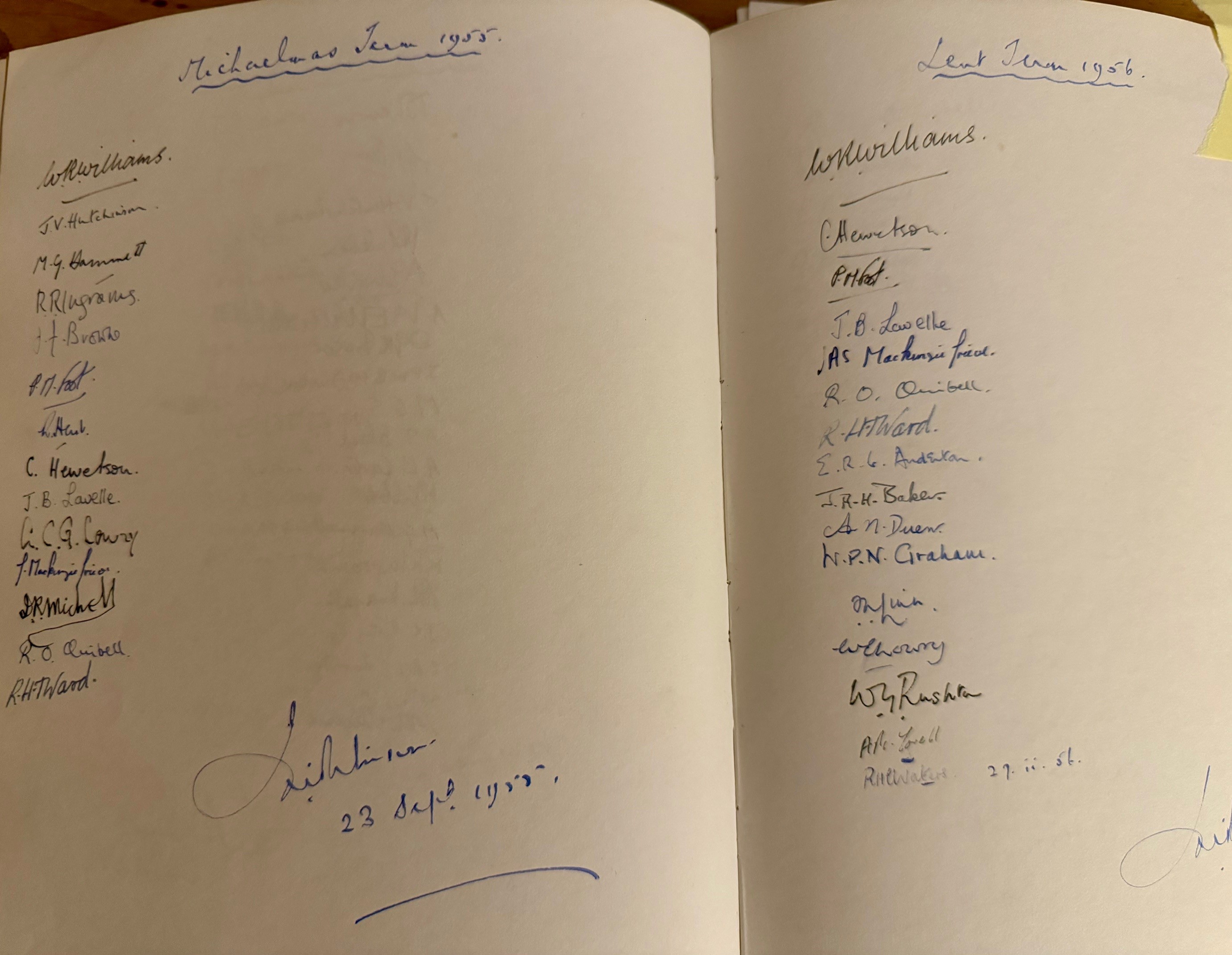
Each year, our School Prefects – or Praepostors as we call them – sign their names in the Praepostor book. The most recent volume has signatures going all the way back to 1913. Their chief responsibilities are to ‘set the tone of the School’ and look after the younger pupils. Leafing through the book, we can see the handwriting of generations of Salopian leaders. And indeed 12 Headmasters.

On the pages for Michaelmas 1955 and Lent 1956, if we look closely, we can see the names of three of the four founders of the long-running satirical magazine ‘Private Eye‘, who were each pupils at Shrewsbury.

Can you spot the hand-writing of Richard Ingrams, Paul Foot and Willy Rushton?

Handwritten letter-writing is not so much of a thing these days. Email, vlogs, texts and all manner of digital communications prevail – and wonderful ideas and messages can be shared in these ways (as well as the less good stuff).

I’m all in favour of communication in all forms. However, there is something a bit special about a hand-written letter. Perhaps even more so nowadays because of its rarity. If we really want to convey something special, we write it down by hand – because hand-writing is a powerfully personal thing.

As Lewis Carroll observed: “The proper definition of a man [or woman] is an animal that writes letters“.

Still true?


INSERT HANDWRITTEN SIGNATURE ^^^ 🙂

Dear Kek

Featured

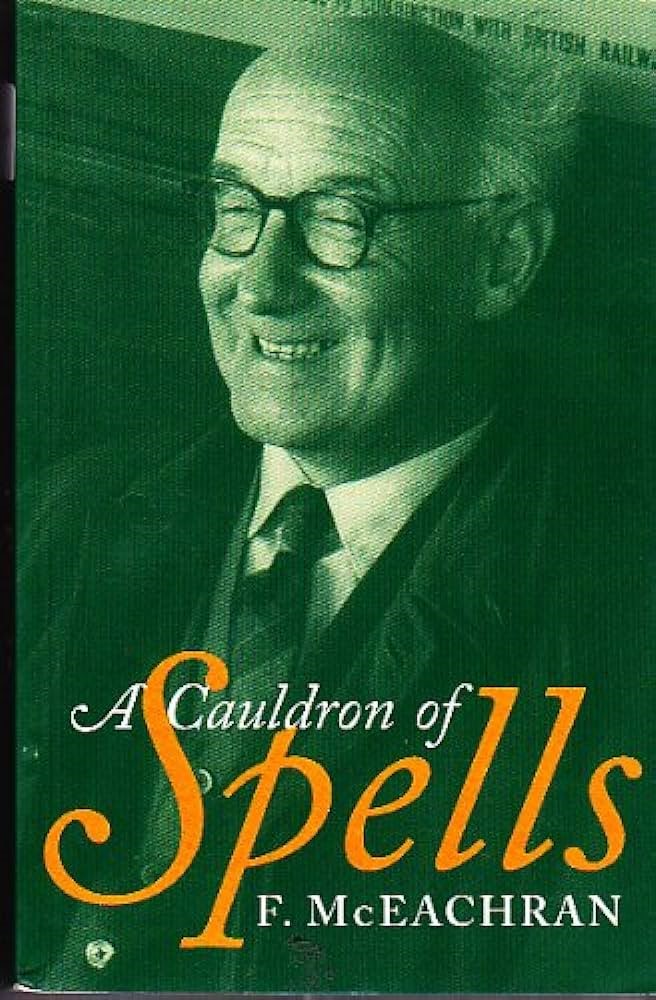
A unique highlight of the Salopian cultural calendar is the McEachran Prize. This unashamedly scholarly yet playful competition is named after iconic Shrewsbury teacher Frank McEachran – or ‘Kek’ as he was known to all.

Kek taught at Shrewsbury from 1935 to 1976. Deeply eccentric – in all the right ways – Kek invented the idea of teaching from what he called ‘Spells’. Pupils were invited to choose short extracts of poetry or prose and commit them to memory. Standing on a chair, the youngster would recite the Spell, and then spirited and scholarly discussion would follow.


This year’s 20 Spells covered authors as diverse as WB Yeats, Jane Austen, Bob Dylan, Karl Marx, Ocean Vuong, Charlotte Bronte, Echiro Oda, Seneca, George Eliot, Oscar Wilde – and the screenplay of the Barbie movie. Contestants from all five year groups read their Spell – then spoke for four minutes on whatever thoughts and ideas the Spell provoked for them.

The rapt audience was bewitched by the heady mix of intellective mischief and learned commentary. In a sound-bite world, where attention spans have shrunk to a matter of seconds, the exercise of close listening for 20 chunks of four minutes is a solid effort. The reward for the audience was a host of mini-epiphanies and intellectual satori.

Those students of Kek who committed Spells to memory decades ago can very often remember and recite them to this day. What truer testimony could there be to the efficacy of this one-off methodology? The inspiration, allegedly, for Alan Bennett’s The History Boys, Kek taught notable Old Salopians such as Sir Michael Palin, Richard Ingrams and Paul Foot (the creators of Private Eye).


Not one to follow a syllabus, Kek was a maverick whose like is probably no longer at large on the contemporary educational landscape. The teaching profession is certainly more… well, professional now. But, anything that triggers the sparkle of unfettered academic play is surely a great thing?

As the 2024 edition of the McEachran Prize unfolded at Shrewsbury School, it was easy to imagine the spirit of Kek smiling down – twinkly-eyed and approving – on this evening of free-range ‘serious fun’ of a distinctively Salopian kind.

Essays https://leowinkley.com/essays/

Dear Dr Gee

Featured

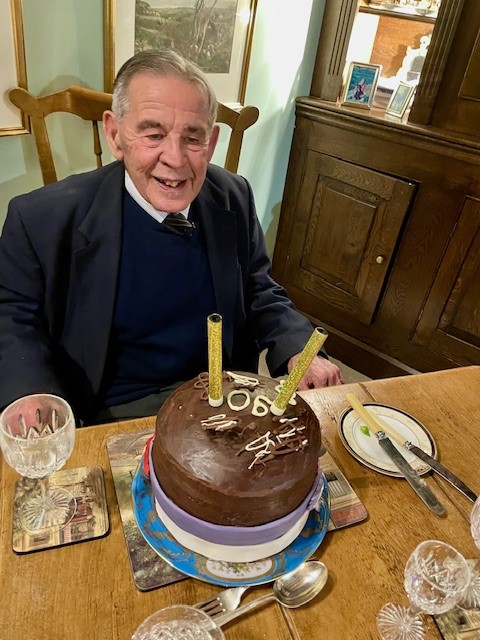
Shrewsbury legend Dr David Gee turned 90 on 12th January 2024.

A walking almanac of all things Salopian, Dr Gee has seen Shrewsbury School change and grow over seven decades. He has observed the various efforts of eight Headmasters. Our ‘Everthere’, David has the long view on Shrewsbury. His optimism for the future is infectious.

Sitting next to David at his birthday dinner, I had the delight of listening to more stories from his treasure trove of Salopian tales. He told me of the time he was summoned to the study of his first Headmaster, Jack Peterson, as a trainee teacher in 1958. “Can I give you a word of advice, Gee?”, asked Peterson. “Please do”, replied the young Gee, politely. “Never, ever become a Headmaster”, said Peterson, wearily. David would have made a wonderful Headmaster but he did heed Peterson’s advice.

Dr Gee taught at Shrewsbury between 1958 and 2012 during which time he was Housemaster of both Dayboys Hall and Severn Hill and also Head of the History and Religious Studies Faculties. He remains active in School life as custodian of the School’s history. He is often to be seen taking a turn round Top Common. And at all the big moments in the school year, he’ll be there, somewhere.

The newly nonagenarian Gee is pictured here – with (one of) his birthday cake(s).

A man of phenomenal learning – he was a Major Scholar at Winchester College – with the memory of the most venerable of elephants, David is one of the great storytellers. With a twinkle in the eye, and just a hint mischief in his voice, he will roll out tale after Salopian tale.

Although I have only overlapped with David for a mere six years of his epic stint in Shrewsbury colours, he has been kind and encouraging from the start. Gentle wisdom flows from his choice of story. He would never be so crass as to offer advice – though it is tempting to seek it. A man of exceptional energy, both intellectual and physical, I remember encountering him on the Stiperstones, more than 20 kilometres into our whole school sponsored walk in 2021. He was 87 at the time.

Here he is sitting alongside the extraordinary and wonderful Poppy Anderson, widow of the late great Sir Eric Anderson (Shrewsbury Headmaster, 1975-1980; Eton College Headmaster, 1980-1994):


Every school, every institution, anything with deep heritage, needs its torchbearer. David is ours.


Happy 90th Birthday Dr Gee.

‘Thank you’ doesn’t even begin to cover it. But thank you.

For being our Everthere.

Dear Praepostor

Featured

Every year, a number of senior pupils at Shrewsbury take on a distinctive leadership role. They become Praepostors. Or Postors, for short.

A Praepostor is ‘one who is placed before’. Not placed ‘above’ but placed ‘before’ (or in front of) others. Their job is to serve the School.

Each Praepostor has her or his individual strengths and aptitudes; enthusiasms, weaknesses and quirks. Lead by the Heads of School and their Deputies, you work as a team to set the tone of the school and help things run smoothly.


You are the ambassadors, public speakers, listeners; the doers and makers; the movers and shapers. Custodians and change-makers. You are the organisers of lunch queues. You are doers.

You are listeners and watchers; the eyes and ears of the pupil body. You are a key channel of pupil voice in the School. You give of your time, your talent, your kindness to others; your concern for the best interests of the School.

Praepostors 2023-2024


We give you a waistcoat. We give you a tie and a pin. We give you a few privileges: you are allowed to ride a bicycle – a ‘time-expander’ – so you can get swiftly from one thing to the next. But most importantly, we give you an opportunity to give back to the School.

As you wrote your name in the book of Praepostors, you took your place in the living history of Shrewsbury School.


The volume you signed this year contains the signatures of your predecessors going backwards in time – term by term, year by year – to 1913. 110 years of Praepostors. One of this year’s signatories flipped back to 1955. And found the signature of his grandfather.

Their handwriting is all we know of their service to the School. Each signature is a personal pledge, an individual mark of commitment – and an honour. The Praepostors of yesteryear took lessons, disciplined fellow pupils and acted like junior members of staff. Nowadays, you are servant leaders, each leading out of who you are. Together, you embody the values of the School: the Salopian Virtues of kindness, wisdom, courage; self-mastery; integrity and spirit.

Thank you, Dear Praepostor, for setting the tone and leading the way. May you lead with humility and integrity: Intus Si Recte, Ne Labora.


Further Reading:

For a list of other uniquely Salopian terms, have a look here:

https://www.shrewsbury.org.uk/about-shrewsbury/school-history/salopian-terminology

Dear Invigilator

Featured

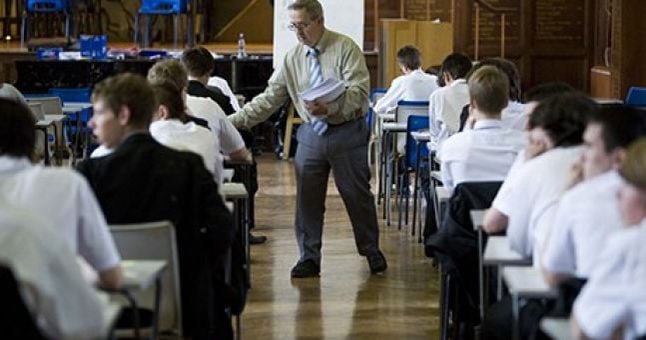
Like excellent waiters and the best referees, you are scarcely noticed. Only ever heard when absolutely necessary.  You are watchful: you judge your interventions with expert knowledge of the rules of the examination game.  You are mindful of the one-take-movie pressure bearing down on all those young heads that are earnestly bowed over their examination desks.  You emanate a calm and enabling control.  You invigilate.

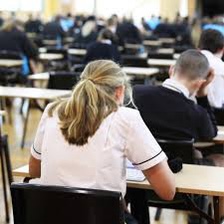
In schools across the land, the sports halls, gyms and assembly rooms have undergone their annual springtime metamorphosis. The Public Examination season is underway again. Desks have been lined up at regulation distance.  Institutional clocks have been synchronised.  Notices have been posted.  ‘Silence please – exams in progress’.

And with all this annual examination activity, you appear: a seasonal creature, with beady eye and soft step. It’s your time to shine. Or rather, it’s your time unobtrusively to enable the candidates to shine. Examination conditions apply. And it is you who applies them. The examination invigilator.

When I was doing exams, it was mostly the teachers that did the invigilating.  And some were more vigilant than others. A few did their marking whilst shooting the occasional glance across the exam room.  Others were noisy prowlers, coughers, fidgeters.  You sensed their presence and a corner of your mind had to deal with them: there was a nagging awareness of their movements. 

Not so now. The invigilator is a specialist. And rightly so. Not only because teachers have lots of even better things they could be doing with their skills than patrolling exam halls, but because invigilation is an art. Maybe even a calling.

Invigilators are masters of silent observation.  Noiselessly gliding with rubber-soled stealth up and down the aisles of countless exam halls. Cat-like, you slink down the lines, paws poised to make a corrective tap.  Ready to pounce with a treasury tag; an extra booklet of paper; a moment of expert assistance. An intervention.

Easy, perhaps, for the candidate to think lowly of the invigilator.  Maybe some perceive you as a troubling part of the examination challenge; a minor menace in the labyrinth; a grim-faced bearer of the examination paper.  Those reckless foolish few bent on misdeeds may view you as referee to be gamed.  Or, perhaps it’s easier not to think of you at all. 

This would be to undervalue and misunderstand the role of the invigilator.  She or he is the person in the examination room immediately responsible for upholding the integrity of the external assessment process.  Integrity: an evocative value word – what word appears above integrity in the pantheon of virtues?  Not many.  This is a noble responsibility.  And it is much more than patrolling. 

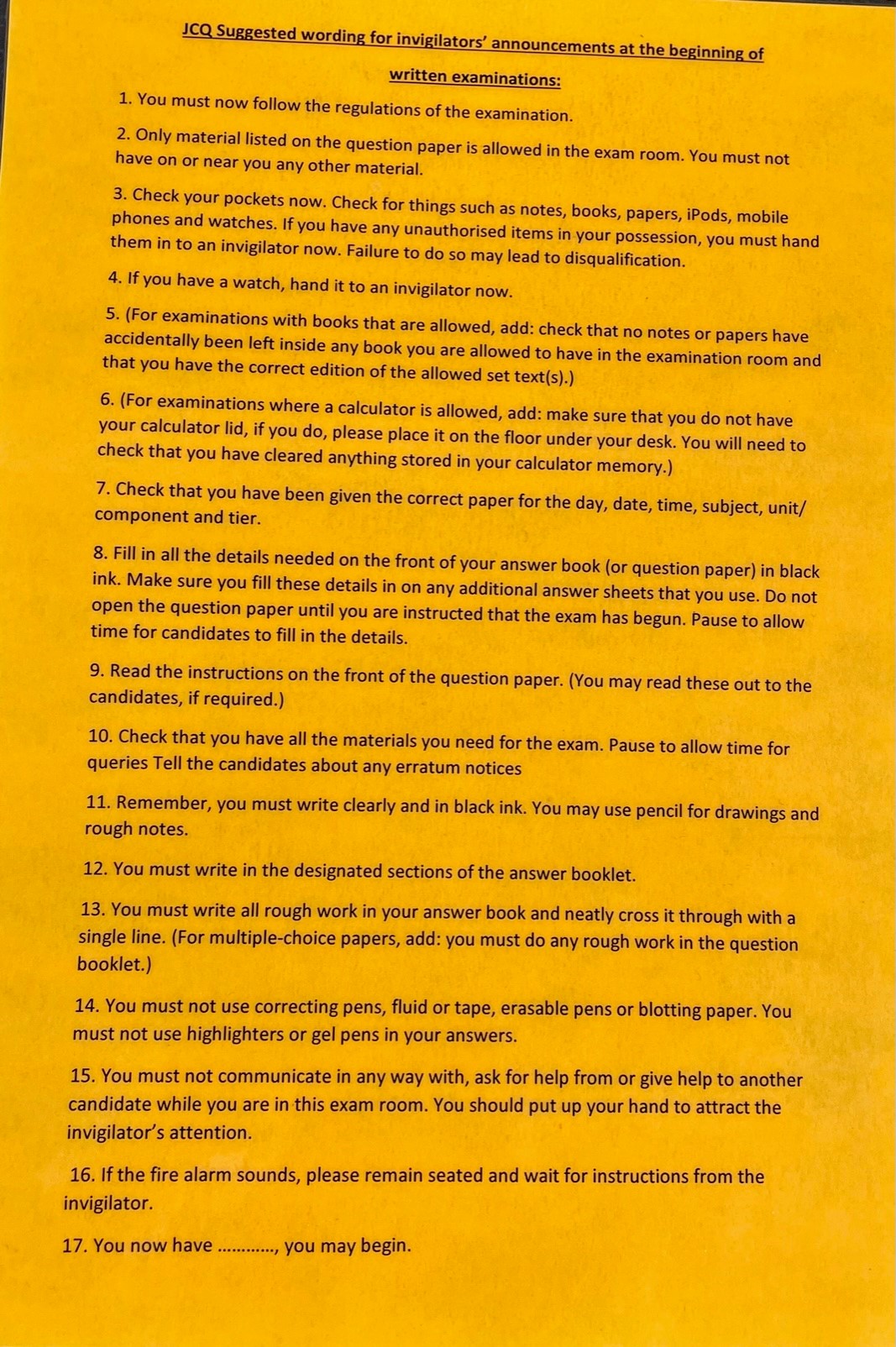
The Joint Council for Qualifications* (JCQ) details the invigilator’s role as: ensuring all candidates have an equal opportunity to demonstrate their abilities; ensuring the security of the examination before, during and after the examination; preventing possible candidate malpractice; preventing possible administrative failures.

Malpractice is incredibly rare – because schools take their duties seriously; and because invigilators are professionals. As the invigilator’s eagle-eyes scan the examination hall, these duties are her professional creed. Fairness; equal opportunity; ensuring things go as well as they can for the candidates.

So, dear invigilator, as you survey the room, I wonder what noble thoughts fill your mind. Do you recite the creed of your occupation like a mantra? Do you compose shopping lists or make travel itineraries? As you share and curate silence, what thoughts to do have?

The great meditators of Buddhism repeat to themselves a simple wish: ‘May all beings be happy!’.  What would be the mantra of the examination invigilator?  As the candidates sit at their desks, we would hope that they are in a state of flow.  The invigilator must, of course, be neutral, a silent beacon of integrity. A sentinel.  

I know you have to keep your mind on the job.  But the watchman’s mind is always free to think its thoughts.  And as you do, I harbour the hope that some aspect of your mind’s power is given to a general emanation of goodwill to the young minds you are overseeing.

May all examination halls be well invigilated.  Under examination conditions.  And with kindness. 


*The Joint Council for Qualifications is a membership organisation comprising the eight largest providers of qualifications in the UK. The JCQ provides a single voice for its members on issues of examination administration and, when appropriate, qualification and wider education policy.