Dear Hope

12 publishers rejected her manuscript before Bloomsbury grudgingly took a gamble on a book about a young magician.  Its author was a single mother living on welfare support.   ‘Harry Potter and the Philosopher’s Stone’ changed her life – and enhanced the lives of millions of readers. 

Hollywood legend Morgan Freeman was 50 when he became an icon of the silver screen.  Before that he worked in the US Air Force; as a children’s entertainer and as a stage actor.  He won an Oscar at the age of 67.

The world record for the most driving tests ever taken before passing is held by a lady in South Korea.  She passed at the age of 69.  It was her 960th attempt.  Her motivation?  To better protect her family business selling vegetables – and a desire to drive her grandchildren to the zoo.

The thing that unites these three people – and thousands upon thousands of others who have achieved their dreams –  is that they had goals.  And they had hope.


The word hope might be mistaken for naïve optimism, for blind faith, or for simply “crossing our fingers” and waiting for things to improve.   But true hope is a dynamic, courageous and transformative force that fuels action, sustains resilience and gives meaning to struggle.

In the words of the American writer, Rebecca Solnit:

Hope is not a lottery ticket you can sit on the sofa and clutch, feeling lucky. It is an axe you break down doors with in an emergency.”


In this part of the world, we are fortunate to enjoy incredible opportunities for which we should be daily grateful.  Equally, however privileged we are, life is unpredictable.

We each face setbacks, losses, disappointments.  Without hope, these moments can feel final.  But hope reframes them—not as endings, but as chapters in a larger story. 

As the great Revd Dr Martin Luther King once observed:  “We must accept finite disappointment, but never lose infinite hope.”  King’s words are a masterclass in emotional strength. Disappointment is real and a part of life. But hope reminds us that pain is temporary and failure is fuel.   As I said to the School during last Wednesday’s assembly, failure is a teacher, not an undertaker.  Hope doesn’t erase difficulty — but it can transform it.  It gives direction to our efforts and dignity to our failures. It’s the compass that keeps us moving, even when the path is unclear.

As an Arsenal fan, I hope that we win the Premier League this season.  Finally.  I can action this hope by supporting the team.  However, there are limits to hope.  It should not become delusional.  My childhood hope that I score the winner for the Gunners in the FA Cup Final is unlikely to come true.  There’s no point fuelling that one.  However, I could, for example, campaign for professional football to share more of its wealth with good causes. 

The great campaigners in history, have been willing to ‘be the change they wanted to see in the world’.  Malala, Ghandhi, Martin Luther King.   The people who make change happen are endlessly hopeful. 


The enemies of hopefulness are despair and cynicism. 

Teddy Roosevelt, who served as the 26th president of the US, cautioned against the “cheap temptation” to be cynical.  “The poorest way to face life is to face it with a sneer”. 

We don’t really do sneering at Shrewsbury, I’m glad to say!   We are participators in ‘serious fun’.  We reflect on what went well; we consider how best to improve.  We do not retreat to the sidelines, criticising. 

In one of the most stirring pieces of writing, Roosevelt urges hope and action, over cynicism and despair:

“It is not the critic who counts; not the man who points out how the strong man stumbles, or where the doer of deeds could have done them better. The credit belongs to the man who is actually in the arena, whose face is marred by dust and sweat and blood; who strives valiantly; who errs, who comes short again and again, because there is no effort without error and shortcoming; but who does actually strive to do the deeds; who knows great enthusiasms, the great devotions; who spends himself in a worthy cause; who at the best knows in the end the triumph of high achievement, and who at the worst, if he fails, at least fails while daring greatly, so that his place shall never be with those cold and timid souls who neither know victory nor defeat…”

Powerful stuff indeed.


In her excellent book, How to Build a Girl, the marvellous Caitlin Moran also writes against the temptation to recline into lazy cynicism:

“When cynicism becomes the default language, playfulness and invention become impossible. Cynicism scours through a culture like bleach, wiping out millions of small, seedling ideas. Cynicism means your automatic answer becomes “No.” Cynicism means you presume everything will end in disappointment.

And this is, ultimately, why anyone becomes cynical. Because they are scared of disappointment. Because they are scared someone will take advantage of them. Because they are fearful their innocence will be used against them — that when they run around gleefully trying to cram the whole world in their mouth, someone will try to poison them.”

We do have to be savvy; street-wise. Not every individual is trustworthy; not every organisation is benevolent.  But, the default must surely remain with hopeful optimism.

The great Maya Angelou once said: “There is nothing quite so tragic as a young cynic”.  Agreed.  This place, this school, is the least cynical place I’ve ever worked. On the whole, I think this is because our School encourages a constructive, hopeful approach to life.  That it is better to get stuck in, than to stand on the side-lines and comment; that you get more out if you put more in.  That it is the creators, the optimists, the constructors, who make a difference.  That nobody ever put up a monument to a critic.


There is nothing more hopeful than youth.  And no time more hopeful than the beginning of a new chapter of our lives.

Yet, our children are growing up in world of exceptional complexity.  The online world is full of possibility – for good, for learning, for connection.  Equally, the negative influences and gloom-mongers can spread fear and anxiety.  We need to protect and equip the young to manage this mixture of messages.  To tell fact from spin; to interpret the world with critical intelligence; to live with optimism that is grounded in pragmatism.  How do I live a good and full life?  Hope is the fuel.  Virtues, the road map.

In a world that sometimes feels chaotic, divided or uncertain, hope is not a luxury—it is a necessity. It is the quality that keeps us grounded; the energy that keeps us moving and the light that keeps us believing – in ourselves and in others.

The great Emily Dickinson offers a memorable avian image for hope:

“Hope is the thing with feathers that perches in the soul—and sings the tune without the words—and never stops at all.”

Hope is persistent. It sings. It endures even in storms.  And it never stops.

However fortunate we are, life is not always straight forward.  Certainly, we are incredibly lucky in this particular place to be surrounded by opportunity; by good people who share a common purpose.  That said, not every day is a cake-walk.  We grow through challenge; we will each have to face down adversity at different stages of our lives:  “we know that suffering produces perseverance; perseverance, character; and character, hope.” [1 Peter]

The beginning of a senior school journey, is one of the most wonderfully hopeful times in life. Whilst we don’t want to wrap our children in cotton wool, we do want to nurture and grow them towards independent life in a world of great complexity and opportunity.  School is both a sanctuary and a training ground.  

As we cultivate the Salopian virtues of wisdom, courage and kindness; integrity; self-mastery and spirit – it is my fervent hope that the distinctive energy and participative optimism of the Salopian community will inspire them to find their path and achieve their personal bests.  I celebrate the power of hope—not as a passive feeling, but as a healthy mindset that leads to action.

Here’s to positive engagement; to thinking for ourselves.  Here’s to resilience and bouncebackability; to making change happen from the inside – for the good of ourselves and the good of others. 

Here’s to hope.

Because hope is contagious.  Because with hope, almost anything is possible—even if it takes 960 attempts.

Dear Excuse

I’ve been a teacher for almost 30 years.  I’ve heard a few excuses over those years.  Indeed, the world of education has produced the most famous excuse of all time.  “The dog ate my homework”. 

My favourite pupil excuse was when an A level Philosophy student of mine told me that they had been unable to complete their written assignment because they got had their toe stuck in the bath-tap the night before. Another asked for a deadline extension because their pet iguana had recently experienced a nervous breakdown. More recently, I recall an interview candidate who explained that they were late arriving because they couldn’t find their car. Not an excuse that inspired much confidence.

Traffic wardens hear more excuses than most as people offer the reasons why they should not be given a parking ticket. I know I’ve been guilty of this kind of excuse-making, amongst plentiful others, to my shame. There are many more examples in an amusing little book called called the Complete Excuses Handbook. I was going to bring it into school to read some examples out – but unfortunately my dog ate it.


It’s terribly easy to slide into the habit of excuse-making. For our own short-comings, those of our family, sports team or nation. In times when many are quick with hair-trigger judgments and blame-culture, we may even be encouraging a climate in which having an excuse up your sleeve is a wise precaution. However tempting it may be to retreat into excuse-making, it is a bad habit. As teachers – indeed as parents – we need to challenge and discourage a culture of excuses.

It’s important to distinguish between a reason and an excuse.

… A reason is a rational explanation for why something is the way it is; or a justification for why a specific action or decision was taken.  It involves providing evidence and facts to back up the justification.

… An excuse is something we use to deflect blame – by shifting the focus away from the action or decision and onto external factors such as circumstances, other people, or events.

Essentially, reasons become excuses when they are used to avoid responsibility.


When we shift the blame, we duck responsibility for a failure, and we also avoid the responsibility for learning from that failure. Excuses undermine trust and honesty between people. When we make excuses, we tend to convince ourselves that we could not have changed the outcome, and therefore have no need to adapt for the future. Failure becomes easier to accept in ourselves, and we never grow beyond our current state.

George Washington, the first US president said: “It is better to offer no excuse than a bad one”. Indeed, it is far better to tell the truth and face the consequences, than it is to damage trust or deceive oneself and others.

The ease with which we make excuses is a window into our character.


We have said that the most common reason for excuse-making – or the most common excuse for excuse-making – is the desire to dodge responsibility, to avoid blame and otherwise save face.  In this sense, it is an act of deception. 

The other kind of excuse is when we deceive ourselves.  Rather than facing up to the reality of a challenge or when we have fallen short, we rationalise the problem away. We invent a more comfortable illusion to avoid facing the truth. We may do this when we find tasks difficult and want to give up; or when we know what we are doing is not right.

Reverend Martin Luther King, Jr. wisely said: “It seems to be a fact of life that human beings cannot continue to do wrong without eventually reaching out for some rationalization to clothe their act”. Each of us will be able to think of excuses we have used to cover our tracks or explain away our habitual failings.

But my favourite line on the subject of excuses comes from Florence Nightingale.

An epitome of honest good work and courage; a person whose heroic devotion to duty in looking after the injured in the Crimean war has made her name synonymous with the caring profession of nursing.

In a letter to a friend, Florence Nightingale wrote very simply:

“I attribute my success to this – I never gave or took any excuse.”

Florence Nightingale

High performers – people who lead good and constructive lives – tend not to make excuses for themselves – or for others.  They have high standards.  And when they fall short, they look for reasons for the shortfall – and then search out ways put things right or mitigate them. 


At the end of the day, the week, the year, how great would it feel to be able to reflect back with honesty and integrity and say what Florence Nightingale said with such clarity? 

How would it feel to say: “I attribute my success to this: I did not invent excuses or blame others… I sought and accepted personal responsibility.  I did my best – and when it was not good enough – I looked honestly at the reasons. I asked for help and I worked hard to improve.”


So, Dear Excuse – beguilingly tempting though you are – I must continue to do my best to shut the door on you. 

Because, all the wise folk say that reward and fulfilment come most completely to those who train themselves not to make excuses.  

Dear 2022

Featured

Your family has been hard to love of late. 

I wrote to your younger sibling, 2020, in her infancy – when she was only a few days old.  I made wishes for her.  And, almost as soon as I had written, I felt ashamed at the presumptive folly of my wish-making.  Yet here I am again.  Full of hope.   

Back in 2020, following a poet’s lead [Philip Larkin: ‘Born Yesterday’), I wished your sister dull.  I wished 2020 the blessing of being ordinary; for her to be about the gradual spreading of ordinary happiness.  I had in mind the steadiness of contentment, rather than the mercurial fireworks of ecstatic highs. 

We all know that 2020 was anything but dull.  And contentment a rare thing. Yet, contentment for all sentient beings must surely be the worthy (if unreachable) endpoint for our biggest hopes.  

My own hopeful thoughts – always infinitesimally tiny in the noisy ocean of possibilities ahead – evaporated as soon as they were voiced.  Hopes are ethereal.  Yet they persist. 

And I can’t help but have high hopes for you, 2022. 


No-one could call a pandemic dull or ordinary.  As well as craving safety, shelter, wellbeing; our species sought certainty, direction, leadership; and we hoped for normality.  2020 gave us little, and her sibling 2021 less.  Lockdowns, limitations and restrictions carried their share of dull.   But these years have been full of extremes.  And they have taken so many on earth to the darkest of places and beyond.  The despair, the suffering, the confusion of 2020 extended into 2021, joined by a stark sense of inequity across and within nations.  Gaps opened further between regions where vaccination programmes surged into life and those where people were left exposed.  The images remain; the suffering continues.

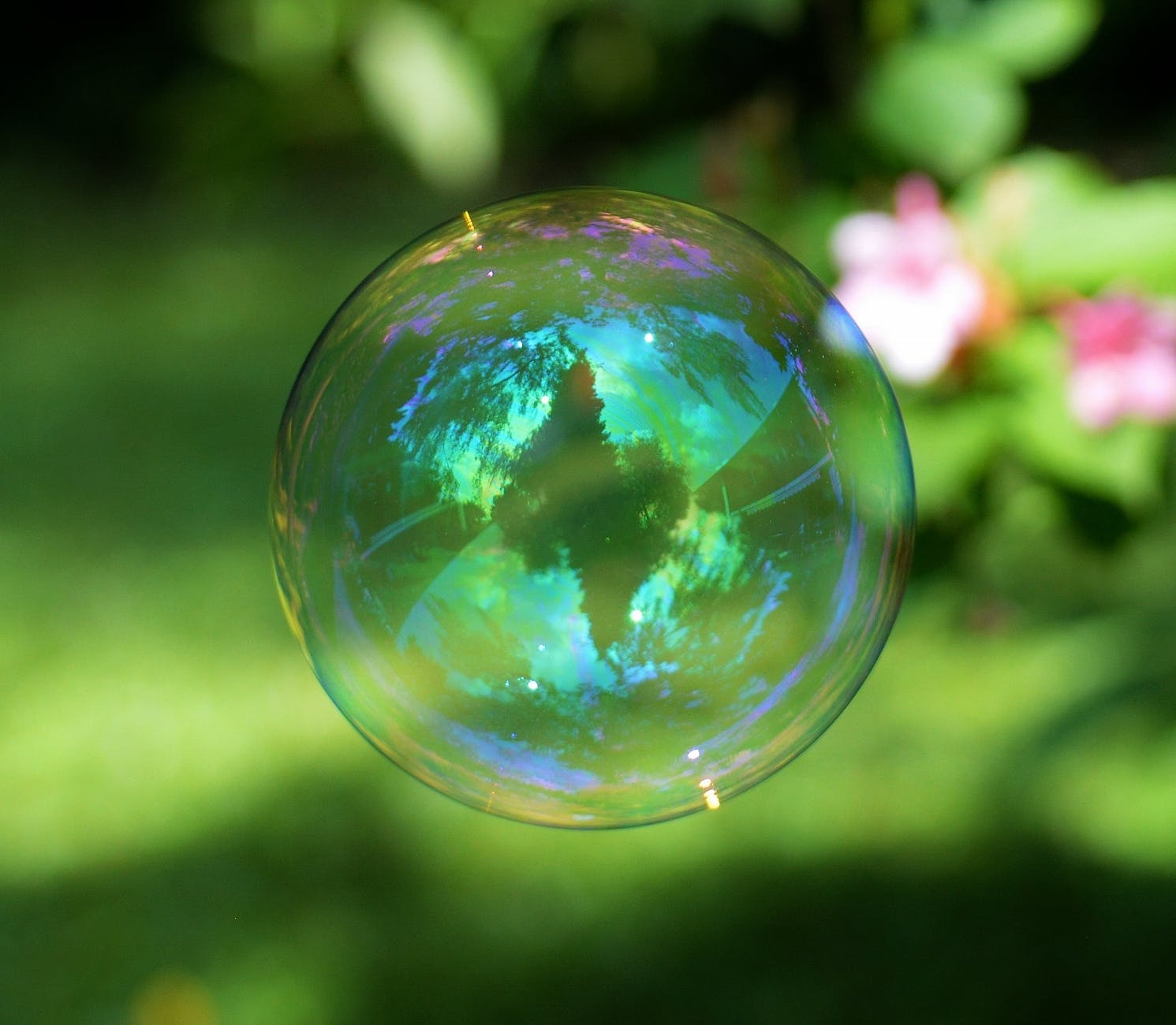
It is really not my place to comment, from the privileged comfort of my protected patch of the world.  Human beings across the globe have felt the awful power of this virus.  In many ways, this reality calls for the absence of words: sombre, shared silence is the only authentic response.  Words are hollow bubbles. 

And yet, like thoughts – like hope – like bubbles, indeed – words float up again out of the silence. 


2020 and 2021 were very, very rough for so many, and in so many ways.  This fact colours everything. 

But, there have been positives.  Shared hardship elicits waves of compassion.  Fellow-feeling flows from the levelling effect of a common threat.  The extraordinary kindness and devotion of so many individuals and organisations, to good causes, to the protection of others.  These are incalculable, potentially paradigm-changing pluses.  We could become more caring, more empathetic, more kind through all this. 

The collective force of human ingenuity has saved millions of lives, enabled continuity, and opened new possibilities. Our thirst for equity has been sharpened: calls for social justice have been voiced more passionately; heard more clearly; actioned more purposefully. Our duties to the natural world have never been more prominent, nor more urgent; lockdowns have caused the small shoots of regeneration; big (though perhaps not big enough) environmental pledges have been made.

Is there a more urgent desire to make the world a better place; to emerge together to a fairer post-pandemic world. Is that to be your thing, 2022?

So, 2022, I wish you kind.  Kinder than your forebears.  And, from time to time, a bit of dull wouldn’t go amiss.

Dear Pedestrian

Featured

Solvitur ambulando: ‘It is solved by walking.’

As a walker, you know this well.

This pithy saying – all the more pithy in Latin – is attributed to St Augustine.  It captures the sense that walking is more than just a physical activity.  Rather, it suggests that walking can be an act of mindfulness; a means of spiritual refreshment; a way of untangling the knots of the mind.  For many, walking and thinking are the closest of travelling companions.

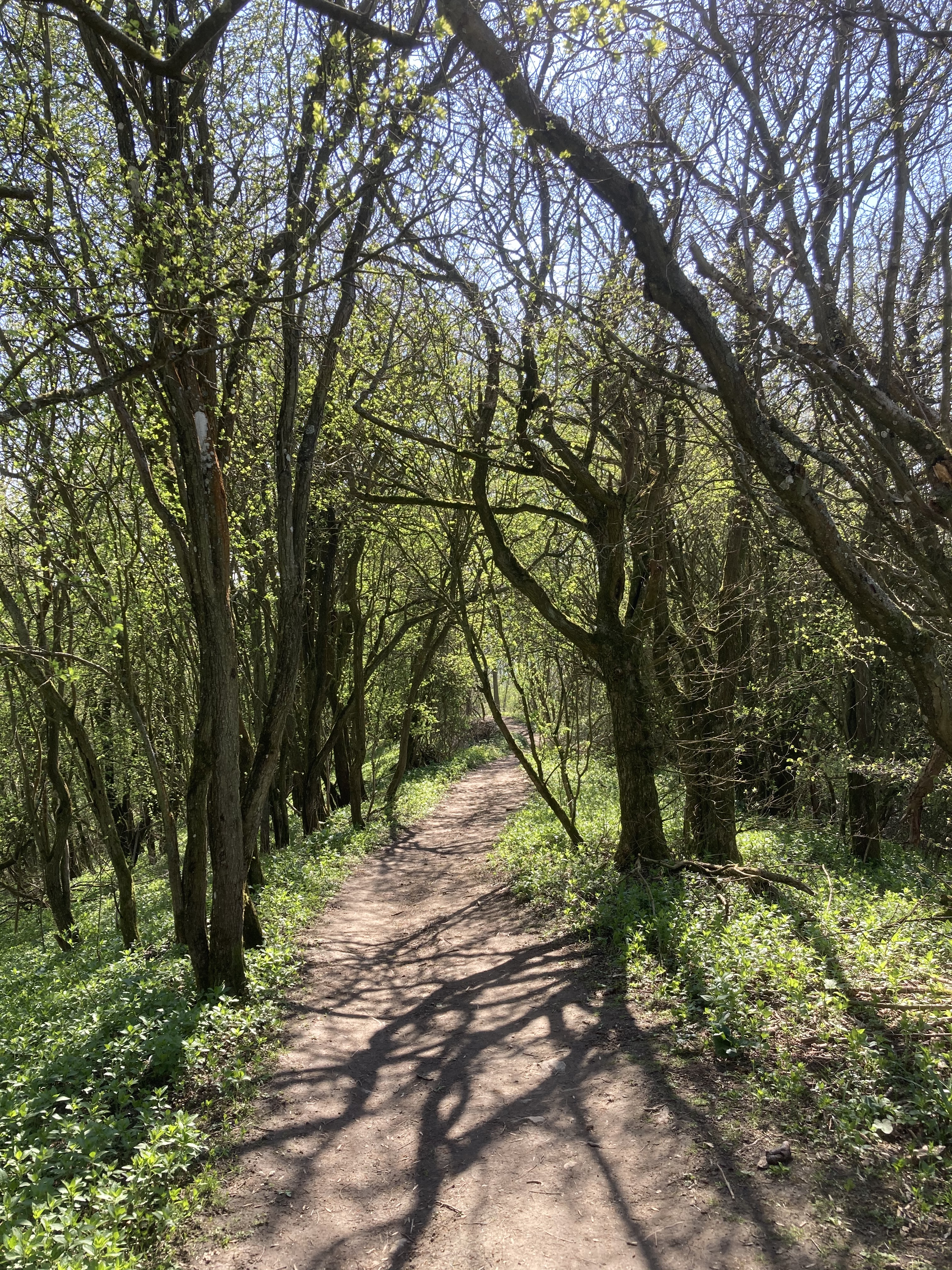
I went through a phase of reading book after book about walking. It was in the aftermath of my father’s death in 2014.  I think, looking back, it was a way of reflecting on his life and its ending.  Big, long walks in the Yorkshire countryside were a way of processing.  I felt drawn to the paths of the East Yorkshire coast; it felt good to be small, yet strangely at home, in the rugged openness of the Moors; the gentle dales and valleys invited me to explore.  Following ancient ways – paths that had been covered by countless pairs of feet – connected me to the unknown folk who have lived and moved across the same land.   

When I wasn’t walking, I was thinking about walking.  I was reading about walking.  I read books by Robert Macfarlane, Roger Deakin, Henry David Thoreau, Frederic Gros, Rebecca Solnit, Geoff Nicholson, Nan Shephard, Patrick Leigh Fermor.  There are shelves of books on walking, natural history, landscape and language, psychogeography – all kept in our little cottage in the North York Moors.

Holloway

My inner teenager would be both baffled and appalled at this strange obsession with the act of walking.  How on earth can walking be interesting?  The Pavlovian response of most teenagers at the prospect of a long country walk is a derisory scoff or a spontaneous list of other more urgent priorities.  For some, walking looks like a waste of time and energy.  Especially the circular walk beloved of ramblers – why on earth would we walk in a big circle that ends up where we started? 

The word pedestrian (as an adjective) has a telling meaning: ‘prosaic, commonplace, dull’. Doesn’t that tell us something about the status of a walk?

Most prosaically, of course, walking is an act of locomotion; of self-propulsion; it is the simplest practice of getting from A to B.  It is a form of exercise and means of staying physically healthy.  More expansively, walking is a way to discover and explore the external world.  At a deeper level, walking can make us happier.     

Like many of the routine capacities that the fit and healthy take for granted, the able-bodied take the daily process of walking unthinkingly in our stride.  For those who find walking easy, we don’t often register that this unconscious process is supremely complex.  The ability to walk was hard-earned, and hard-learned, over months of early childhood development.  We learn to walk and are free.  Viewed this way, walking is a privilege.  More empoweringly conceived, it is an act of self-determination.  And a route to inner discovery.

You can see why slow self-locomotion seems ordinary next to the rapid movement of car, plane and rocket.  As the industrial revolution brought speed, along with so much else, shanks’ pony became equated with backwardness and poverty.

And yet… slow can be good.

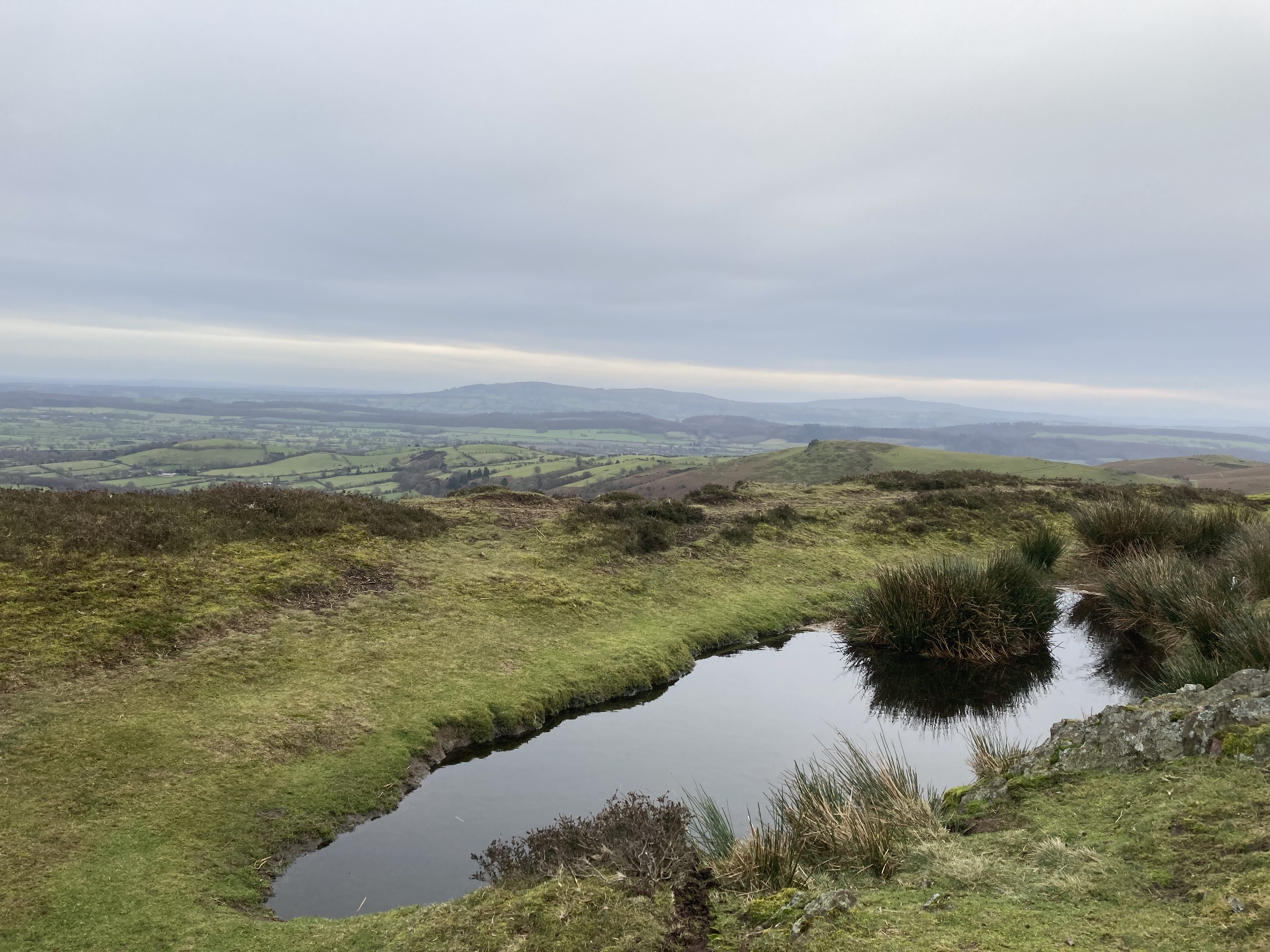
View from Caer Caradoc

During lockdown, the daily walk has become disproportionately important.  For most, the local wander was the default leisure activity.  Ask someone what they did at the weekend during lockdown and they will almost certainly reference a walk.  Being pedestrian has been crucial to our wellbeing.

In the 18th and 19th centuries, pedestrianism was a spectator sport; an heroic activity that drew fans and inspired a degree of celebrity.  Walking was a means to epic feats and the focus of wild wagers.  For example, the legendary pedestrian Captain Robert Barclay Allardice’s most impressive achievement was to walk 1 mile every hour for 1000 consecutive hours between 1st and 12th July 1809.  People travelled to see him walk.  Many other men and women became competitive endurance or speed walkers.  Over time, this craze for pedestrianism gradually passed and became obsolete.  However, history shows that being a pedestrian was not always pedestrian.  

Returning to the current day, walking is a means of exercise and relaxation for many.  You come back from a decent walk feeling physically tired and mentally refreshed.  The quick wander with the dog; the late afternoon perambulation – these all help to dislodge the lumps in the mind’s path. 

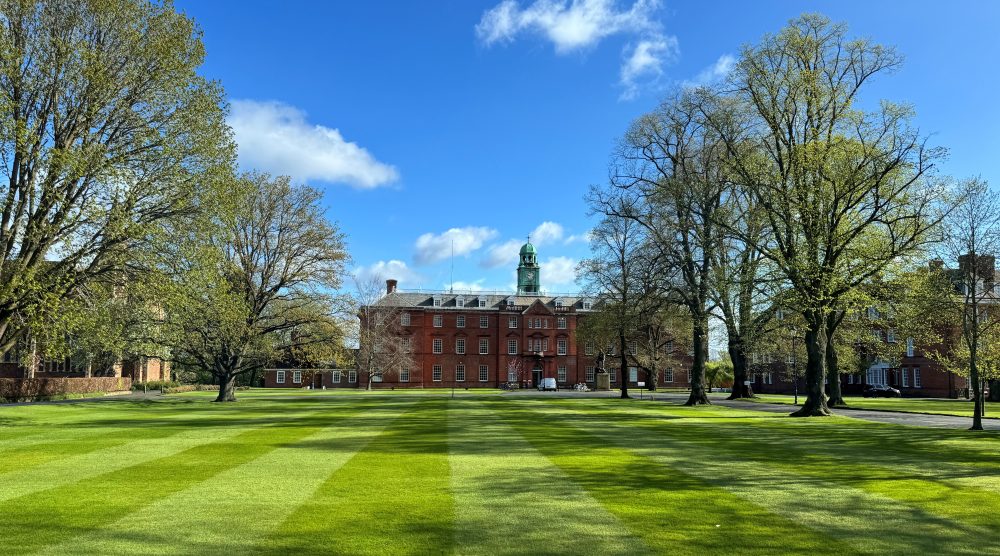
I think it is one of the many uniquely special things about Shrewsbury School life that we – by which I mean pupils and staff alike – all do a lot of walking in our daily routines.  Our 100 acre site has walking designed into it. 

Shrewsbury School Site – walking to work

We have to walk from house to lessons; from one building to another; to and from meals.  We walk through a shared  place of calm, natural beauty. I think this is a very healthy thing for all of us.

Walking, woven into our daily routines, is good for the mind and the body.  And it can also help with problem-solving.

Whatever ‘it’ is – it may well be solved, or at least eased, by walking.

Keep walking, dear Pedestrian. 

Dear Myrtle and Maud

Featured

You don’t know me – but you met my wife recently.  You probably won’t remember.  She came to see you in the care home you share with about 30 others.  She was wearing greens and a mask.  You made her feel very welcome: you offered her a cup of tea which she couldn’t accept.  She told me a little bit about you when she got home.  Nothing personal or confidential, of course.  She just said that you were wonderful friends.  And told me how you kept each other going.

One of you is 92 and the other is 94.  I can’t remember which way round.  You sit together most of the day, in comfy chairs in a large sitting room with a decent view of the garden.  You tell each other stories and share memories.  You are not the best listeners, if we’re honest.  But you are great story-tellers – and the best of friends.  You cackle at each other’s jokes; you make mischievous comments about your fellow residents; you play little tricks on your carers.  So they say, anyway.  All to pass the time, which you do cheerfully, and always together.

Truth be told, you seem to have a lot of the same conversations.  If one of you goes out of the room, and returns ten minutes later, you greet each other like long-lost relatives.  And loop back into a familiar conversation.  Like an old juke box on free play.

Like an old juke box on free play.

It seems that you both struggle to remember things from the here and now; from this hour to the next.  But longer-held, deeper memories abound.  And you share them with each other freely.  And often.  The past is more present than the present.  Who knows how much of it is real memory; how much is made and re-made in the telling?

There is a danger here.  I am treading a very thin line.  I want to go somewhere that threads its way safely between the ankle-breaking rabbit holes of sentimentalism or pity or projection or just being condescending.  I may get my foot stuck and be guilty of these and more.  I hope not.  But if I am, I sense that you would forgive – and forget.  

You see, I imagine your talk as a kind of charm.  I picture it casting a safety spell around you.  I see your joyful daily endorsement of one another turn solid; a talisman against – whatever.  Are you aware that there is threat outside the enchanted circle of your chat?  Who can tell?  You don’t seem to be fearful.  Not of anything.  Instead, maybe the diurnal rituals of shared remembering insulate you from the harder truths of the present.

Others around you are exposed.  By their knowledge or their ignorance.  You are exposed too.  Yet, you seem to move together in a different place.  One of dignity and innocence; of knowing insouciance.  In this state, I see your vintage minds shining bright with hope and love and laughter. 

Are you sheltering in some woozy, magic kingdom?  Are you hiding there together?  No.  If you are hiding, it is in plain sight of extinction’s alp.  There: I see you rambling on together – equipped with all the careworn kit of the years – cheerfully talking your way across the rocky ground beneath that final incline. 

The phrase ‘Extinction’s Alp’ is taken from from Philip Larkin’s ‘The Old Fools’

This is guesswork, of course.  After all, you were just a 30 second comment.  But you lit up my mind in that short time. 

What I imagine, from this brief window, is two lives wound around each other in a shared present; two friends bound by talk that is potent with memory.  I imagine the two of you together in your chairs side by side.  I picture you laughing.   

And I wish you protected. 

Leo

PS I hope you don’t mind that I changed your names.

Dear 2020

Featured

Dear 2020

Welcome to the world, new-born thing. I hope you find your feet quickly. And I have some other hopes for you too.

Your older sister, 2019, was a fiery one. Capable of so much good, but full of contradictions and often quite disagreeable. That’s teenagers, I suppose. Mind you, she was nowhere near as confounding and unpredictable as her older brother 2016. You never knew what was coming next with him. I wonder how he looks now, four years on.

Anyway, after 25 years of teaching, and 16 years as a parent, I know not to judge one sibling by another. Each child is wonderfully, bracingly different; unique individuals with promise and potential; needs and demands; fears, expectations and hopes.

The poet Philip Larkin wrote a poem to the newly born daughter of his friend, Kingsley Amis. He wishes her something “none of the others would”. Instead of wishing her beauty, talent and love, he says: “May you be ordinary […] In fact, may you be dull.

Well, 2020. You are 9 days old as I write this and there is no danger of you being dull. At least, that’s what the news suggests. Of course, there’s lots about you that will be mundane, ordinary. And, indeed, good. Particularly when lived and viewed from this safe corner of the world in Shrewsbury.

My hope for you is like that of Larkin. You’ll have your moments, for sure, and as with all your family, there will be sadness, despair, loneliness – horror even, sad to say. But… I hope that the weight and volume of all the unseen good, and the plain day-to-day ordinary that you think and do, all this stuff will be the thing that truly defines you. I hope you are fair: or at least, fairer than your forebears – gradually but meaningfully fairer. And kinder too.

There are lots of other things I hope for you, new-born thing. But Larkin’s odd and surprising incantation says it so much better. He wishes balance and ordinariness. A life more ordinary: “If that is what a skilled, / Vigilant, flexible, / Unemphasised, enthralled / Catching of happiness is called”.

May you be dull, 2020. May you catch more happiness.

Yours in hope

Leo Winkley

Handedness and points of difference

Studies suggest that 90% of the global human population is right-handed and 10% left-handed. This means there are about 60 left-handers in this room.  A minority group. If you are left-handed you are – well – a bit different.

It turns out that men are more likely to express a strongly dominant left hand than women. If you are a Muppet, however, it’s almost certain that you’ll be left-handed.  This is because a right-handed puppeteer (and we can assume that about 90% of puppeteers are right-handed) – they will use their right hand to articulate the puppet’s head, and the left to move the arm-rod.  So, in the world of Muppets, and other hand-puppets, it is the right-handed Muppet that is the minority animal.

Simpsons fans will have noticed that Bart Simpson– and indeed Ned Flanders – are both lefties. This may be a function of the fact that the creator of the Simpsons is left-handed – as was Jim Henson, who invented the Muppets.

Yet, despite the common terminology of “left-handed” or “right-handed”, the distinction is less than absolute. Some of us are more ‘handed’ than others.  We are in effect dotted along a continuum between strong left and strong right.  In between these extremes lie various degrees of mixed-handedness and ambidexterity.  Some of us will prefer the left for certain tasks but not others – we might write with our left hand but play tennis with our right, for example.

Interactive sports such as table tennis, badminton, cricket, and tennis have an over-representation of left-handedness. In cricket, for example, around 1 in 5 on the all-time list of international male cricketers bat left handed.

The smaller the physical distance between participants, the greater the number of lefties. In fencing, for example, it seems that about half the participants are left-handed.  Plenty of boxers are ‘southpaws’. Meanwhile, in non-interactive sports, such as swimming, we see no over-representation of left-handers.  It’s not a relevant factor.

Handedness is something of an evolutionary mystery. One of the earliest theories proposed that handedness in humans was originally evenly distributed, but hand-to-hand battle in the ancient world killed off the lefties because they held the sword with their left hand and the shield in their right, thus leaving the heart much less protected than for righties, who held the shield on the left. As the lefties perished on the battlefield, so did their genes.

A later theory proposed pretty much the opposite — that left-handedness gave warriors a competitive advantage “for much the same reason left-handed tennis players, boxers, or fencers have an advantage.”

In a book called ‘Right Shift Theory [1985], Marian Annett observes that animals have roughly 50-50 split between righties and lefties. Your domestic dog, cat, rat or rabbit has a pretty much even chance of being left or right pawed.  But, for humanity the distribution of preference and performance is dramatically shifted to the right.  Why?  This human bias was triggered, says Annett, by a shift to the left hemisphere of the brain for certain cognitive functions, most likely speech. . . .   The development of complex speech has led to right-hand dominance.

It was once hypothesized that the cultural link between left-handedness and negativity arose due to the left hand’s use for hygiene purposes in non-industrialized countries – that is, wiping your bottom. However, the association has much deeper roots, including the very etymology of the word “left”, which derives from the Anglo-Saxon lyft which means ‘weak’ or ‘broken’.

Even modern dictionaries include such meanings for left as “awkward,” “clumsy,” “inept,” and “maladroit,” the latter one borrowed from French, translated literally as “bad right.” Most definitions of left reduce to an image of doubtful sincerity and clumsiness, and the Latin word for left, sinister, is a well-known negative connotation.  There are many references to God’s right hand – not so many – in fact none that I could find – to God’s left hand.

This tells us a little about the cultural bias that has existed around handedness.  It is not all that long ago in this part of the world that, if a child showed left-hand preference, she was educated (that is, forced) to use the right hand.  I can remember a boy in my class at school called Stuart.  He had terrible hand-writing – a tiny, spidery drawl across the page that often meant his teachers got frustrated at marking his work.  The reason?  He preferred to write with his left hand but his mother was very superstitious, associating left-handedness with negative forces.  It was she who insisted that Stuart learned to write with his non-dominant right hand.  Don’t worry, he’s now a very successful businessman.  And a good touch-typist.

Why talk about left-handedness? Well, it’s a point of difference.  And, I’d like to suggest, that difference is good.  We should not only tolerate and respect difference – we should celebrate it – loudly!  What a tedious and sterile world it would be if we were all right-handed; all good at the same things; all interested in the same things; held the same views; wore the same clothes.

I’m not saying it’s cool to be left-handed, any more than it’s cool to be right-handed. In fact, often we don’t even notice.  A person is a collection of features which, when all added up, amount to something unique.  What’s cool is authenticity – being who you are and letting others be who they are.

So here’s to lefties. Here’s to the leftie in all of us – even us common old righties.  Here’s to all our many points of difference.

What’s the point of school?

These were some thoughts at the start of the new school year at St Peter’s in 2018.

This is a strange question for a Head Master to ask, perhaps – but: what is the point of school?

For the grown-ups in a school like mine, for the teaching and support staff, the school provides us with our jobs, our livelihoods, our vocations and a very significant part of our life’s purpose. Every teacher will have an answer to the question: what is the point of school?  But, what of the pupils? For the 571 pupils starting this new academic year at St Peter’s, what is the point of school?   I hope that the most immediate thoughts are things like these: to learn, to have fun, to make friends, to play, to get involved in all manner of activities.

Yet, the most obvious answer is that they’re in school because they have to be. All children have to be educated as a matter of law.  And it’s a matter of law because education is a fundamental human right and essential for the exercise of all other human rights. It is worth reminding ourselves of this blindingly obvious truth. Education empowers and liberates human beings.  This is a fact that we sometimes lose sight of in the Western world.  We can become rather blasé.  In emerging nations, there is an insatiable hunger for education as the route to a happy, independent life.

Parents in this country have a choice as to how they would like their children educated. They can choose for their children to be educated at home.   The vast majority of parents, however, choose to send their children to some version of the institution known as ‘school’.  In this country, most children attend a school that provides education free of charge – state education.  The remaining minority of parents make the choice to send their child to a fee-paying independent school.  Like St Peter’s.

Interestingly, the word ‘school’ derives from the Greek word ‘schole’, with the paradoxical meaning “leisure” or “free time”. When school was invented, it was about putting people into groups so that they could learn in their free time.  So, right at the start, we have the idea that school is about learning and about freedom.

The Revd. Dr Martin Luther King once gave a lecture entitled ‘The Purpose of Education’. Dr King summarised what he believed was the true goal of education in three words: “intelligence plus character“.  By that, I wonder if he meant that education is not only about filling young minds with knowledge and equipping them with a range of skills and aptitudes; but that it is also about developing the whole person; shaping and nurturing the values, the beliefs, the individual character of every child. “Education is not the filling of a bucket, but the lighting of a fire.” (WB Yeats).

It is, of course, hard to identify a single purpose to school. Everything is important.   Our academic learning is vital to grow our own individual intelligence to its full and varied potential, to experience the delight that comes from learning new things and acquiring new skills and, of course, to strive for the best possible outcomes in formal exams.  The certificates matter: they form the passports to the next stage.  But, just as my passport is not me – which is good news if your passport photo is anything like mine – the grades we achieve are not the full story; but they do provide the keys that open doors. With this in mind, it is terrific that this summer’s exam results at both A Level and GCSE have been very strong indeed.  This school can provide its pupils with the conditions for its pupils to achieve their own personal best in exams – with the right effort – to secure the passport.  But, this is not the true purpose of education.

As the new school year begins, perhaps more than any other day, we will all of us be feeling a heady mix of hopes and fears. We human beings are made up of a shifting flux of feelings, reactions, emotions, opinions, judgements.  We carry in us a finely tuned emotional dashboard – we all have to learn to manage that dashboard.  This self-management is the most important learning there is.  Through a good education, we learn how to manage our inner emotions; how to direct our attention purposefully; to look after our minds; to control and look after our bodies.

We need to learn how to behave. We have to develop the inter-personal skill-set, the habits and manners, of a fully rounded person.  Education is about becoming the best possible version of ourselves.  It is about becoming fully human.

Thus understood, our education never ends. It goes way beyond our school years.  The point of our school years is to set the pattern and lay the foundations of our lives.

A school is a community of individuals. Every individual matters.  We want each individual pupil to develop his or her own intelligence – to grow the mind – to develop wisdom and insight. We want you to enjoy physical activity, culture, the arts. We want each pupil to find ways to explore their spiritual self.  We want you to thrive on the friendship and shared enjoyment that comes from a vibrant communal life: in house, in teams, in group activities of all kinds.   We want each individual pupil to feel valued and respected for who they are; and to grow in confidence so that, when you come to the end of your school days, you can look backwards with gladness and look forwards with confidence.

School should be ‘serious fun’. School should be about enjoying our learning; facing the hurdles we have to jump; keeping a sense of perspective; being active; trying new things; playing a part in something bigger than your own individual self; growing and staying healthy in mind and body.  A great education should instil a balance of confidence blended with humility; independence tempered by a sense of social responsibility; individuality anchored in a deep sense of communal identity.

What’s the point of school? I think that the point of school is to begin the lifelong project of educating the mind, the body and the soul.  This is the all-round education I want to offer all the pupils in my school this year.