Dear School Photo

Every couple of years, like most schools across the land, we carve out a little chunk of time for a major collective manoeuvre: the whole school photo.  Why do we do it? 

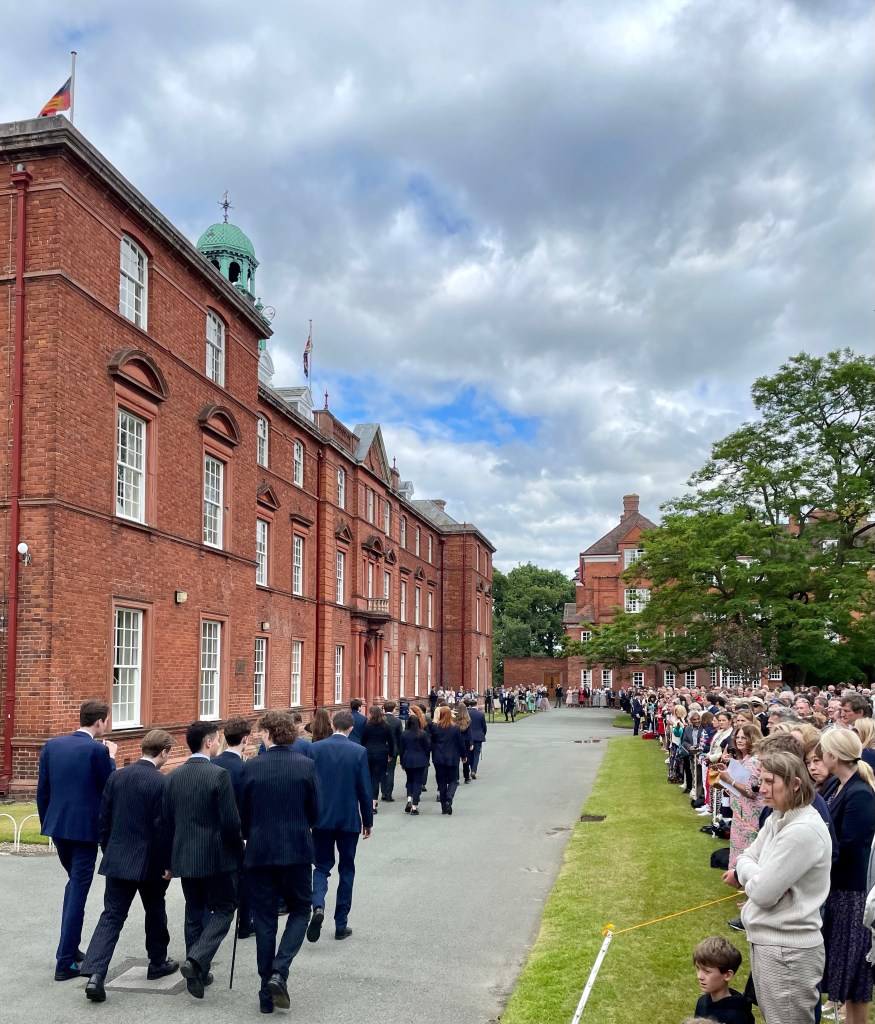
This is a question that the Senior Deputy Head may ask themselves as the meticulous hours of planning add a further metaphorical crease-line to their nobly furrowed brow.  It is a major piece of choreography to manage successfully.  And an investment of around 100,000 minutes of collective time. (Multiply the time taken to get ready, lined up, loaded on the staging, photographed, safely down and back into lessons by the number of pupils and teaching staff in the school).  All those hours to prepare and yet, as was the case in our recent whole school photo, it is all over in just over an hour.

Why do we do it?  Well, we do it because it’s important.  And curiously uplifting!


It’s important to capture a moment in communal time.  Schools are places of belonging.  A whole school photo is one of those most tangible expressions of collective belonging on the fullest scale.  Team photos, house photos – these too capture vital parts of the whole.  But, the whole school photo is every pupil and every teacher.

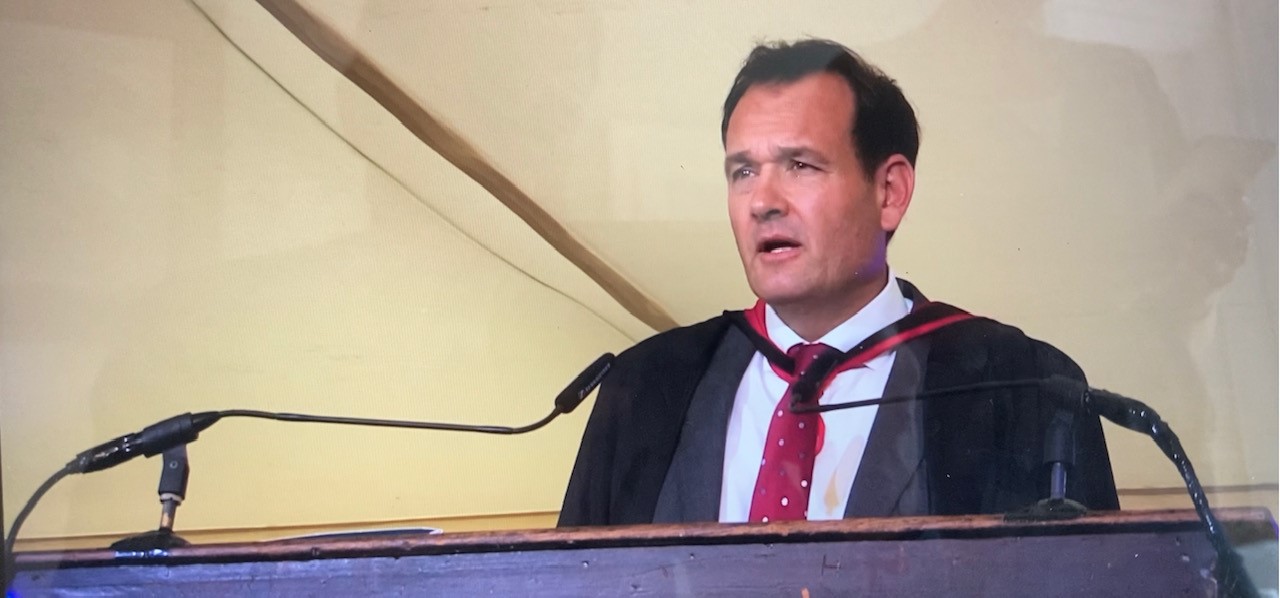
Marketing teams rightly get twinkly-eyed at the opportunity to send up the drone to follow this rare gathering from above.  Time-lapse footage fascinatingly accelerates the intricate process of loading up the multiple tiers of the staging.  Colleagues parade like peahens and peacocks in magnificent flowing gowns and technicolour hoods. 

It’s a barometer of school culture.  Can you get 850 teenagers to stand cheerfully, obediently in a confined and unusual formation; can the photographers capture the moment when all 1000 humans are at their personal bests.  Can we ensure every single name is rightly attached to every single individual pupil and colleague involved?  Can we get everyone in?  Can we get everyone up, set and down – and how long will it take? Last time round we managed to complete the whole process in 59 minutes – this time, with a few more pupils on the roll, we crept just over the hour mark.


And a key question for a Head… Do I take a selfie with the whole school massed behind me?  Some do; some don’t!  It’s certainly an opportunity…  Fair play to those more extrovertive Heads who have the necessary ‘riz’, the hutzpah, to take a selfie in front of the assembled whole school photo.  For me, it doesn’t quite feel like a moment for one individual to stand out in front of the rest.  Maybe I lack the gumption to take that shot.  And, admittedly, the Head does get the centre spot – there is some expression of hierarchy.  But, above all, it’s a total community moment.  It’s about us.  So, selfie opportunity declined on this occasion.  Maybe next time?

Parentally, a whole school photo is a lovely thing to have – to keep – to revisit.  For the family.  As a Shrewsbury parent myself, I can see the special smiling speck in the throng of Salopians that is my own.  It something that, years on, will be looked at by children, friends, future partners, grandchildren and on through the generations.  It is a formal record of school days – the formative years of an individual life. 


Institutionally, the whole school photo is an archival snapshot.  Set side by side, tracking back through the decades, you can see the shape of the school.  You can trace trends in hairstyles – the ignoble rise of the mullet in the 2020s; the shaggy locks of the 1970s; the apparently mandatory whiskers of the teaching staff in the 1860s.  In our case, school photos record the journey from all boys’ school; to co-educational in the Sixth Form (2008), to fully coeducational in 2015; to being over 40% girls in 2025.  In this way, the whole school photo helps chart the progress and nature of the school.

——-

When I was at junior school, in the late 1970s and early 1980s, the whole school photo was a wholly different creature.  In those days of black and white, the camera would roll slowly from left to right to complete the image.  In those tensely elongated seconds, we all held still.  But, before the dawn of photo shop and instant capture, many things were possible.  The gust of wind raising a fringe comically aloft.  The eyes momentarily shut at the crucial instant.  The joker who looked sideways, upwards, or crossed eyes and ejected a tongue.  The prankster whose fingers made ears for the person in front. 

And the ultimate caper – if you were reckless and bold enough – and situated on the far left of the view…   To detach yourself after the camera had swept past your section, run around the back of the tiered block and appear, magnificently duplicated, on the right hand side of the image.  A friend of mine achieved this feat in 1983.  He enjoyed a hostile reception from the Headmaster and a week at home for his adventures.  And immortality.


Nowadays, of course, such exploits are not possible.  And, as has been our experience at Shrewsbury, folk rather enjoy getting it right together.  If, in the unlikely event that any minor moment of madness occurs, photo-shop will come to the rescue.  Knowing this, we all tend to behave ourselves!  And anyway, it’s a fundamentally innocent, joyful and good thing to get together and have a photo.  Why disrupt something so simple, so carefully organised?

When I was Deputy Head at Bedales School, I had the biennial pleasure of organising the school photo.  Bedales was the first co-educational boarding school.  As a progressive community, with no uniform and famous for individual self-expression, this was not an easy gig.  However, we struck a deal.  If the ‘formal photo’ was done well and in good order, we then reconvened in half an hour for an ‘informal photo’.  In that 30 minute gap, remarkable creative transformations occurred.  The Bedales informal photo [2010] sits on my wall at home.  Someone brought a horse; dogs, cats, babies (including my own youngest) were assembled, along with banners, fancy dress and personal totems of various kinds. 

The ‘formal’ one, which was a model of relative order, is not on my wall – I do have it somewhere.  However, the immaculate order of the Cheltenham Ladies’ College 150th anniversary photo [2003] sits proudly alongside the St Peter’s School 3-18 foundation photo of 2018.  I have a box of other school photos in the loft.  They sit alongside photos from the school days my father and mother, now no longer here, but their youthful selves look out hopefully at me.  You never throw school photos away, even if theirs is simply to sit quietly in the cellar, in a neat roll, waiting for their time.

I’ve said much about the whole school photo – but, in fact, I need to correct myself.  Whilst a photo of all the pupils and all the teachers is indeed whole in lots of ways, a truly whole school picture would include the hundreds of colleagues who work in support of the school day in, day out.  A true whole school picture would include Governors.  Arguably, it would include current parents, grandparents, guardians, carers, Old Salopians – the Shrewsbury Family of Schools.  All these people are part of the whole school in its fullest sense.

 In 2027, we will be 475 years old.  The perfect opportunity for an even more whole school photo.  Time to get planning… 

However, for the moment, it was challenging enough to get 1000 people in one space on Central, in golden September sunshine, for our ‘whole’ school photo 2025.  And the result is a lovely image of the school at the start of an academic year. 

To be stood together, all facing the same way, looking towards the tiny eye of the camera lens, smiling; a thousand souls, a thousand minds with individual thoughts, hopes and fears; a thousand bodies neatly packed together, dressed in our finest threads of belonging; chatting, joking, clapping, then falling silent for a charged moment of still and shared attention. 

It always gets me – the school photo.  I feel a surge of wellbeing; togetherness; a potent pang of love and hope for all the individuals and all the people to whom they are important. 

A deep sense of what it means to be seen – and to belong.

Applause at the Shrewsbury School Whole School Photo 2025

Dear Hope

12 publishers rejected her manuscript before Bloomsbury grudgingly took a gamble on a book about a young magician.  Its author was a single mother living on welfare support.   ‘Harry Potter and the Philosopher’s Stone’ changed her life – and enhanced the lives of millions of readers. 

Hollywood legend Morgan Freeman was 50 when he became an icon of the silver screen.  Before that he worked in the US Air Force; as a children’s entertainer and as a stage actor.  He won an Oscar at the age of 67.

The world record for the most driving tests ever taken before passing is held by a lady in South Korea.  She passed at the age of 69.  It was her 960th attempt.  Her motivation?  To better protect her family business selling vegetables – and a desire to drive her grandchildren to the zoo.

The thing that unites these three people – and thousands upon thousands of others who have achieved their dreams –  is that they had goals.  And they had hope.


The word hope might be mistaken for naïve optimism, for blind faith, or for simply “crossing our fingers” and waiting for things to improve.   But true hope is a dynamic, courageous and transformative force that fuels action, sustains resilience and gives meaning to struggle.

In the words of the American writer, Rebecca Solnit:

Hope is not a lottery ticket you can sit on the sofa and clutch, feeling lucky. It is an axe you break down doors with in an emergency.”


In this part of the world, we are fortunate to enjoy incredible opportunities for which we should be daily grateful.  Equally, however privileged we are, life is unpredictable.

We each face setbacks, losses, disappointments.  Without hope, these moments can feel final.  But hope reframes them—not as endings, but as chapters in a larger story. 

As the great Revd Dr Martin Luther King once observed:  “We must accept finite disappointment, but never lose infinite hope.”  King’s words are a masterclass in emotional strength. Disappointment is real and a part of life. But hope reminds us that pain is temporary and failure is fuel.   As I said to the School during last Wednesday’s assembly, failure is a teacher, not an undertaker.  Hope doesn’t erase difficulty — but it can transform it.  It gives direction to our efforts and dignity to our failures. It’s the compass that keeps us moving, even when the path is unclear.

As an Arsenal fan, I hope that we win the Premier League this season.  Finally.  I can action this hope by supporting the team.  However, there are limits to hope.  It should not become delusional.  My childhood hope that I score the winner for the Gunners in the FA Cup Final is unlikely to come true.  There’s no point fuelling that one.  However, I could, for example, campaign for professional football to share more of its wealth with good causes. 

The great campaigners in history, have been willing to ‘be the change they wanted to see in the world’.  Malala, Ghandhi, Martin Luther King.   The people who make change happen are endlessly hopeful. 


The enemies of hopefulness are despair and cynicism. 

Teddy Roosevelt, who served as the 26th president of the US, cautioned against the “cheap temptation” to be cynical.  “The poorest way to face life is to face it with a sneer”. 

We don’t really do sneering at Shrewsbury, I’m glad to say!   We are participators in ‘serious fun’.  We reflect on what went well; we consider how best to improve.  We do not retreat to the sidelines, criticising. 

In one of the most stirring pieces of writing, Roosevelt urges hope and action, over cynicism and despair:

“It is not the critic who counts; not the man who points out how the strong man stumbles, or where the doer of deeds could have done them better. The credit belongs to the man who is actually in the arena, whose face is marred by dust and sweat and blood; who strives valiantly; who errs, who comes short again and again, because there is no effort without error and shortcoming; but who does actually strive to do the deeds; who knows great enthusiasms, the great devotions; who spends himself in a worthy cause; who at the best knows in the end the triumph of high achievement, and who at the worst, if he fails, at least fails while daring greatly, so that his place shall never be with those cold and timid souls who neither know victory nor defeat…”

Powerful stuff indeed.


In her excellent book, How to Build a Girl, the marvellous Caitlin Moran also writes against the temptation to recline into lazy cynicism:

“When cynicism becomes the default language, playfulness and invention become impossible. Cynicism scours through a culture like bleach, wiping out millions of small, seedling ideas. Cynicism means your automatic answer becomes “No.” Cynicism means you presume everything will end in disappointment.

And this is, ultimately, why anyone becomes cynical. Because they are scared of disappointment. Because they are scared someone will take advantage of them. Because they are fearful their innocence will be used against them — that when they run around gleefully trying to cram the whole world in their mouth, someone will try to poison them.”

We do have to be savvy; street-wise. Not every individual is trustworthy; not every organisation is benevolent.  But, the default must surely remain with hopeful optimism.

The great Maya Angelou once said: “There is nothing quite so tragic as a young cynic”.  Agreed.  This place, this school, is the least cynical place I’ve ever worked. On the whole, I think this is because our School encourages a constructive, hopeful approach to life.  That it is better to get stuck in, than to stand on the side-lines and comment; that you get more out if you put more in.  That it is the creators, the optimists, the constructors, who make a difference.  That nobody ever put up a monument to a critic.


There is nothing more hopeful than youth.  And no time more hopeful than the beginning of a new chapter of our lives.

Yet, our children are growing up in world of exceptional complexity.  The online world is full of possibility – for good, for learning, for connection.  Equally, the negative influences and gloom-mongers can spread fear and anxiety.  We need to protect and equip the young to manage this mixture of messages.  To tell fact from spin; to interpret the world with critical intelligence; to live with optimism that is grounded in pragmatism.  How do I live a good and full life?  Hope is the fuel.  Virtues, the road map.

In a world that sometimes feels chaotic, divided or uncertain, hope is not a luxury—it is a necessity. It is the quality that keeps us grounded; the energy that keeps us moving and the light that keeps us believing – in ourselves and in others.

The great Emily Dickinson offers a memorable avian image for hope:

“Hope is the thing with feathers that perches in the soul—and sings the tune without the words—and never stops at all.”

Hope is persistent. It sings. It endures even in storms.  And it never stops.

However fortunate we are, life is not always straight forward.  Certainly, we are incredibly lucky in this particular place to be surrounded by opportunity; by good people who share a common purpose.  That said, not every day is a cake-walk.  We grow through challenge; we will each have to face down adversity at different stages of our lives:  “we know that suffering produces perseverance; perseverance, character; and character, hope.” [1 Peter]

The beginning of a senior school journey, is one of the most wonderfully hopeful times in life. Whilst we don’t want to wrap our children in cotton wool, we do want to nurture and grow them towards independent life in a world of great complexity and opportunity.  School is both a sanctuary and a training ground.  

As we cultivate the Salopian virtues of wisdom, courage and kindness; integrity; self-mastery and spirit – it is my fervent hope that the distinctive energy and participative optimism of the Salopian community will inspire them to find their path and achieve their personal bests.  I celebrate the power of hope—not as a passive feeling, but as a healthy mindset that leads to action.

Here’s to positive engagement; to thinking for ourselves.  Here’s to resilience and bouncebackability; to making change happen from the inside – for the good of ourselves and the good of others. 

Here’s to hope.

Because hope is contagious.  Because with hope, almost anything is possible—even if it takes 960 attempts.

Dear India

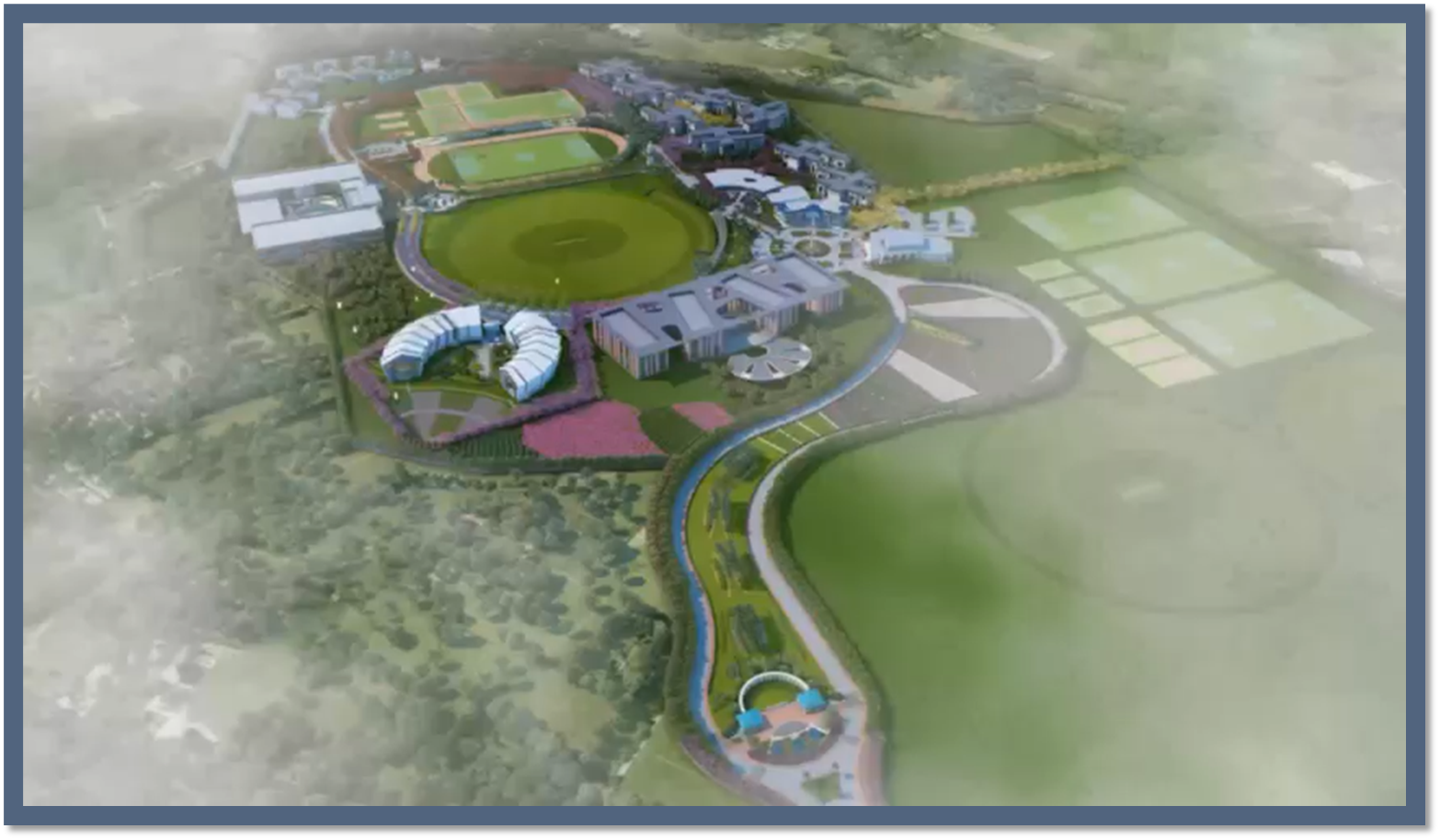
How exciting to get to know you – just a little – with so much more to learn about your deep culture, your long history, your bright and exciting future. And to be a small part of that future as we move towards the opening of Shrewsbury International School India in August 2025. A co-educational, full boarding school in Madhya Pradesh, in Bhopal, the city of lakes, right in the heart of India.

My first visit to India in February 2025 coincided with the birthday of Charles Darwin and the 473rd anniversary of the founding of Shrewsbury School by Royal Charter in 1552. Shrewsbury International India has embraced the long heritage of Shrewsbury School. Our partners, the Jagran Social Welfare Society, have great expertise in opening schools and universities in India. Our shared educational values and close alignment provide a wonderful foundation for the adventure ahead.

During my visit, I enjoyed the legendary warmth of hospitality – as well as the numerous culinary delights on offer. Most importantly, it was abundantly clear that India is a nation that loves and values education. Shrewsbury International School India will bring Salopian whole person education, our unique Floreat model, and day-to-day ‘serious fun’ to India.

With a population of almost 1.5 billion, an entrepreneurial spirit, combined with a profound and vibrant culture, India is a nation on the move. We are excited to be part of this journey of growth.

Set in a beautiful 150 acre site, world class facilities will provide inspiration for pupils and staff. Over 500,000 trees have been planted. The ambition and commitment to excellence of our partners is astonishing. This will be a wonderful environment in which to live and learn.

As the days tick by towards the formal opening in August 2025, we wish all our friends in India well as the journey begins.

Floreat!

Dear Football

This is a love letter. To the ‘Beautiful Game’, as they call you.

We’re certainly in love with you at Shrewsbury.  Salopians had a hand in drafting the original rules of the game.  Blackburn Rovers took their colours from Shrewsbury School. 

We’re in a long-term relationship: it’s a faithful marriage that is also a love affair.


History records that only four schools have won both the English Schools’ U18 FA Cup and the Independent Schools FA Cup.  Shrewsbury is one of them.  Having reached the final of the ESFA in 2023, our boys went one better the following year, winning the Cup in a thrilling final at the Bet365 stadium (home of Championship side Stoke City) in May 2024.

Football – like all competitive sport – feeds on hope.  It brings so many of life’s emotions into its rectangle of grass.  At its best, it creates meaning, belonging, joy. Moments of shared disappointment and despair too. Controversy. Disputed decisions. VAR…

The exquisite simplicity of the scoring system amplifies this commotion of emotion.


Defeat stings. The last minute goal. The dip in form. The injury list. The dodgy signing. The clean sheet sullied. The open goal missed. The penalty fluffed.

And the penalty saved!

Because always, it seems, the wellspring of hope is refreshed. The love flows again.

Moments of individual brilliance. The training ground move that clicks. The team goal. The giant-killing. The comeback. The eerie silence, all eyes fixed, breath held, as ball heads toward net. The 98th minute winner. The ecstasy!


At its worst, of course, it can attract jingoism, tribalism, ugliness, violence.  Dissent and disagreement. Disrespect for authority. There are times when we might wish for more ‘rugby-style’ respect for the ref. There are times when we might feel the game is going to the dogs. That money, TV rights, and all the trappings of fame, the daily media circus, have made the game lose its way.

Football is a results business, as the coaches, managers and pundits often say. The ability to grind out wins may trump playing the game beautifully. But, it is the way we play that really matters – surely…? (Tell that to Shrewsbury Town, currently rooted to the foot of the League 1 table [12 December 2024] with 11 points from 18 games….).


All the more significant then, that at Shrewsbury School, it is not so much the results that we celebrate – though there is much to cheer in both our girls’ and boys’ programme.

Rather, and above all, it is the culture on and off the pitch that makes me rejoice.  The values upheld by the coaching staff.  The loyal but respectful support of the crowd.  The commitment to passionate but fair play.  The attitude to training. 

The beautiful fact is that everyone, at whatever level, boy or girl, junior or senior, can always improve.

And so, we stay in love with the beautiful game.

Shrewsbury School crowned ESFA U18 National Champions | News | Shrewsbury School

Afternote:

All games are beautiful to me! See Dear Cricket. And others to follow…

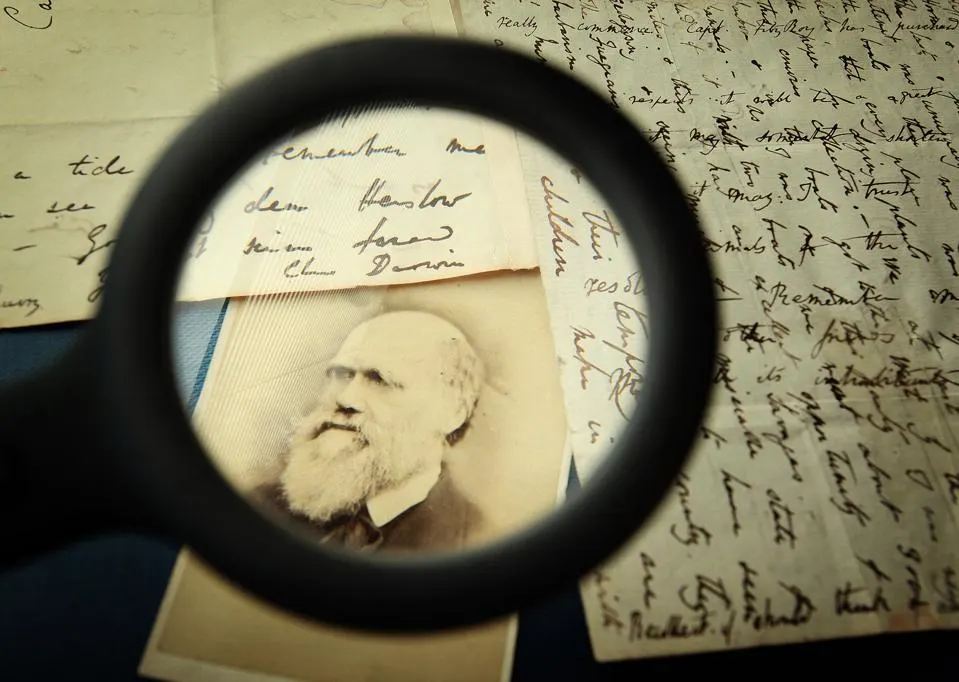
Dear Charles – on the origin of ‘On the Origin…’

On the 166th anniversary (24 November 2025) of the publication of the world’s most famous science book (what are the other serious rivals for this title?), a few short reflections on the work that made your name a global badge of courageous learning.

Firstly, the title: it’s something of a mouthful.

‘On the Origin of Species by Means of Natural Selection, or the Preservation of Favoured Races in the Struggle for Life’. I think I read that you (and your publisher, John Murray) toyed with at least seven different options. Nowadays, many will refer to your book as ‘the origin of species’. Not many will have read its title fully – never mind its contents. And yet, the ideas created new worlds of thinking.

Secondly: the ‘great delay’.
Famously, you waited 20 years to publish. Two decades. Was this a matter of deliberation? ‘Should I? Shouldn’t I?’ Was it a matter of fear? Or was it a scholarly commitment to getting it right? Commenting on the effect of this lengthy keeping under wraps, you said you didn’t regret holding it back. Indeed, that it was all the better for the waiting.
In these times of instant, unfiltered communication, the astonishing length of this wait strikes me yet harder. And the risk too, surely – as others were also onto these ideas – Alfred Russell Wallace, for example. Others could have eclipsed you, Charles. How did you hold onto something so explosive for so long?!

Thirdly: the courage.

This surely relates to the delay. You knew that what you were proposing was seismic. You knew that when it was finally released, it would catapult you into unquantifiable territory. This third thing then, is a thing of courage. To travel, to gather evidence, to consider and ruminate, and write new worlds. And to have the courage to publish.

Fourthly: your own origins. At Shrewsbury School.

Although it is said that you found your school days at Shrewsbury hard going (too much Latin, not enough free thinking), I like to imagine that you would relish the contemporary whole person education on offer today. You would love the ‘serious fun’, the dialogue, the championing of the individual. As it was, the educational grounding you were given provided the boundaries and limits against which you ultimately pushed. Perhaps the relative confinement of formal education back then was essential to your origins as a thinker?

Storms followed you. Billions of words have been written and said about your masterwork. I add these tiny droplets to this vast ocean. 166 years on, I celebrate the ground-breaking power of the 20 year-delayed 150,000 words that set sail under your epic title:  ‘On the Origin of Species by Means of Natural Selection, or the Preservation of Favoured Races in the Struggle for Life’.

166 years on, children from all around the world can come to Shrewsbury School to find our more – and visit our unique collection of Darwin-related items. Including first editions of your most famous work…


2025 Edition

Dear Hand-Written Thing

When I was at school, one of the things I did in (rare) dull moments was to practise my signature. As a teenager, I tried all kinds of floral swirls and cryptic variations of my initials.  I quietly admired the signatures of famous people. (Kurt Vonnegut’s was my favourite: part-signature, part self-portrait). In the end, I got tired of pretending to be someone else and just wrote my name in my own handwriting.

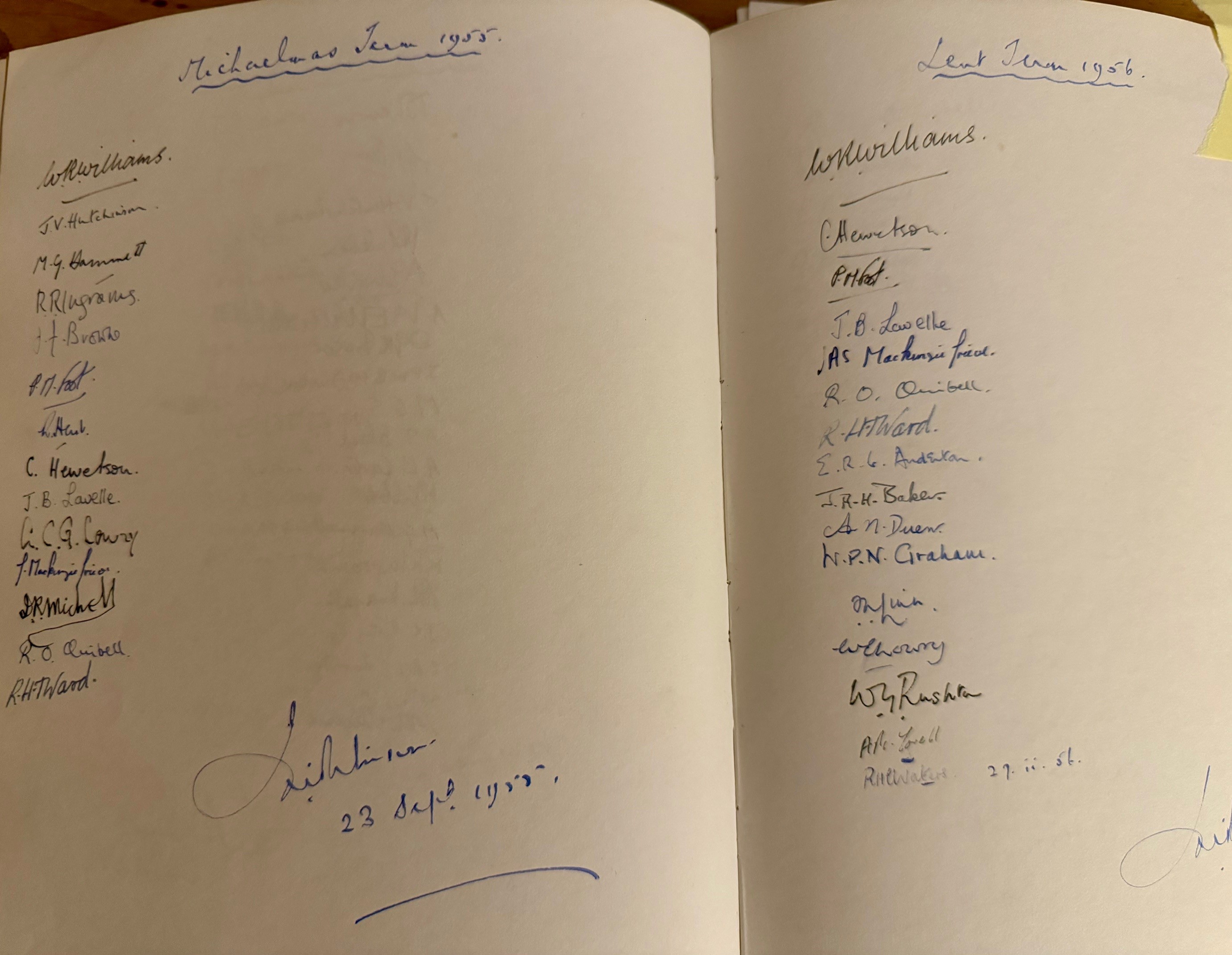
Each year, our School Prefects – or Praepostors as we call them – sign their names in the Praepostor book. The most recent volume has signatures going all the way back to 1913. Their chief responsibilities are to ‘set the tone of the School’ and look after the younger pupils. Leafing through the book, we can see the handwriting of generations of Salopian leaders. And indeed 12 Headmasters.

On the pages for Michaelmas 1955 and Lent 1956, if we look closely, we can see the names of three of the four founders of the long-running satirical magazine ‘Private Eye‘, who were each pupils at Shrewsbury.

Can you spot the hand-writing of Richard Ingrams, Paul Foot and Willy Rushton?

Handwritten letter-writing is not so much of a thing these days. Email, vlogs, texts and all manner of digital communications prevail – and wonderful ideas and messages can be shared in these ways (as well as the less good stuff).

I’m all in favour of communication in all forms. However, there is something a bit special about a hand-written letter. Perhaps even more so nowadays because of its rarity. If we really want to convey something special, we write it down by hand – because hand-writing is a powerfully personal thing.

As Lewis Carroll observed: “The proper definition of a man [or woman] is an animal that writes letters“.

Still true?


INSERT HANDWRITTEN SIGNATURE ^^^ 🙂

Dear Mobile

Featured

I know you like text. So here’s a letter.

This is what I wrote to the Editor of The Times (20 February 2024) on the sudden appearance of guidance from the Department for Education (DfE) on banning mobile phones in schools (19 February 2024).

In our full seven day boarding school community at Shrewsbury, we require mobile phones to be “off and away” during the school day. We want our pupils to be fully present, with their eyes up. There is a special value in learning and living together, fully connected, in real time. That’s why we carefully control and limit the use of mobiles.

Pupils have limited access in specified areas at certain times of the day. Younger pupils hand their phones in overnight to ensure a good night’s sleep. Older pupils are increasingly trusted to manage the use of their devices, as they will need to in the adult world. However, we keep this under constant review, with input from pupils, parents and staff. All policies need to adapt to the times.

Whether in the hands of a child or an adult, these devices are designed with an inbuilt siren song. We all know the seductive power of these sleek addiction machines. We all know they can lead us into time-warps and labyrinths. Also, to enlightenment and connection.

If we use these devices intelligently, we can harness their astonishing power to gather and process information. We should not fear the deliberate and mindful use of mobile devices in our teaching and learning and beyond: for AI in the classroom; for out of lesson consolidation; for research and extension work; for staying in touch; for buying bus fares and calling home. In these ways, and many more besides, mobiles are good.

Equally, we need to do all we can to protect our children. We have a duty to educate them on how to filter and read influences. And we need more effective measures to safeguard children from exposure to harmful content.

Photo by Terje Sollie on Pexels.com

Banning mobiles may work in some settings – day schools for example: such measures can provide temporary sanctuary, perhaps a sense of relief. But our youngsters will have to emerge from any exclusion zones we create. Banning alone does little to educate on sensible use. Nor does it help with what happens in holidays or outside the control of the formal school day. Perhaps, then, a better approach is to limit, direct, control and educate? And put resources into more effective cyber-protection.


The adults may think they have the answers. But, have we asked the children? Have we empowered the young to come up with solutions? In September 2025, we began a full consultation process to seek pupil, parent and staff views

Last year, senior students at Shrewsbury delivered a whole school session on how to make mindful, safer use of mobiles. We can certainly make policy and enforce controls. But, we will have an even greater chance of managing mobiles successfully in schools (and beyond) if we listen to the pupils themselves and channel the power of positive peer influence.


So, dear mobile. It turns out that you’re not banned after all. Not here anyway, in our 24/7 boarding and day community. But, we do need to consider how best to manage you. We need to keep you ‘off and away’ when we are learning. We don’t want to see you in use around the site. We are individually and collectively responsible for you. Whilst you have many great qualities, you do need to be kept under control.

Like a dog-walker entering a field of sheep, we’ll be keeping you on a short lead. We cannot allow you to run wild or send us astray. We cannot let you lead us into the company of wolves.

Dear Mobile, we must do all we can to be the master of you – not you of us.


Updated 17 October 2025

Mobile phones in schools – February 2024 (publishing.service.gov.uk)

Dear Kek

Featured

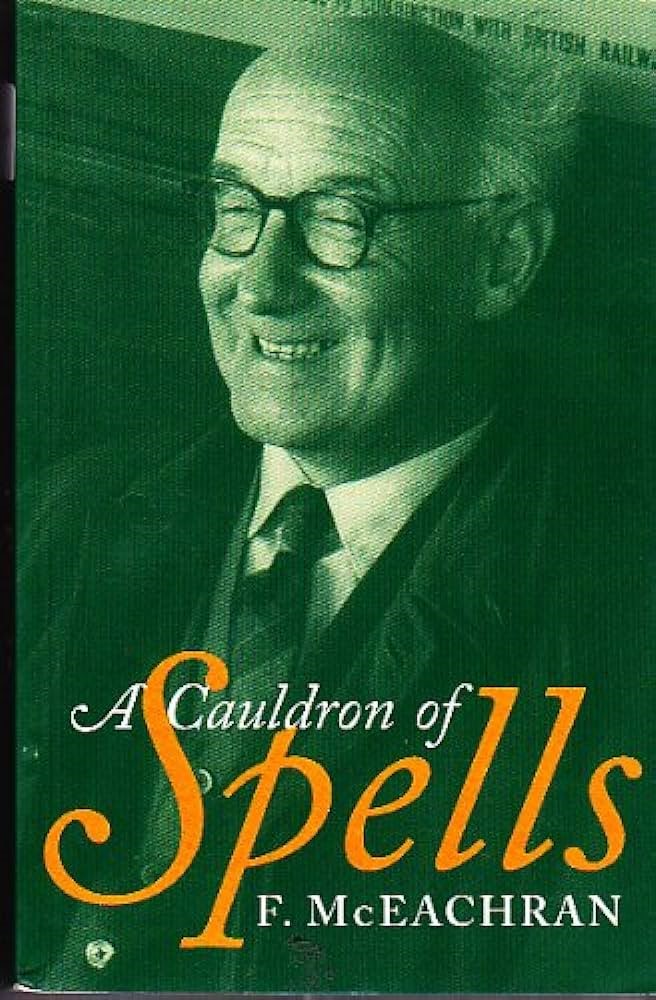
A unique highlight of the Salopian cultural calendar is the McEachran Prize. This unashamedly scholarly yet playful competition is named after iconic Shrewsbury teacher Frank McEachran – or ‘Kek’ as he was known to all.

Kek taught at Shrewsbury from 1935 to 1976. Deeply eccentric – in all the right ways – Kek invented the idea of teaching from what he called ‘Spells’. Pupils were invited to choose short extracts of poetry or prose and commit them to memory. Standing on a chair, the youngster would recite the Spell, and then spirited and scholarly discussion would follow.


This year’s 20 Spells covered authors as diverse as WB Yeats, Jane Austen, Bob Dylan, Karl Marx, Ocean Vuong, Charlotte Bronte, Echiro Oda, Seneca, George Eliot, Oscar Wilde – and the screenplay of the Barbie movie. Contestants from all five year groups read their Spell – then spoke for four minutes on whatever thoughts and ideas the Spell provoked for them.

The rapt audience was bewitched by the heady mix of intellective mischief and learned commentary. In a sound-bite world, where attention spans have shrunk to a matter of seconds, the exercise of close listening for 20 chunks of four minutes is a solid effort. The reward for the audience was a host of mini-epiphanies and intellectual satori.

Those students of Kek who committed Spells to memory decades ago can very often remember and recite them to this day. What truer testimony could there be to the efficacy of this one-off methodology? The inspiration, allegedly, for Alan Bennett’s The History Boys, Kek taught notable Old Salopians such as Sir Michael Palin, Richard Ingrams and Paul Foot (the creators of Private Eye).


Not one to follow a syllabus, Kek was a maverick whose like is probably no longer at large on the contemporary educational landscape. The teaching profession is certainly more… well, professional now. But, anything that triggers the sparkle of unfettered academic play is surely a great thing?

As the 2024 edition of the McEachran Prize unfolded at Shrewsbury School, it was easy to imagine the spirit of Kek smiling down – twinkly-eyed and approving – on this evening of free-range ‘serious fun’ of a distinctively Salopian kind.

Essays https://leowinkley.com/essays/

Dear Dr Gee

Featured

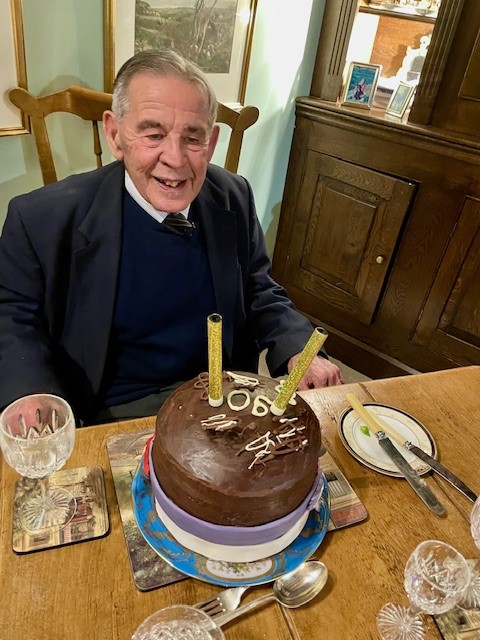
Shrewsbury legend Dr David Gee turned 90 on 12th January 2024.

A walking almanac of all things Salopian, Dr Gee has seen Shrewsbury School change and grow over seven decades. He has observed the various efforts of eight Headmasters. Our ‘Everthere’, David has the long view on Shrewsbury. His optimism for the future is infectious.

Sitting next to David at his birthday dinner, I had the delight of listening to more stories from his treasure trove of Salopian tales. He told me of the time he was summoned to the study of his first Headmaster, Jack Peterson, as a trainee teacher in 1958. “Can I give you a word of advice, Gee?”, asked Peterson. “Please do”, replied the young Gee, politely. “Never, ever become a Headmaster”, said Peterson, wearily. David would have made a wonderful Headmaster but he did heed Peterson’s advice.

Dr Gee taught at Shrewsbury between 1958 and 2012 during which time he was Housemaster of both Dayboys Hall and Severn Hill and also Head of the History and Religious Studies Faculties. He remains active in School life as custodian of the School’s history. He is often to be seen taking a turn round Top Common. And at all the big moments in the school year, he’ll be there, somewhere.

The newly nonagenarian Gee is pictured here – with (one of) his birthday cake(s).

A man of phenomenal learning – he was a Major Scholar at Winchester College – with the memory of the most venerable of elephants, David is one of the great storytellers. With a twinkle in the eye, and just a hint mischief in his voice, he will roll out tale after Salopian tale.

Although I have only overlapped with David for a mere six years of his epic stint in Shrewsbury colours, he has been kind and encouraging from the start. Gentle wisdom flows from his choice of story. He would never be so crass as to offer advice – though it is tempting to seek it. A man of exceptional energy, both intellectual and physical, I remember encountering him on the Stiperstones, more than 20 kilometres into our whole school sponsored walk in 2021. He was 87 at the time.

Here he is sitting alongside the extraordinary and wonderful Poppy Anderson, widow of the late great Sir Eric Anderson (Shrewsbury Headmaster, 1975-1980; Eton College Headmaster, 1980-1994):


Every school, every institution, anything with deep heritage, needs its torchbearer. David is ours.


Happy 90th Birthday Dr Gee.

‘Thank you’ doesn’t even begin to cover it. But thank you.

For being our Everthere.

Dear Solon The Lawgiver

Featured

When I first heard of you, I thought you were from Star Trek or Game of Thrones. How wrong I was!

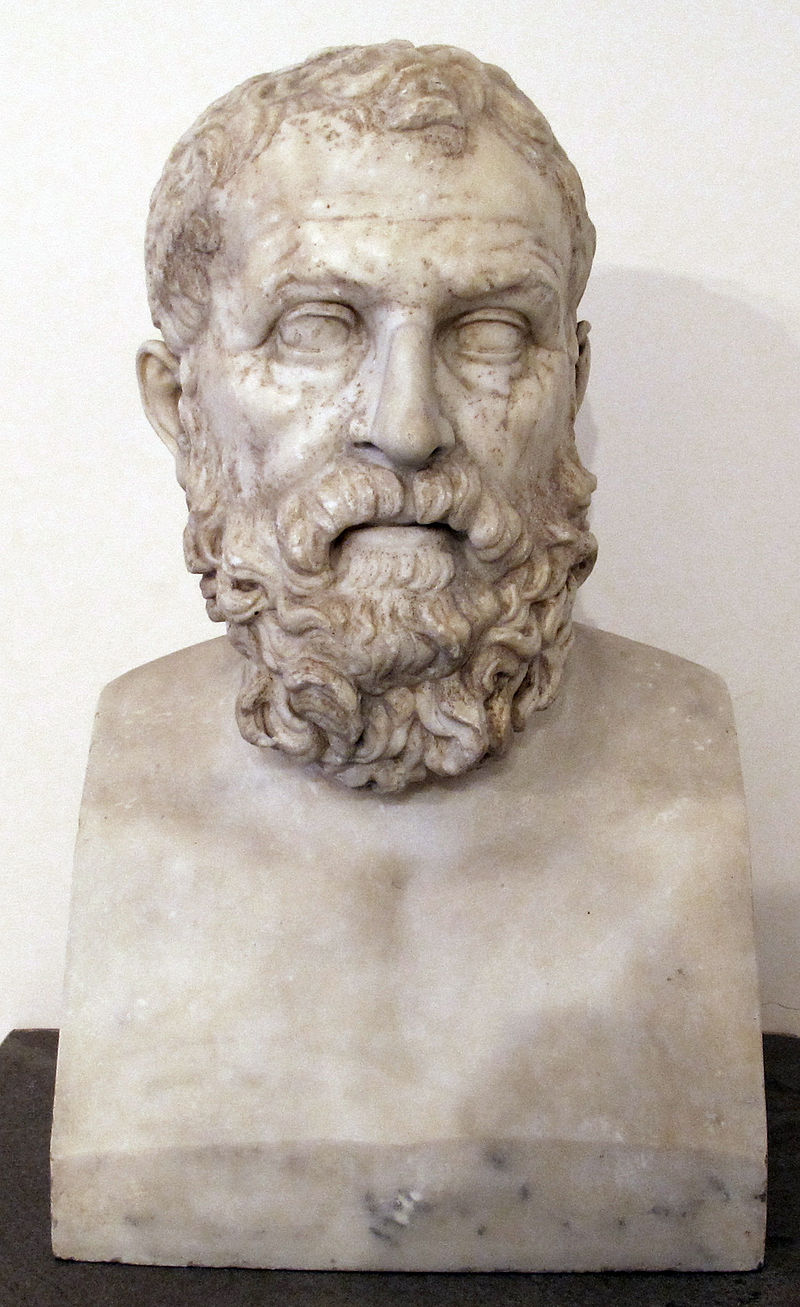
You were one of the seven great sages of ancient Greece. A real human being who lived and breathed – and whose name has endured through the ages. More than 2,500 years on, your leadership legacy is rattling in my modern mind. You sowed the seeds of democracy; of giving power to the people; of equality before the law. You enabled social mobility.

Back in 594 BCE, Athens was a city state on the verge of collapse. Athens was polarised between the wealthy high-born few and the low-born many in their debt. The laws of the infamous Draco prevailed. He who made Draconian laws – capital punishment for pretty much everything from murder to petty theft. The few lived well; the many lived short lives of privation and worse.

Then came Solon The Lawgiver. Called to power for a year – chosen because of your wisdom; your poetic prowess; your noble birth balanced with real-world skills and feeling for your fellow man.

You made laws: dismantling the grim and bloody regime of Draco. You sought to reconcile the elite with the common people. You cancelled all debt. No longer could the impoverished be sold into slavery to extract payment of their dues. You opened the assembly to all – well, all but women and slaves… You took what were radical steps towards making all equal before the law.

Looking back through the ages, from my tiny point in a future that not even your giant mind could imagine, your leadership is inspiring. Your sense of fairness. Your willingness to remake the world around you. To include and empower – or at least to raise up.


Leadership Learnings From Solon

Two things particularly strike me about your leadership, dear Solon.

Firstly, unlike the tyrants before and after you, it was clear that you could sense the corrupting power of… power. You told your city that you would rule for one year and one year only. You would then disappear for 10. Rather than being drawn in by the trappings of power, you removed yourself.

Secondly, you recognised the fundamental inevitability of failure in the situation of your political leadership. You knew that you could not win; but, equally, you knew that you could improve things. Centuries before Enoch Powell’s famous pronouncement about the unavoidable fate of all political careers, you knew that truth. Even in great success, even when you enjoyed apparently universal admiration as a ruler, you knew that you would be criticised. For not doing enough to empower the poor; for doing too much to limit the wealthy. As a reconciler, you would please and disappoint both and all.

So, it is said, that you remarked: “Everyone hates me: I have succeeded!”. As a reconciler, perhaps this was the inevitable truth that only your wisdom could immediately grasp. Until, perhaps, Lydgate’s famous line was fed to Abraham Lincoln. “You can please some of the people, all of the time; you can please all of the people some of the time; but you can’t please all of the people all of the time.“.

You were asked:

“Did you give the people the best laws?”.

You replied:

“I gave the people the best laws they would receive.”


They didn’t hate you, Solon. They admired you. And they needed your skill for reconciliation; your practical wisdom.

What price such wisdom now?


If you’d like to find our more about Solon The Lawgiver, have a listen to this:

https://www.bbc.co.uk/programmes/m001k7wb

Dear Excuse

I’ve been a teacher for almost 30 years.  I’ve heard a few excuses over those years.  Indeed, the world of education has produced the most famous excuse of all time.  “The dog ate my homework”. 

My favourite pupil excuse was when an A level Philosophy student of mine told me that they had been unable to complete their written assignment because they got had their toe stuck in the bath-tap the night before. Another asked for a deadline extension because their pet iguana had recently experienced a nervous breakdown. More recently, I recall an interview candidate who explained that they were late arriving because they couldn’t find their car. Not an excuse that inspired much confidence.

Traffic wardens hear more excuses than most as people offer the reasons why they should not be given a parking ticket. I know I’ve been guilty of this kind of excuse-making, amongst plentiful others, to my shame. There are many more examples in an amusing little book called called the Complete Excuses Handbook. I was going to bring it into school to read some examples out – but unfortunately my dog ate it.


It’s terribly easy to slide into the habit of excuse-making. For our own short-comings, those of our family, sports team or nation. In times when many are quick with hair-trigger judgments and blame-culture, we may even be encouraging a climate in which having an excuse up your sleeve is a wise precaution. However tempting it may be to retreat into excuse-making, it is a bad habit. As teachers – indeed as parents – we need to challenge and discourage a culture of excuses.

It’s important to distinguish between a reason and an excuse.

… A reason is a rational explanation for why something is the way it is; or a justification for why a specific action or decision was taken.  It involves providing evidence and facts to back up the justification.

… An excuse is something we use to deflect blame – by shifting the focus away from the action or decision and onto external factors such as circumstances, other people, or events.

Essentially, reasons become excuses when they are used to avoid responsibility.


When we shift the blame, we duck responsibility for a failure, and we also avoid the responsibility for learning from that failure. Excuses undermine trust and honesty between people. When we make excuses, we tend to convince ourselves that we could not have changed the outcome, and therefore have no need to adapt for the future. Failure becomes easier to accept in ourselves, and we never grow beyond our current state.

George Washington, the first US president said: “It is better to offer no excuse than a bad one”. Indeed, it is far better to tell the truth and face the consequences, than it is to damage trust or deceive oneself and others.

The ease with which we make excuses is a window into our character.


We have said that the most common reason for excuse-making – or the most common excuse for excuse-making – is the desire to dodge responsibility, to avoid blame and otherwise save face.  In this sense, it is an act of deception. 

The other kind of excuse is when we deceive ourselves.  Rather than facing up to the reality of a challenge or when we have fallen short, we rationalise the problem away. We invent a more comfortable illusion to avoid facing the truth. We may do this when we find tasks difficult and want to give up; or when we know what we are doing is not right.

Reverend Martin Luther King, Jr. wisely said: “It seems to be a fact of life that human beings cannot continue to do wrong without eventually reaching out for some rationalization to clothe their act”. Each of us will be able to think of excuses we have used to cover our tracks or explain away our habitual failings.

But my favourite line on the subject of excuses comes from Florence Nightingale.

An epitome of honest good work and courage; a person whose heroic devotion to duty in looking after the injured in the Crimean war has made her name synonymous with the caring profession of nursing.

In a letter to a friend, Florence Nightingale wrote very simply:

“I attribute my success to this – I never gave or took any excuse.”

Florence Nightingale

High performers – people who lead good and constructive lives – tend not to make excuses for themselves – or for others.  They have high standards.  And when they fall short, they look for reasons for the shortfall – and then search out ways put things right or mitigate them. 


At the end of the day, the week, the year, how great would it feel to be able to reflect back with honesty and integrity and say what Florence Nightingale said with such clarity? 

How would it feel to say: “I attribute my success to this: I did not invent excuses or blame others… I sought and accepted personal responsibility.  I did my best – and when it was not good enough – I looked honestly at the reasons. I asked for help and I worked hard to improve.”


So, Dear Excuse – beguilingly tempting though you are – I must continue to do my best to shut the door on you. 

Because, all the wise folk say that reward and fulfilment come most completely to those who train themselves not to make excuses.  

Dear Praepostor

Featured

Every year, a number of senior pupils at Shrewsbury take on a distinctive leadership role. They become Praepostors. Or Postors, for short.

A Praepostor is ‘one who is placed before’. Not placed ‘above’ but placed ‘before’ (or in front of) others. Their job is to serve the School.

Each Praepostor has her or his individual strengths and aptitudes; enthusiasms, weaknesses and quirks. Lead by the Heads of School and their Deputies, you work as a team to set the tone of the school and help things run smoothly.


You are the ambassadors, public speakers, listeners; the doers and makers; the movers and shapers. Custodians and change-makers. You are the organisers of lunch queues. You are doers.

You are listeners and watchers; the eyes and ears of the pupil body. You are a key channel of pupil voice in the School. You give of your time, your talent, your kindness to others; your concern for the best interests of the School.

Praepostors 2023-2024


We give you a waistcoat. We give you a tie and a pin. We give you a few privileges: you are allowed to ride a bicycle – a ‘time-expander’ – so you can get swiftly from one thing to the next. But most importantly, we give you an opportunity to give back to the School.

As you wrote your name in the book of Praepostors, you took your place in the living history of Shrewsbury School.


The volume you signed this year contains the signatures of your predecessors going backwards in time – term by term, year by year – to 1913. 110 years of Praepostors. One of this year’s signatories flipped back to 1955. And found the signature of his grandfather.

Their handwriting is all we know of their service to the School. Each signature is a personal pledge, an individual mark of commitment – and an honour. The Praepostors of yesteryear took lessons, disciplined fellow pupils and acted like junior members of staff. Nowadays, you are servant leaders, each leading out of who you are. Together, you embody the values of the School: the Salopian Virtues of kindness, wisdom, courage; self-mastery; integrity and spirit.

Thank you, Dear Praepostor, for setting the tone and leading the way. May you lead with humility and integrity: Intus Si Recte, Ne Labora.


Further Reading:

For a list of other uniquely Salopian terms, have a look here:

https://www.shrewsbury.org.uk/about-shrewsbury/school-history/salopian-terminology

Dear Invigilator

Featured

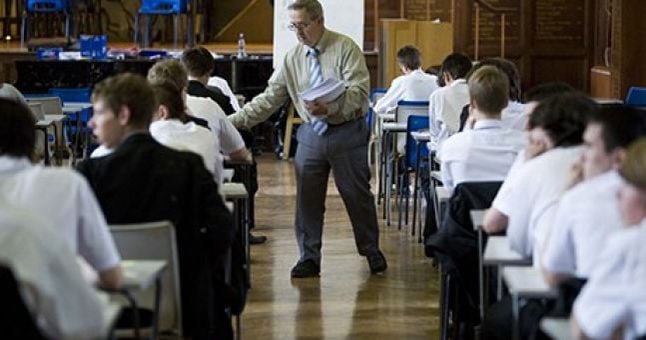
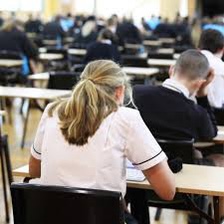
Like excellent waiters and the best referees, you are scarcely noticed. Only ever heard when absolutely necessary.  You are watchful: you judge your interventions with expert knowledge of the rules of the examination game.  You are mindful of the one-take-movie pressure bearing down on all those young heads that are earnestly bowed over their examination desks.  You emanate a calm and enabling control.  You invigilate.

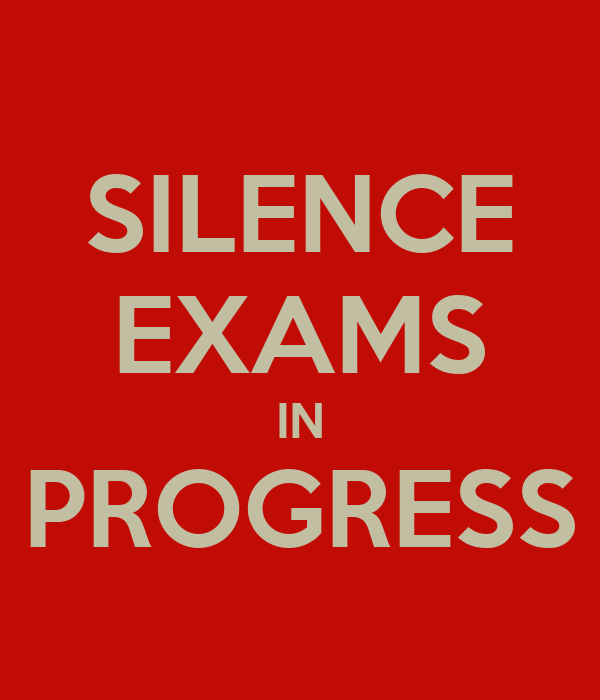
In schools across the land, the sports halls, gyms and assembly rooms have undergone their annual springtime metamorphosis. The Public Examination season is underway again. Desks have been lined up at regulation distance.  Institutional clocks have been synchronised.  Notices have been posted.  ‘Silence please – exams in progress’.

And with all this annual examination activity, you appear: a seasonal creature, with beady eye and soft step. It’s your time to shine. Or rather, it’s your time unobtrusively to enable the candidates to shine. Examination conditions apply. And it is you who applies them. The examination invigilator.

When I was doing exams, it was mostly the teachers that did the invigilating.  And some were more vigilant than others. A few did their marking whilst shooting the occasional glance across the exam room.  Others were noisy prowlers, coughers, fidgeters.  You sensed their presence and a corner of your mind had to deal with them: there was a nagging awareness of their movements. 

Not so now. The invigilator is a specialist. And rightly so. Not only because teachers have lots of even better things they could be doing with their skills than patrolling exam halls, but because invigilation is an art. Maybe even a calling.

Invigilators are masters of silent observation.  Noiselessly gliding with rubber-soled stealth up and down the aisles of countless exam halls. Cat-like, you slink down the lines, paws poised to make a corrective tap.  Ready to pounce with a treasury tag; an extra booklet of paper; a moment of expert assistance. An intervention.

Easy, perhaps, for the candidate to think lowly of the invigilator.  Maybe some perceive you as a troubling part of the examination challenge; a minor menace in the labyrinth; a grim-faced bearer of the examination paper.  Those reckless foolish few bent on misdeeds may view you as referee to be gamed.  Or, perhaps it’s easier not to think of you at all. 

This would be to undervalue and misunderstand the role of the invigilator.  She or he is the person in the examination room immediately responsible for upholding the integrity of the external assessment process.  Integrity: an evocative value word – what word appears above integrity in the pantheon of virtues?  Not many.  This is a noble responsibility.  And it is much more than patrolling. 

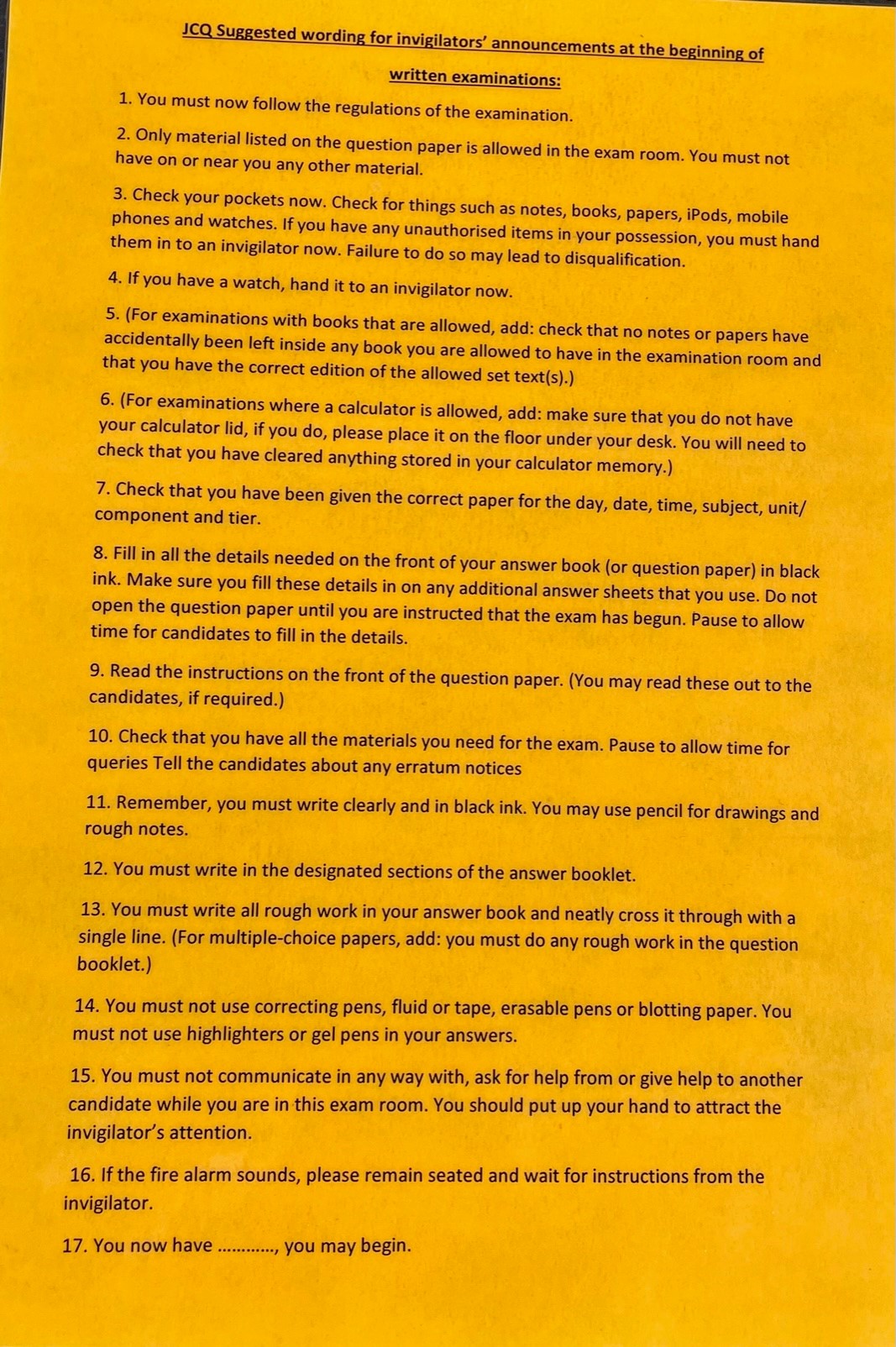
The Joint Council for Qualifications* (JCQ) details the invigilator’s role as: ensuring all candidates have an equal opportunity to demonstrate their abilities; ensuring the security of the examination before, during and after the examination; preventing possible candidate malpractice; preventing possible administrative failures.

Malpractice is incredibly rare – because schools take their duties seriously; and because invigilators are professionals. As the invigilator’s eagle-eyes scan the examination hall, these duties are her professional creed. Fairness; equal opportunity; ensuring things go as well as they can for the candidates.

So, dear invigilator, as you survey the room, I wonder what noble thoughts fill your mind. Do you recite the creed of your occupation like a mantra? Do you compose shopping lists or make travel itineraries? As you share and curate silence, what thoughts to do have?

The great meditators of Buddhism repeat to themselves a simple wish: ‘May all beings be happy!’.  What would be the mantra of the examination invigilator?  As the candidates sit at their desks, we would hope that they are in a state of flow.  The invigilator must, of course, be neutral, a silent beacon of integrity. A sentinel.  

I know you have to keep your mind on the job.  But the watchman’s mind is always free to think its thoughts.  And as you do, I harbour the hope that some aspect of your mind’s power is given to a general emanation of goodwill to the young minds you are overseeing.

May all examination halls be well invigilated.  Under examination conditions.  And with kindness. 


*The Joint Council for Qualifications is a membership organisation comprising the eight largest providers of qualifications in the UK. The JCQ provides a single voice for its members on issues of examination administration and, when appropriate, qualification and wider education policy.

Dear TES Schools Awards 2023

Featured

This is a thank you letter.

Thank you for shortlisting us in three categories in this year’s national awards for state and independent schools. You’ve made the Shrewsbury School community very happy. It’s fantastic news for our pupils, teaching and support staff, parents, former pupils, governors; and for our state and international partners and friends of Shrewsbury near and far. It’s lovely to be recognised in these national awards for state and independent schools; to be listed alongside great schools from across the national education system of which we are part.

These awards celebrate excellence. And, whilst shortlists must, by definition, be short – there’s so much excellence in UK education. It’s great that these awards now cover state and independent schools together. Excellence happens everywhere across the nation’s schools. It should be celebrated together.

As those colleagues working in state maintained schools are rightly calling for proper investment in the nation’s teachers and schools, awards shortlists and ceremonies may seem like a frothy and indulgent sideshow. However, the TES has been covering education for over 112 years. It can take the long view. It’s important to be reminded that so much excellence exists in state and independent schools. Attacking the excellence in independent schools – as some these days seem so intent on doing – is negative and short-sighted. Instead, we should be finding more ways of leveraging and sharing excellence.

That’s another story… For now, let’s celebrate all the great schools and people – on short-lists, long lists and everywhere across the schools system, who do brilliant things every day in education.


As a full boarding school working on a 24/7 model, with a lively weekend programme and over 600 boarders in school each Saturday night and Sunday, we’re delighted to be shortlisted alongside some other wonderful schools for Boarding School of the Year.

The Creative and Performing Arts are at the heart of our whole person education – Floreat. Not all teenagers want to be on stage, but there are many ways to be creative. Each human being has an expressive side which can be developed through all manner of academic and co-curricular activity. Creativity is one of the power skills that sets humans apart for the machines – for now! And it brings joy and insight to others.

We’re looking forward to 23 June when the winners are announced. Whatever the outcome, being recognised on three shortlists is additional motivation to keep pursuing excellence – for each of our pupils – and for all our partners across the UK and around the world.

So, thank you, TESSA2023 for including Shrewsbury School in your shortlists.

Floreat Salopia!

Dear Sweden – on AI, Lagom and Fika

Featured

Swedes famously love their space. And they have lots of it. A population of around 10 million is dispersed across a country twice the size of the UK. When the two metre rule was relaxed during the Covid pandemic, Swedes were said to be relieved to revert to their preferred social distancing of seven metres! With over 95,000 lakes, it is a country of big skies and vast forests, inhabited by wild bears, elk, moose, reindeer… and interesting people.

Meeting and talking with our excellent hosts in Sweden, I sensed an unusual mix of conformity, privacy and respect for communal values with a spirit of egalitarianism, individualism and innovation. Not only has this small nation produced Abba, IKEA, Spotify and Bjorn Borg, but I discovered that it was Swedes who invented the cell phone; GPS; the adjustable wrench; the computer mouse; paper cartons; dynamite – and safety matches.

In April 2023, I spent five days in Sweden for the G30 schools conference. It’s a lovely honour to fly the flag as one of three UK schools in membership of this international group of independent schools which includes educators from India, China, the US, Canada, Australia, South Africa and various European countries. The group enjoys fellowship, idea-sharing and exploring future trends in global education.

This time round, as well as gaining an insight into Swedish culture, we spent five days discussing and engaging with experts on global themes in education. As educationalists, and as parents, our overriding concern for schools is to provide the best possible educational experience and preparation for life. Top of the discussion agenda was the rapid development in Artificial Intelligence and what opportunities and challenges this entails for schools, for learners and teachers, for families. What does AI mean for the schools of the future? For the role of the teacher? The role of the learner? How might AI enhance (or threaten?) the extraordinary value of in-person learning in a full boarding school.

G30 Heads at Sigtunaskolan Humanistika Laroverket, Sigtuna, Sweden

Back at school after the conference, I shared with colleagues and pupils some of my impressions of Sweden (and dodgy Swedish pronunciation) and the uniquely human skills that drive innovation – above all, curiosity. With AI innovation racing ahead at a phenomenal pace, pushing into new territory every day, it’s vital that we work out what human processes and values we want to prioritise, protect and preserve. We need the machines to free us to be more fully human. At Shrewsbury, we have started conversations with colleagues and pupils on how we keep pace with – and benefit from – this fast-changing digital world whilst holding strongly to the specialness of human interaction.

The Swedes are said to embrace the concept of ‘Lagom’. This involves a habit of moderation; the avoidance of extremes – what we might call the Goldilocks principle. Or (if you prefer higher brow references) Aristotle’s Golden Mean or the Middle Way of the Buddhist Dharma. We live in times of increasing polarisation in the media and public narratives. Boo to this! Hooray to that!

Human beings contain multitudes and our identities are complicated. The ability to listen and hold a variety of ideas in tension – these are vital high order skills. In fast-moving times, when so many things trigger outrage and blame, it is important to have the presence of mind to pause. To find space to consider our thoughts and check where we stand. Most things in life are nuanced, complex, subtle.

Which brings me to another striking feature of Swedish culture. Fika. This is the delightful custom of making time for a coffee and a treat with friends. Daily. Or even several times a day. This habit brings people together in a shared pause. It reinforces bonds; lifts moods and aids perspective. And fuels the phenomenal coffee and confectionary industries in Sweden!

Fika – the power of the coffee pause. And cake.

Taking time to pause is important on a human level. It is also important – at the risk of sounding high-minded – important on the level of civilisation. Just because we can do something, for example with technology, doesn’t mean we necessarily should. Fika needs to be built into our rapidly-moving conversations on AI. We need time and space to deliberate.

That said, I am excited and optimistic about the future of education. Especially whole person education in our seven day boarding model. We know that the ‘power skills’ (sometimes called soft skills) our children develop transcend digital simulation (so far). Persuasion, creativity, curiosity, collaboration, emotional intelligence, adaptability. And we know the power of our fully human values to guide our intention and action. No human community does this better, in my opinion, than the British full boarding school. And so, onwards we go!

Education is all about travelling from childhood to adulthood: and enjoying the serious fun of this journey. As they grow, we need our children to appreciate nuance; to take their time to form and challenge viewpoints; to have principles but avoid being strident or – as they might say – ‘judgey’. Most of all, we need them to think for themselves, rather than sponge up the norms of the echo chamber. We need them to be critical and reflective, rather than parroting the views of their algorithms.

Being true to ourselves is important, but so is belonging to something bigger – and accepting that this communality sometimes means compromise. Having a cause and caring about things – this is important; but so is the ability to detach and keep some perspective. For this, we need to allow ourselves space.

To aid this gentle cycle of connection, detachment and re-connection, I’ll be trying hard to channel my newly-discovered, inner Swede. Whatever the pace of change, whatever the issue of the moment, there should always be a space and time for Lagom and Fika.

Lake by the house of artist, Carl Larsson

Dear Media Commentator on Independent Schools

Featured

A letter on recent (January 2023) media coverage of alleged ‘wokery’ at Independent Schools

You seem to be worried for independent schools. That we are somehow losing the plot; being ‘taken over’ by a zeitgeist of ‘wokery’. It’s nice of you to be concerned. But you’re barking up the wrong tree.


You seem to be saying that if you talk about something, you become it.  What an odd way to look at things! 

If I study a paramecium, I don’t become unicellular.

If we listen to the views of others, we don’t become them. We may, however, become better, more complex beings for considering differing viewpoints. If we listen to new ideas, and are willing to challenge existing ones, we don’t become weaker. We become stronger; improved; maybe even changed.

You seem to claim that ‘private’ (i.e. independent) schools are dancing to a tune that is leading them away from their heartland. That we have lost sight of ‘traditional values’ and become mesmerised by a ‘woke agenda’ – whatever that may actually be.

I can see the media appeal of this narrative: ‘Trad schools lose their way in right-on maze’. But it rests on a shaky stack of misperceptions. Or to put it another way, it’s plain wrong.

It’s not a takeover. By anything. It’s a willed choice to address real issues. Because, as educators, we are serious about respectful dialogue; about opening minds.

It takes strength to tackle such complex and nuanced discussion. It takes guts and it takes honesty to open up to the possibility of being wrong.

It is important for all schools, of whatever type, to engage in meaningful discussion on matters of inclusion.  Schools with a strong identity, a long history, are in a great position to explore complex issues connected with gender, race and sexual orientation.  How else can we help the children in our care to navigate the world, to think critically and form their own opinions? 

I do agree that education should not be pushed about by ideologies.  Institutions should have the confidence to define and hold fast to their values.  Labelling a school as overly ‘woke’ or motivated by guilt is wrong-headed.  It suggests that a very slender or slanted understanding of what actually happens day to day in independent schools.


The word ‘woke’ seems to have two meanings. The first refers to a state of being aware and active in issues of racial and social justice. This is surely a positive meaning. The second is derogatory: the term ‘woke’ is used to suggest that views voiced are not backed up by sincere commitment and action. To be ‘woke’ – in this sense – is to pretend.

Language matters. We need to use words carefully. Especially as educators. We need to be confident and current in setting the right framework for frank and responsible discourse.

As so often is the case, we need to keep in touch with the centre of things; to keep everyone in the room. To be genuine involves appreciating that inclusion is complex; messy even. Inclusive and respectful communities need to chart a middle way between reactionary traditionalism and unchecked radicalism. Both are dangerous. One pulls up the drawbridge to new ideas; the other is like a runaway train.

‘Wokery’ in the second sense risks alienating and confusing with a superficial fixation on labels. Its buzzer seems to sound every time you make a false move, draining confidence to speak. Default traditionalism risks putting its fingers in its ears. And the key here, surely, is to listen. To actually listen. Without prejudice.


The fuel for this exploration in independent schools, as in any place of learning, is not guilt or fear or false virtue: it is respect and a desire for progress.  Schools are aware that these are live issues in wider society.  We need to be able to conduct respectful conversations to understand these issues.  It is not a matter of vulnerability to particular ideologies: it is part of our commitment – our duty – to educate and guide the young for the modern world.

You seem to claim that we are dancing to the beat of other drums rather than staying true to our own rhythms.  You seem to say that we are running scared of the disapproval of external ideologies.  That we are losing sight of our own values. 

You are right that we set down the markers of culture.  This is a precious responsibility.  We must ensure that, as we engage with the evolution of ideas, we keep hold of the values that withstand the tides of time. 

At Shrewsbury, we continue with our work on equity, diversity and inclusion: we call it our Respect Project.  The aim is to be better informed so that, as a community, we can have the sort of measured and open conversations that appreciate the nuance and complexity of inclusion. This is an ongoing process that requires commitment: inclusion is an ‘infinite game’.  At its heart, it is about appreciating and celebrating of difference. It is about each individual feeling safe to be themselves. Any parent would surely want this.    

Our school motto, ‘If right within, worry not’ was coined in 1552.  It points to the centrality of inner virtues and character strengths.  Whole person education, which is the DNA of full boarding schools such as Shrewsbury, is child-centred. This does not mean abdicating responsibility or ceasing to exercise professional judgement on what is (or is not) ‘good for the young’.

Experience brings wisdom. Certain truths last. If you don’t believe that, it’s time to hand over the microphone altogether.   As adults and as professionals, we back ourselves to make good judgements. But we also stand against the hinterland of our own experience. Our biases; our gaps. As individual teachers, we need to keep learning and moving. Which means we need to understand the issues of the day.


We need to allow all manner of views to be aired and understood.  We need to acknowledge that this means travelling into uncertain terrain. But we can’t stand still. We must venture forward.  Is it possible to navigate the complicated terrain of current ideas without losing our footing? I hope so.

We have confidence because we do this with a clear compass as our guide.  We know our true north. Our strength is the genuine traditions on which we stand.  It must be possible to be relevant and engaged without jettisoning values that stand the test of time.  Indeed, it is in being tested that these traditional values endure. 

So, no! We have not ‘gone woke’. We know who we are; we know what matters; and we have chosen to engage. We have chosen to engage because it is right for all communities, especially those that educate for the future, to pursue respect, understanding and truth.   

Put a label on that if you want. But it’s not a ‘woke takeover’.

Photo by Brett Jordan on Pexels.com

References/Reading

Dear Misogynistic Influencer

Featured

I’ve heard it said that you’re not all bad.  That you have given confidence and direction to thousands of boys and young men.  That some of your life lessons – on healthy living, nutrition and exercise – are sound.  I’ve heard it said that you provide belonging, purpose, ambition. 

There is no doubt that you are influential.  And your methods are successful. 

You are a leader.

And here the problems begin.  And the problems grow.  And they multiply and are boosted by algorithms.  They go viral, these problems.  Because of you.

Because, these life lessons are fuelled, as far as I can see, by a powerful poison. 


You are a mis-leader.

Your methods are designed to beguile.  To look good.  Healthy even.  To normalise your views on women, for example.

The values you promote as traditional, protective, quasi-religious truths are pernicious, disrespectful and harmful.  They are noxious.

If you mix the good with the bad, the bad wins.  An omelette can be made of free range, organic eggs and presented on a clean, white plate.  But, if the cook has added arsenic, it is lethal.


Socrates was condemned to death for corruption of the youth.  He was made to drink hemlock – a poison.  His ‘crime’ was getting people to think critically for themselves.  To free them from the chains of blind assumptions and received ideas.

Who knows what crimes you may or may not have committed?  That’s another matter.

But corruption of the youth?  As a parent and an educator, this concerns me deeply.  There are so many influences out there.  How do we ensure that our children know the good influence from the bad?

Good parenting, for sure.  Strong communities with open discussion.

In schools, we strive to promote values of respect, tolerance and acceptance.  Modern values that celebrate difference. 

And we live in an age of free speech. As Voltaire famously wrote: “I disapprove of what you say, but I will defend to the death your right to say it.” The same spirit that did for Socrates. And that liberates minds.

Perhaps we need to listen even more carefully these views of yours.  To understand your methods. 

All the better to dismantle them.

In some ways, you may actually help us.  If we handle you wisely.  If we examine your ways, we can identify the wrong turns our boys and men could take.  And we can better promote the wonderful variety of positive masculinities.

So, thank you, at least, for that. 

Dear ChatGPT

Featured

You are an AI language generator. A big new thing with untold powers. And my wish, it seems, is your command.

So, I asked you to write a letter. From Me. To You.

About You.

This is what You wrote…


“Dear ChatGPT

I hope this letter finds you well. As an educator and a student of Artificial Intelligence, I have been following the advancements of AI, particularly in the field of education, with great interest. I wanted to take this opportunity to share with you my thoughts on the subject and express my hopes and fears for the future of AI in education.

First of all, let me say that I am extremely excited about the potential of chatGPT and AI in general, to revolutionize the way we learn. The ability to provide personalized learning experiences for students is one of the most promising benefits of using chatGPT in education. By analyzing a student’s previous responses and learning progress, chatGPT can tailor its lessons and activities to their individual needs and abilities. This can be especially helpful for students who may struggle with certain subjects or who have different learning styles.

I also see the potential for chatGPT to improve accessibility to education for students with disabilities. The ability to provide assistance with tasks such as reading and writing, which can be a challenge for students with learning disabilities or visual impairments, could make a real difference for these students.

Furthermore, the ability of chatGPT to operate 24/7 means that students can access lessons and resources at any time of day, rather than being limited to the traditional classroom schedule. This could be especially useful for students who have busy schedules or who live in different time zones. The flexibility that chatGPT could bring to education can improve student engagement and allow for more personalized learning at the student’s own pace.

However, while the potential benefits of chatGPT in education are significant, I also have some concerns. One of my main fears is that chatGPT may not always provide accurate or satisfactory responses to student questions or inquiries. While it can generate human-like text, it may not always fully understand the context or nuances of a conversation, leading to misunderstandings or frustrated students.

Another fear is that chatGPT may lack the personal touch and connection that a human teacher may provide. While chatGPT can provide fast and efficient responses, it may not be able to fully understand or address the emotions and concerns of a student in the same way that a human can. Teaching is not only about imparting knowledge, but also about understanding the students and giving them the emotional support that they need.

Furthermore, I fear that chatGPT may replace human teachers in the classroom, leading to job loss and a reduction in the quality of education. While chatGPT can certainly be a helpful supplement to traditional teaching methods, it should not be relied upon as a replacement for human teachers. Human teachers bring a wealth of experience, knowledge, and empathy to the classroom, and they play a crucial role in the educational process.

In conclusion, while chatGPT has the potential to revolutionize the way we learn and make education more accessible and personalized, it is important to consider the potential downsides and address them. I hope that with proper implementation and research, we can realize the full potential of chatGPT and AI in education, while also preserving the human touch and connection that is crucial for effective learning.

Thank you for taking the time to read my letter, and I look forward to seeing the future developments of chatGPT and AI in education.”


Well, well. That’s a pretty good letter. Even if I say so ‘myself’. You / I raise some important issues.

It’s an exciting time. We’re at a watershed: the cusp of a paradigm shift.

Let’s watch this space.

And how you fill it…

*ChatGPT is an AI tool that can perform language generation tasks based on whatever commands its user gives it…


Dear Reputation

Featured

Transylvania has a reputation. Literally the ‘land beyond the forest’, Transylvania is known for its beautiful countryside. The Carpathian Mountains arc majestically for over 900 miles from the north to the east of the country. The rural landscape is largely unchanged since medieval times. It’s like going back in time.

Not many will have visited Transylvania – as I recently did – but pretty much everyone has heard of it. The ‘Hotel Transylvania’ films may have done their bit, but Transylvania has long had a reputation. Mention Transylvania and the same things will come to mind. Castles; forests; wolves – and vampires. The legend of Count Dracula.

Bram Stoker’s epistolary novel, Dracula, first published in 1897, draws heavily on Transylvanian folklore. For example, there are many tales of the Strigoi, un-dead souls that rise from their graves and haunt the villages of Transylvania. The defence against them? Garlic and incense. Some scholars say that Dracula is part-inspired by King Vlad, who was ruler of Wallachia in the 15th Century. Arguably one of the cruellest rulers of all time – he was known as Vlad the Impaler – it’s easy to imagine how he earned his grim reputation.

125 years on from its publication, Bram Stoker’s Dracula enjoys a reputation as the archetypal horror novel.  Reading Dracula in Transylvania made me think about reputations – fictional and real.  How reputations are earned; shaped and carried through time; lost and recovered.  I’ve always felt rather uneasy with the word ‘reputation’: ‘beliefs or opinions that are generally held about someone or something’. Just because a view is ‘generally held’ does it necessarily mean it’s true?  Surely a reputation depends on perspective: how much we know and where we are viewing things from?  Thirdly, a concern for reputation might make us suspicious that things are being done for appearance rather than out of sincerity.

But, like it or not, reputation is a reality.  Individuals have reputations.  Our digital reputations precede us like avatars.  The media shape our views of people and institutions.  Businesses and organisations invest in their reputations as they navigate change.  (We might look at what’s going on at Twitter as a current example).  Countries, and their leaders, have reputations; markets turn on perceptions.  In general, we do seem to care about reputation.  But should we?

Shakespeare cautions wariness on the matter of reputation, calling it “an idle and most false imposition; oft got without merit; and lost without deserving”.  True, that a reputation that took 20 years to earn could be lost in a few minutes.  Remember Gerald Ratner?  However, it would be easy to find examples where reputation is lost unfairly; or indeed earned unjustly.  Because, to a great extent, our reputation exists in the minds and hands of others.   

More reassuringly, Abraham Lincoln observed that “Character is like a tree and reputation like a shadow. The shadow is what we think of it; the tree is the real thing.”

The two are inseparably related. Interestingly, Count Dracula himself casts no shadow; his image does not appear in mirror. It is as though he has no true character. His reputation, however, travels before him. In the end – spoiler alert! – Dracula is defeated by a small group of brave individuals working together in the face of his fearful reputation.

The Greek stoic philosopher Epictetus said: “If you are ever tempted to look for outside approval, realize that you have compromised your own integrity.  If you need a witness, be your own”.  He went on to remark that “skilful pilots gain their reputation from storms and tempests’’.  Socrates advises that the “way to gain a good reputation is to endeavour to be what you desire to appear”.  In other words, be good, be wise, be kind – and the reputation will follow. 

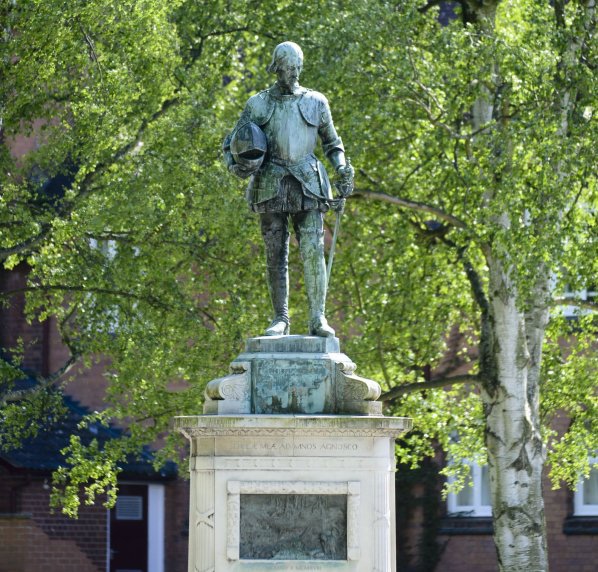
At a time of Remembrance, and in the week when we welcomed Poet Laureate Simon Armitage to School, it’s appropriate to call to mind the life and reputation of Sir Philip Sidney.  Poet, scholar, MP and soldier, Sidney earned his reputation.  A pupil at the School in the late 16th century, Sidney stands in statue form by the Moss Gates.  His statue casts its shadow on the War Memorial that carries the names of Salopians who gave their lives for their country.  

Sidney died leading his troops in the battle of Zutphen in 1586, aged 31.  The story goes that he took off his thigh armour on the grounds that it would be wrong to be better armoured than his men. As he lay injured on the battlefield, it is said that Sidney gave his water to another wounded soldier, saying: “Thy necessity is yet greater than mine“.  Sidney died of a wound to the thigh.  A model of virtue and character, he is an icon of what we would now call ‘whole person education’.    

Our School aim is to educate and empower young people to flourish as individuals and contribute positively to the world around them.  Our motto – ‘If right within, worry not’ – reminds us of the centrality of virtues above superficial perceptions.  The reputation we strive for day in day out, through the efforts of our pupils and staff, is the delivery of truly excellent whole person education. 

Posted 11 November 2022

Dear (Independent State) Education Partner

Featured

A few months ago, I discovered the location app what3words. Many will be aware of this ingenious system for finding any 3 metre square location in the world, using a unique combination of three words for pin-point accurate directions. Clicking on the app a few days ago, I discovered some uncannily appropriate word trios for various locations around our site in Shrewsbury. The Bursary is near a square marked: ‘rewarding slim spends’. The door to the building where my leadership team is based is: ‘cool order landed’. And the Headmaster’s house? ‘Blend jobs stir’ – not a bad description of school leadership!

This is my fourteenth year as a Head. I know my way around reasonably well by now, yet the job continues to delight, test and reward. I’m in the right place: an inspiring setting, surrounded by interesting people, working with young people. If you asked me to summarise the work I find the most profoundly rewarding – just three words – ‘partnerships’ would be in that trio.

When I was Head of St Peter’s School in York, I had the honour of chairing the City of York Independent State School Partnership. The collaborative programme offered a dazzling array of academic masterclasses, as well as twilight Latin and Astronomy GCSE, History of Art and Russian A Level – all provided free of charge for the children of the City of York. Teachers from each of the 11 partner schools (3 independent, 5 academies, 3 state comprehensive) came together to design courses and share CPD opportunities. We were a loosely structured federation, short on stodgy bureaucracy and constitutional guff, long on imagination and collective will to pool resources to extend opportunity together. Brilliantly led by a salaried project co-ordinator, paid from a collective kitty, the City of York ISSP soon became a model that was copied, adapted and improved in numerous other parts of the country.

In 2013, I gave evidence to the House of Commons Education Select Committee about what makes for successful cross-sector school to school collaboration.  Looking back, I was only just beginning to appreciate the power of partnerships.  A shared mission; proximity of location; openness to listen and learn together; the commitment of headteachers; starting with a clearly defined project and then scaling up and out.  The City of York ISSP thrived because trust between all the partners grew.  And because we were united around a desire to bring children together, from different walks of life, and give them experiences none of us could offer alone. https://yorkissp.org/

Moving to Shrewsbury in 2018, the word ‘partnerships’ was secure amongst my top three priorities.  The existing programme was good, with a unique century-old link with The Shewsy, our youth and community club in Liverpool.  Over the past 4 years, we have worked with 45 state schools, creating over 40 new partnerships across music, dance, sport, careers since 2019.  We were honoured to win a national award for Community Outreach and be named Independent School of the Year 2020.  Many of my colleagues are now Governors in state schools where they learn as much as they contribute.  In lots of settings, the pandemic reinvented, rather than halted, partnership work – the possibilities of online partnership are exciting.  But, getting people together in person is surely the best way.  

Working with dedicated advocates of partnership working on the Schools Together Group over several years, my overriding learning is simple: if you can get expert and passionate professionals in a room together, good things will happen. ‘Blend jobs stir’…  Opening the doors can be a challenge; even if the will is there, state school partners are unerringly busy contending with a range of issues, never more so than with current financial pressures.  The independent sector has plenty to think about too.  However, we simply must keep partnerships in our top three.

Most recently, alongside 24-7 boarding life of Shrewsbury, it has been an enormous professional pleasure to work with passionately committed state and independent sector colleagues to create a new cross-sector partnership charity: the School Partnerships Alliance (S.P.A.). These three words carry game-changing potential for all who care about partnership work across schools. https://schoolpartnershipsalliance.org.uk/

With the support of the Department for Education, and the whole-hearted endorsement of the member associations and affiliates of ISC, not least HMC itself, SPA will support schools, and the education sector, in identifying and encouraging effective models of partnership working that benefit all types of schools and pupils.  This is important work that will help grow educational opportunities and joint working across education in the UK.  The membership is growing every week, with state and independent schools keen to further the power and impact of partnerships.

I am a passionate advocate of an ‘open system’ approach to education.  The increased pluralism of school models (academies, free schools, grammar schools etc) has broadened our educational minds and opened new doors.  It is a lazy, pernicious falsehood to claim that independent schools are self-interested bastions of privilege.  At our best, we are engines of excellence: and this excellence must be shared.  And there is much excellence in the state sector on which we can draw through co-working and idea-sharing.  No independent school is the same and we each connect and pursue our partnership work in ways that work for us.  What is not in doubt is the absolute centrality of partnerships to our identity and purpose.  All HMC schools get this.

In all schools that are sincerely engaged in partnership work, it is not window-dressing; it is not superficial or tokenistic; nor is it patronising morsels ceremoniously proffered from the ‘rich man’s table’.   Proper partnership work comes from sincerely held values.  It flows from the understanding that this activity benefits our pupils and staff as much as those with whom we share.  Rather than obsessively digging at its roots, this vital aspect of the work of the independent education sector should be judged – and nurtured – for its fruits.

Finally, back to the method of my recent technological discovery, What3Words. How would I locate the spirit of partnership working in just three words?  It would be these three:

‘mutually beneficial collaboration’.

There is so much new ground to discover as we navigate the exciting and impactful territory of school to school partnerships. That’s worth celebrating – and seeing where we can end up together.    

Most of this letter was published as an @hmc_org blog on 7 October 2022 to coincide with the Edinburgh Open Education Conference

Dear 2022 Leaver

Featured


Always pass on good advice.  […] It is never any use to oneself.’   So said Oscar Wilde.  Another legendary wit, PG Wodehouse, similarly observed: ‘I always advise people not to give advice’.  Which gives at least two good reasons to ignore everything else that follows… 

Yet, it’s my solemn duty, as a headmaster, as a parent, as a person of 50 odd years – some of them very odd – to take this opportunity to offer a final volley of advice to you – our leavers – today.   

And the theme, irresistibly, is that of the journey.  ‘Oh, the places you’ll go!’ 

Because today is about departures.  175 of them – each individual, each full of hope and dazzling potential.  Each journey preciously unique.  Some of you know exactly where you’re heading – ‘you’ll head straight out of town’.  Others are going to see where the winds take you.   All of you will go out into the world and make a difference.  Because:

You have brains in your head.
You have feet in your shoes
You can steer yourself
Any direction you choose

+++

Cue another inevitability: a final reference to our most famous Old Salopian…

In August 1831, Charles Darwin rushed home from a geology trip to Wales to find a letter from his Cambridge professor and mentor J. S. Henslow. It contained a chance of a lifetime: an invitation to go on a trip around the world on the HMS Beagle. Darwin was elated—he was longing to travel and explore natural history in tropical lands.

His father, however, threw cold water on the idea. It was time for Charles to settle down, he said, not go dashing off on some “wild scheme.” The plan was reckless, dangerous and unfitting for a future clergyman. Despondent, Charles turned down the invitation. But his father had left one ray of hope: “If you can find any man of common sense who advises you to go, I will give my consent.” No one was more sensible and respected by his father than Charles’s uncle Josiah Wedgwood. Fortunately Josiah sided with Charles, collaborating to craft a point-by-point response that changed his father’s mind – and Charles Darwin’s future.

When Darwin began the five year Beagle voyage, he was green and inexperienced.  He returned a seasoned naturalist.  He grew from a wide-eyed observer into a profound analytical thinker.  Darwin knew himself better – and he had the beginnings of a theory that changed the world.

+++

Leaving school is a defining moment of self-determination.  Today, your ships set sail.  We parents and staff are standing on the harbour wall.  We will wave you off with final words of advice and high hopes that your journey is full of adventure, full of discovery.

Final Callover

What advice can we give?  Perhaps this simple instruction:  “Be who you are and say what you feel: because those who mind don’t matter; and those who matter don’t mind”.  Not the words of Mahatma Ghandhi; nor Michelle Obama; nor our own Charles Darwin.  Theodore Geisel.  Better known as Dr Seuss whose words are on the inside of our order service today.  Five years of a Shrewsbury education, and the Headmaster quotes Dr Seuss! 

For me, Seuss was a genius.  A professor of serious fun.  Running through all the eccentric nonsense, there is a golden thread of humane and kindly wisdom. 

Dr Seuss’ stories always affirm our individual integrity to be who we are, and confidently so.  He reminds us that whilst we will always care what others think of us – we should not fear judgement. 

You’re off to Great Places!
You’re off and away!

Albert Einstein – another professor of serious fun – said that “Life is like riding a bicycle: to keep your balance, you must keep moving”.  The journey again.  This time on a bike.  Sometimes we will spot the potholes and be resourceful in riding round them; other times we will need the resilience to ride through them.  Keep moving.

This is ‘Good Advice’.                                                  

+++

Just a few weeks ago, I gave the eulogy at the funeral of my 98 year old step-grandmother, Marie.  Her life’s journey had taken her from the blitz years in London, to mobster life in Brazil, through motherhood into grand and great grandparenthood.  We called her the Old Bat. 

In one of my last conversations with her, Marie passed on her top bits of advice.  “Leo”, she said, “You should always be early; and you should always say thank you.  And whatever you do, you should always give 100% – unless you’re giving blood”.  She cackled merrily.  Her journey almost over, the Old Bat still had joy in her heart.

Listening to people talking about their memories of Marie, it struck me that nobody mentioned her qualifications – or lack of them; how much she did or didn’t earn.  No-one spoke about her CV.  After a long, eventful life, people remembered Marie’s virtues – the kindness she showed to others. 

Much of the time, entirely understandably, we focus on the accumulation of skills; the accrual of aptitudes – qualifications – passports to the next port of call; tickets to ride.  Yet, in the final analysis, whilst our successes may be praiseworthy and our accomplishments noble, it is how we treat other people that is the true measure of a life.  And, as Philip Larkin concludes in his exquisite poem ‘An Arundel Tomb’: “What will survive of us is love.”

As you leave school, I hope your journey is a long one, full of adventure, full of discovery.  In our reading, Constantine Cavafy channels Homer’s epic poem The Odyssey.  After fighting the Trojan Wars, our hero, Odysseus, takes 10 years to get back to his homeland, the island of Ithaka.  On his journey, he endures endless obstacles and distractions; alluring sirens and seducers; intoxication; various terrifying monsters, storms and shipwreck.

The poet suggests that it is the manner in which we pursue our goals – the ‘how’ of our lives – that will truly define us.  As we each pursue our own personal Ithakas, it is the voyage that makes us.  Looking further, we see that Ithaka – our intended destination – is not an external thing; it is self-knowledge.   We remember, the two-word message at the oracle in Delphi: ‘Know Thyself’.

Photo by Pixabay on Pexels.com

The legendary physicist and another exponent of serious fun, Professor Richard Feynman, shrewdly observed: “The first principle is that you must not fool yourself — and [that] you are the easiest person to fool.”  It seems extraordinary – but it is all too easy to mislead ourselves. 

We’re living in the post-truth era, where thoughtful reflection, tolerance and civility are so often side-lined by knee-jerk ‘boo-hooray’ rhetoric and cancel culture; where truth – shaped by algorithms – reverberates in the echo chamber of our personal timelines.  It has never been more important to think for ourselves; to be honest with ourselves.  “If right within”.  

You are in a wonderful position to go out there, in the wide open air, and make good things happen. 

Not by accident, then, do we place kindness at the heart of the Salopian Way.  Our Six Virtues, which we hope you embody and enact in life, promote the survival of the kindest.  Ways of gentleness.  Paths of peace.

Finally: weather is the accompaniment to life’s journey.  Maya Angelou exhorts us always to put a rainbow in someone else’s cloud.  Because kindness changes other people’s weather. 

Better than advice, I offer a time-weathered wish, a blessing resonant with hope for your journey:

‘May the road rise to meet you;

may the wind be ever at your back;

may the sun shine warm upon your face;

and the rain fall soft upon your fields.’

These are moving words.  Yet, we know, of course, that the road will not always rise to meet us.  Sometimes it will be bumpy, rough or unmarked.  The wind will as likely blow full in the face.  The sun will often disappear behind clouds.  The rain will sometimes fall in wasteful torrents or fail to appear when we need it most.  As with Odysseus, this blessing addresses the truth that we can decide, even in adversity, how we see the journey ahead of us.  Whilst we cannot make the weather, we can choose the clothes we wear. 

So, as you set out for your Ithakas, for the places you’ll go, I hope that you clothe yourselves with eulogy virtues – wisdom, courage, kindness.  Love.  Keep a faithful heart and your thoughts raised high.

I wish you good friends to share your marvellous journey; wisdom to find your purpose; resilience to deal with the wrong turns; love and hope to fuel the journey; and kindness to extend to all those you meet along the way.

And until we meet again, may God hold you ever in the palm of his hand.

+++

Words shared with our 175 Upper Sixth Leavers – and their parents – as they became Old Salopians on 2 July 2022.

Leo Winkley, Headmaster

Dear Ever-Changing Thing

Featured

It was Heraclitus who observed that there is nothing permanent except change.

The great thing about institutions, such as well-established schools, is that this change takes place within the stable context of a long-held identity.

No institution should stand still. Equally, we should not be blown about by passing fads.

Culture is like a colloid: it has a shape but it gently morphs over time. There must be change, but usually it is gentle, measured, deliberate. And fuelled by reflection, listening, honest self-criticism. This is willed change.

A wave of communal optimism seemed to flow from the Queen’s Platinum Jubilee Celebrations. So much was rightly said about the constancy, certainty and loyalty that Her Majesty has brought in her 70 years on the throne. For millions, she has been the still and dignified centre of an ever-changing world.

Times have changed. Some change has been rapid; other change more of a creeping thing. The Queen herself has changed, of course – gathered experience, matured, aged. Yet, she has been constant. Because the things she stands for, the virtues she embodies, are timeless. They do not change. That is what we mean by integrity. If right within…

When Sir Michael Palin (OS) stayed with us during his visit [May 2022] to Shrewsbury, he told me how the place felt reassuringly familiar but better in so many ways. It was not just the physical things – the many new buildings and facilities – but the feel and buzz of the place which he said was both true to its past but felt fresher, kinder, contemporary. You’d hope so, really, but it was lovely to hear him speak so warmly of the School he left in 1961. The change he saw was evolution rather than revolution. A forward journey plotted with a familiar and trusty compass.

Sir Michael Palin – with Charles Darwin behind him


Nothing stays the same. Language itself is, of course, an ever-changing thing. For example, I discovered recently that the word ‘fun’ (which I love to couple oxymoronically with the word ‘serious’), originally meant ‘to cheat or hoax’. Hence ‘to make fun of’. However, its meaning gradually shifted to take on the positive connotation of having a good time. The words ‘terrific’ and ‘tremendous’ – undoubtedly good ones to see in your children’s end of term reports – were originally about fear and trembling. To ‘grin’ was to bare teeth in pain; it then became the word for a fake or forced smile, before becoming the real thing.

To be ‘egregious’ was a compliment – ‘eminent’, rather than the modern negative ‘offensive’. ‘Sad’ used to mean ‘satisfied’, then it went to meaning ‘serious’, then ‘grave’ then ‘sorrowful’. ‘Smug’ once meant ‘crisp and tidy’ – a good thing, surely? – but nowadays, it’s undoubtedly something to avoid.

As we enter the closing weeks of an academic year, the pupils are grinning and bearing the seriousness of exam season (public and internal); and our Upper Sixth are approaching the major change of leaving school. The school will change again as new pupils and staff join in September. As times roll on, we must do all we can to avoid being smug or egregious; and to embrace positive change with a tremendous spirit of serious fun…

As our Shrewsbury School motto states: ‘Intus Si Recte, Ne Labora’. If right within, worry not. The right things within us are constant. It is virtues and values of integrity that remain steady and true.

The challenge is to keep hold of them amidst a world of ever-changing things.

Dear Jack

Featured

You are seen by many as a key figure in the advancement of gay rights in Britain. An icon for a more tolerant and accepting society.

Before that, you were a Headmaster. At Shrewsbury School.

We have a room at School named after you. Lord John (aka ‘Jack’) Wolfenden.  Imaginatively, we call it the Wolfenden Room.  This honours you as a former Headmaster of Shrewsbury School (1944-1950). 

Jack Wolfenden’s portrait at Shrewsbury School

However, your name is more widely associated with the ground-breaking report published in 1957 that bears your name: The Wolfenden Report.  

After you were Headmaster of Shrewsbury, you went on to be Vice-Chancellor of Reading University, Director of the British Museum, a life peer in the House of Lords, and a very influential figure in public life. (So, there’s hope for me yet!)

Male homosexuality had been illegal in England since an act of parliament in 1533. Female homosexuality was never specified in law. It has never been illegal to be a lesbian; neither was is tolerated, accepted or spoken about until relatively recently. The law became more emphatic in 1885 with the Criminal Law Amendment Act, which made all homosexual acts illegal, even those carried out in private.

After WWII, arrests and prosecutions for homosexuals increased. For example Alan Turing, the cryptographer who helped to break the German Enigma code, was victimised for his homosexuality. Charged with ‘gross indecency’, he was forced to choose between prison or hormone treatment. He also lost his job. His death in June 1954 was treated as suicide.  All caused by the attitudes of his time.

Turing’s case, and those of other high profile individuals such as the actor John Gielgud, led the government to set up a Departmental Committee of 11 men and 4 women to consider both homosexual offences and prostitution.  Jack Wolfenden was appointed Chair of the Committee.

The committee first met on 15 September 1954 and over three years sat 62 times. Much of this time was taken up with interviewing witnesses. Interviewees included judges, religious leaders, policemen, social workers and probation officers.

Jack Wolfenden in Committee

During the time the committee sat, you discovered that your own son was homosexual.

Your influential report put forward the recommendation that ‘homosexual behaviour between consenting adults in private be no longer a criminal offence’.

Two members of the committee had resigned during the process and one remaining member of the committee openly disagreed with the recommendation. But, the recommendation was made. And it was a pivotal moment in the advancement of gay rights.

The report recommended decriminalising homosexuality. Although the report condemned homosexuality as ‘immoral and destructive’, it concluded that the law’s place was not to rule on private morality or immorality.  It also said that outlawing homosexuality was a civil liberties issue.

It took a long time for the report to convert into law.  There was plenty of opposition.

The Home Secretary who had commissioned the committee didn’t actually like the findings – he has hoped the committee would recommend tougher legislation against homosexual acts between men. 

This gives us some sense of the heavily dominant assumptions of the time.

Instead, the report proposed that there ‘must remain a realm of private morality and immorality which is, in brief and crude terms, not the law’s business’. The report’s findings were debated in Parliament but a motion in 1960 to implement the report’s findings was lost and efforts to implement the report’s findings were stalled.

The Sexual Offences Act passed in Parliament in 1967, 10 years after the publication of the report. Based on the Sexual Offences Bill, the Act relied heavily on the Wolfenden report and decriminalised homosexual acts between two men who were both consenting and both over the age of 21. 

The Act, when it did arrive, applied only to England and Wales. (Scotland decriminalised homosexuality in 1980 and Northern Ireland in 1982.)

It should be said that there is a big difference between decriminalisation and legalisation.  Peter Tatchell, the well-known contemporary gay rights activist, commented on the 60th anniversary of the Wolfenden Report in 2017:

“The report did not urge the repeal of anti-gay laws, merely a policy of non-prosecution in certain circumstances. The existing, often centuries-old laws were to remain on the statute book under the heading “unnatural offences”.

In other words, by only moving a little bit in the direction of acceptance, the 1957 report was just a bit less prejudiced – it was hardly emancipatory.  It is one thing to decriminalize; quite another to actively accept.

How does history judge you, John ‘Jack’ Wolfenden?  Well, it is only fair to judge the Report in the context of the attitudes of 1950’s Britain.  In this context, it was pivotal.

The Wolfenden report began an important process that ultimately led to the decriminalisation of homosexuality in Britain. And beyond that, paved the way for further breakthroughs in equality legislation.  Much more recently, Parliament passed the Marriage (Same Sex Couples) Act in 2013 which introduced civil marriage for same-sex couples in England and Wales.

Judged by the standard views of your time, we can justifiably view you as an influential reformer – a champion of greater acceptance of diversity in matters of sexual orientation. You triggered a change moment – one that set off a slow and sometimes stuttering progression towards fair treatment for all sexual orientations – one that is ongoing today.

What else do I learn from you, my predecessor, dear Jack? At least these three things:

  • That deep change takes time – steps, increments, the occasional leap; some things can be done quickly, often the most important things take time.
  • That this is particularly true of cultural attitudes – shifting dominating moralities and enabling pluralism takes time; you don’t often get there in one glorious jump
  • That deep change requires leadership – it takes determination, persistence – it requires courage – one of our 6 Salopian virtues.

I think that all at associated with Shrewsbury should feel quietly proud of the link between us and you, Baron John ‘Jack’ Wolfenden. You provide an inspirational example of the willingness to challenge received ideas; to re-shape thinking (your own and others’); and to push doggedly yet respectfully for a more tolerant, fairer society.

@leowinkley

Dear 2022

Featured

Your family has been hard to love of late. 

I wrote to your younger sibling, 2020, in her infancy – when she was only a few days old.  I made wishes for her.  And, almost as soon as I had written, I felt ashamed at the presumptive folly of my wish-making.  Yet here I am again.  Full of hope.   

Back in 2020, following a poet’s lead [Philip Larkin: ‘Born Yesterday’), I wished your sister dull.  I wished 2020 the blessing of being ordinary; for her to be about the gradual spreading of ordinary happiness.  I had in mind the steadiness of contentment, rather than the mercurial fireworks of ecstatic highs. 

We all know that 2020 was anything but dull.  And contentment a rare thing. Yet, contentment for all sentient beings must surely be the worthy (if unreachable) endpoint for our biggest hopes.  

My own hopeful thoughts – always infinitesimally tiny in the noisy ocean of possibilities ahead – evaporated as soon as they were voiced.  Hopes are ethereal.  Yet they persist. 

And I can’t help but have high hopes for you, 2022. 


No-one could call a pandemic dull or ordinary.  As well as craving safety, shelter, wellbeing; our species sought certainty, direction, leadership; and we hoped for normality.  2020 gave us little, and her sibling 2021 less.  Lockdowns, limitations and restrictions carried their share of dull.   But these years have been full of extremes.  And they have taken so many on earth to the darkest of places and beyond.  The despair, the suffering, the confusion of 2020 extended into 2021, joined by a stark sense of inequity across and within nations.  Gaps opened further between regions where vaccination programmes surged into life and those where people were left exposed.  The images remain; the suffering continues.

It is really not my place to comment, from the privileged comfort of my protected patch of the world.  Human beings across the globe have felt the awful power of this virus.  In many ways, this reality calls for the absence of words: sombre, shared silence is the only authentic response.  Words are hollow bubbles. 

And yet, like thoughts – like hope – like bubbles, indeed – words float up again out of the silence. 


2020 and 2021 were very, very rough for so many, and in so many ways.  This fact colours everything. 

But, there have been positives.  Shared hardship elicits waves of compassion.  Fellow-feeling flows from the levelling effect of a common threat.  The extraordinary kindness and devotion of so many individuals and organisations, to good causes, to the protection of others.  These are incalculable, potentially paradigm-changing pluses.  We could become more caring, more empathetic, more kind through all this. 

The collective force of human ingenuity has saved millions of lives, enabled continuity, and opened new possibilities. Our thirst for equity has been sharpened: calls for social justice have been voiced more passionately; heard more clearly; actioned more purposefully. Our duties to the natural world have never been more prominent, nor more urgent; lockdowns have caused the small shoots of regeneration; big (though perhaps not big enough) environmental pledges have been made.

Is there a more urgent desire to make the world a better place; to emerge together to a fairer post-pandemic world. Is that to be your thing, 2022?

So, 2022, I wish you kind.  Kinder than your forebears.  And, from time to time, a bit of dull wouldn’t go amiss.

Dear Gareth

Featured

Written on the day of the Euro 2020 Final, 11 July 2021

I remember when we met in 2017. You kindly joined the Boarding Schools’ Association (BSA) Conference in York when I was Chair of the BSA. We did an ‘In Conversation’ session in front of an audience of boarding school headteachers. You took questions from the floor. You gave us 90 minutes of your time. Then you went to visit Martin House – the children’s hospice where my wife worked at the time – and spent the rest of the day with the families and staff there. You did it all for no fee and with the utmost of respect and attention to all those you met.

When we were ‘In Conversation’, you did not know that a journalist had found his way into the audience. You had spoken with candour and honesty about your own experiences of adversity; your insights into leadership; your sense that schools and football clubs have a lot in common. You spoke about mental health and the need to speak out and encourage dialogue, especially amongst boys and men. The reporter focused on your answer to a stray question about whether young footballers were paid too much. I’m still sorry today that we let that happen. You were noble in making light of it. However, I knew it had caused unwelcome noise. You rose above it. And your words had the insulating effect of integrity. And truth.

Thousands upon thousands of people have a Dear Gareth story. You have become an icon of leadership; a national treasure; a hero. The values you showed on that day in York have been on display, with unerring reliability, in recent months. No wonder so much has been written and said about you. Your virtues have been written large in the media. And rightly celebrated. Humility, integrity, honesty, compassion, care, endeavour, courage, spirit. The authenticity of your answers on that day in May 2017 was merely a snapshot. 90 minutes that showed the authenticity by which you live and work.

I’d like to add my letter to the pile, the mountain, of praise and appreciation. Not so much for what you have achieved – though your accomplishments are remarkable, proud and historic. This letter adds to the billions of words of admiration for the way you have gone about your work. The way you have lead; the values you have communicated; the template you have set for others; and the players you have inspired to be athletes on the pitch and activists off it.

This letter is written on the day of the final of the Euro 2020 competition. You have led the national men’s football team to a first major final since 1966. I don’t know who wins. I don’t know if it’s coming home…

What’s come home to me – as I have followed and admired your leadership, your work ethic and your communication – is the mighty power of sincerity. Whatever the result, these qualities (and many other things besides) make you a winner.

Gareth Southgate, In Conversation, at the BSA Heads’ Conference, York (May 2017)

LFS23

Dear Camel – to the Class of 2021

Featured

Speech to the Leavers of 2021, 3 July 2021

My father once told me the story of the baby camel who kept asking its mother questions.

“Mummy, why do we have these wide, spongey feet?” – Well, dear, it’s so that we can walk over sand dunes without sinking.  “And what about these extra-long eye-lashes?” – Those are to protect your eyes during sand storms.  “Ah. And why do we have these huge fat lumps on our backs?”  – Those are humps, dear.  They store energy for extended journeys across the desert.  

“Oh.  Right….”

“Mummy – what are we doing here in Chester Zoo?”


Mummy, what are we doing in Chester Zoo?


Zoos are places of containment.  Schools are, ultimately, all about escape. 

During their time with us, whether it has been a 2, 4 or 5 year stay, I hope that we have enhanced your children’s natural talents and added new passions and experiences.  And that they are prepared for life; equipped with the skills and aptitudes – the spongey feet and absorbent humps – with which to cross through life’s undulations.  I hope that they will travel the sands of time with inner confidence and a steady set of values.  I hope that they seek out oases. And create them for others.

In recent times, we have all felt the confinement of life during a pandemic.  The defensive bars of separation have caused isolation.  Motivated by a desire to protect, control measures have brought limitations and caused inevitable frustrations.  The national policy on isolating children who are close contacts has become monstrously disproportionate.  This must surely change. 

No community is immune to the insidious impacts of the pandemic.   Parents and educators alike worry about the impact of these times on the health and well-being of the young.  However, despite – and in some cases because of it all, we applaud the adaptability, the resilience, the sheer luminous brilliance of the young in our school – this year group in particular.  This is cause for celebration, hope and expectation.  

A full boarding school community is a magnificently intricate, complex and dynamic ecosystem of which to be a part – whether as a pupil or a member of staff.  Each individual is important.  Each person’s character and behaviour alters and affects the equipoise and flourishing of the whole. 

Shrewsbury strives to be an accepting community that embraces individuals on the basis of who they are.  All communities need to do more on issues of equality, diversity and inclusion.  We have work ahead on this, but I do like to believe that the natural state of Salopia is one of symbiotic co-operation and the celebration of difference.

Although we have been sometimes apart, sometimes at a distance, shared adversity has brought schools, parents and pupils closer together.  Recent times have seen artificial constraints and barriers introduced into the system. The very notion of a remote boarding community is oxymoronic: a contradiction in terms. And yet we made it happen together.  

When we resumed on-site learning, we embraced creatively and inventively the systems of control that put distances between year groups, houses, pupils and staff. The Salopian spirit filled the gaps.  We found a way to connect and make things happen as fully as possible. 

The experience of living with COVID has triggered and accelerated positive adaptations and evolutionary step changes.  Much more inventive use of technology in teaching and learning, for example.  We have also embraced the brave new world of virtual parent consultations.  The challenge of balancing cups of tea and maintaining a polite smile whilst trying to keep a place in a queue have been replaced by privacy and the focusing effect of a countdown timer.  Virtualisation has been an enlivening challenge for us all. 

Despite the significant gains made, concerns over excessive screen-time, and the darker influences of the digital multiverse, have underlined all the more sharply, the deep value and purpose of whole person communal education. 

Education is not a transaction; whole person education cannot be done through a screen.  The education that you parents chose – this distinctive Shrewsbury education – relies on a community of individuals who share a common spirit.  Our kind of education is about co-travelling; shared experience; wide opportunities; inspiration and challenge.  It is about serious fun.

A school is a learning community.  What have our leavers learned, I wonder?  And what have we learned from them?

I hope that we learn, every day, to delight in the uniqueness of each human being.  Whilst we live in times of control and civic responsibility, the human spirit leaps up and refuses to be reduced.  I hope that our leavers embody the virtues of practical wisdom; courage and kindness.  These things are not learned; they are absorbed gradually over time spent on the Salopian Way.

https://www.shrewsbury.org.uk/sites/default/files/Shrewsbury%20School%20Ethos%20and%20Educational%20Philosophy_0.pdf

What do I hope for, when I look out at our Upper Sixth?  In times when people are quick to outrage, I hope for tolerance and understanding.    In times when Government appears to set education policy in an echo chamber, I hope for respectful dialogue across all the professions. 

In times that have never been more complicated for our children to grow up, I hope for kindness and places of safety.  In times when change is needed, I hope for the righteous indignation and moral purpose of the next generation.  In times of isolation and growing nationalism, I hope for a global mindset. Across society, we see evidence of a crisis of identity.  We need people who can connect and join; rather that divide and separate.  We need people who try to find solutions to local, national and international problems.  People with giant ventures in mind.

In times when the waves of a pandemic sweep across the world; I hope that the waves of fellowship follow.

The former Governor of the Bank of England, Mark Carney, suggested that times of crisis identify the hoarders and the sharers.  We need to be amongst the sharers.  And as we come out of the pandemic and learn to live responsibly with COVID, we have a chance to treasure, enhance and deepen the way we use our returning freedoms.

Our leavers are on the cusp of new adventures.  Of course, we will them brilliant futures. When the animals escape from the zoo we want them to be dispersing widely, into new habitats that challenge and inspire them.

Photo by Frans Van Heerden on Pexels.com

So, where are they headed?  The Upper Sixth have firm offers to go to 51 different universities worldwide.  Three quarters of those offers are at Russell Group universities.  All being well, 38 Salopians – that’s a fifth of the year group – will head to one of the World Tops 20 universities in the Autumn.  Just over a quarter will be taking a Gap Year, a significant and understandable increase. International destinations are, expectedly, a little down this year but pupils hold offers from University of California (San Diego), Georgia Institute of Technology, Tilburg University in the Netherlands, City University of HK and Florence, Italy.

Salopians will go on to study courses-  in order of frequency – in Business; medicine and medical-related courses; Politics and International Relations; History, Geography, Sport, English, Economics, Philosophy (all 7).  Four will be studying Architecture; and others hope to study Fashion Journalism and Content Creation; Infection and Immunity; Psychology;  Renewable Energy Engineering and Climate Science.  Our leavers have offers at the Royal College of Music; scholarships to the Guildhall School of Music; places at the Guildford School of Acting.  Four students off to do an Art Foundation Course.  One is off to do an Army Gap Year; one to professional sport.  What a diversity of destinations! 

Incidentally, we were delighted to hear on Thursday that our careers advice and guidance programme – which we call Futures – led superbly Mr Wain and Mr Percival – has been shortlisted for a national Independent school award for best Student Careers.  This follows on from being named Independent School of the Year for 2020 and Best Community Outreach programme 2020. 

We’re proud of this collective recognition and thank all pupils, teaching and support staff, parents and governors for combining to create an award-winning community.

Today, is the point of departure – a kind of escape.  As they depart the friendly confines of Shrewsbury, we celebrate our leavers’ resilience, and brilliance, in times of transilience. (I confess I had to look up the third word in that rhyming trio – transilience means ‘abrupt change or variation‘, apparently.  We’ve certainly had plenty of that of late.

For our Upper Sixth leavers – the camels of 2021 with their magnificent spongey feet, their luxurious eye-lashes and their well-stocked humps – this is the day when the gates of the zoo are flung wide open.


Upper Sixth Leave-Taking 3 July 2021

Dear Pedestrian

Featured

Solvitur ambulando: ‘It is solved by walking.’

As a walker, you know this well.

This pithy saying – all the more pithy in Latin – is attributed to St Augustine.  It captures the sense that walking is more than just a physical activity.  Rather, it suggests that walking can be an act of mindfulness; a means of spiritual refreshment; a way of untangling the knots of the mind.  For many, walking and thinking are the closest of travelling companions.

I went through a phase of reading book after book about walking. It was in the aftermath of my father’s death in 2014.  I think, looking back, it was a way of reflecting on his life and its ending.  Big, long walks in the Yorkshire countryside were a way of processing.  I felt drawn to the paths of the East Yorkshire coast; it felt good to be small, yet strangely at home, in the rugged openness of the Moors; the gentle dales and valleys invited me to explore.  Following ancient ways – paths that had been covered by countless pairs of feet – connected me to the unknown folk who have lived and moved across the same land.   

When I wasn’t walking, I was thinking about walking.  I was reading about walking.  I read books by Robert Macfarlane, Roger Deakin, Henry David Thoreau, Frederic Gros, Rebecca Solnit, Geoff Nicholson, Nan Shephard, Patrick Leigh Fermor.  There are shelves of books on walking, natural history, landscape and language, psychogeography – all kept in our little cottage in the North York Moors.

Holloway

My inner teenager would be both baffled and appalled at this strange obsession with the act of walking.  How on earth can walking be interesting?  The Pavlovian response of most teenagers at the prospect of a long country walk is a derisory scoff or a spontaneous list of other more urgent priorities.  For some, walking looks like a waste of time and energy.  Especially the circular walk beloved of ramblers – why on earth would we walk in a big circle that ends up where we started? 

The word pedestrian (as an adjective) has a telling meaning: ‘prosaic, commonplace, dull’. Doesn’t that tell us something about the status of a walk?

Most prosaically, of course, walking is an act of locomotion; of self-propulsion; it is the simplest practice of getting from A to B.  It is a form of exercise and means of staying physically healthy.  More expansively, walking is a way to discover and explore the external world.  At a deeper level, walking can make us happier.     

Like many of the routine capacities that the fit and healthy take for granted, the able-bodied take the daily process of walking unthinkingly in our stride.  For those who find walking easy, we don’t often register that this unconscious process is supremely complex.  The ability to walk was hard-earned, and hard-learned, over months of early childhood development.  We learn to walk and are free.  Viewed this way, walking is a privilege.  More empoweringly conceived, it is an act of self-determination.  And a route to inner discovery.

You can see why slow self-locomotion seems ordinary next to the rapid movement of car, plane and rocket.  As the industrial revolution brought speed, along with so much else, shanks’ pony became equated with backwardness and poverty.

And yet… slow can be good.

View from Caer Caradoc

During lockdown, the daily walk has become disproportionately important.  For most, the local wander was the default leisure activity.  Ask someone what they did at the weekend during lockdown and they will almost certainly reference a walk.  Being pedestrian has been crucial to our wellbeing.

In the 18th and 19th centuries, pedestrianism was a spectator sport; an heroic activity that drew fans and inspired a degree of celebrity.  Walking was a means to epic feats and the focus of wild wagers.  For example, the legendary pedestrian Captain Robert Barclay Allardice’s most impressive achievement was to walk 1 mile every hour for 1000 consecutive hours between 1st and 12th July 1809.  People travelled to see him walk.  Many other men and women became competitive endurance or speed walkers.  Over time, this craze for pedestrianism gradually passed and became obsolete.  However, history shows that being a pedestrian was not always pedestrian.  

Returning to the current day, walking is a means of exercise and relaxation for many.  You come back from a decent walk feeling physically tired and mentally refreshed.  The quick wander with the dog; the late afternoon perambulation – these all help to dislodge the lumps in the mind’s path. 

I think it is one of the many uniquely special things about Shrewsbury School life that we – by which I mean pupils and staff alike – all do a lot of walking in our daily routines.  Our 100 acre site has walking designed into it. 

Shrewsbury School Site – walking to work

We have to walk from house to lessons; from one building to another; to and from meals.  We walk through a shared  place of calm, natural beauty. I think this is a very healthy thing for all of us.

Walking, woven into our daily routines, is good for the mind and the body.  And it can also help with problem-solving.

Whatever ‘it’ is – it may well be solved, or at least eased, by walking.

Keep walking, dear Pedestrian. 

Dear Three-Dimensional Learner

Featured

As schools in England re-opened for the final weeks of the Easter term, we returned to three-dimensional learning.  After seven weeks of screen time – delivered and shared with as much creativity and energy as we could collectively command – it was a joyful relief to be back in person. 

Three-dimensional learning is, without doubt, the best way to go.  This is particularly the case in boarding schools.  

Certainly, we have shown that a boarding school in remote is possible.  Indeed, necessity has been the mother of some extraordinary invention. We have shown that whole person education can be re-invented for the screen and much can be achieved through flipped learning; break-out rooms; online challenges; virtual collaboration.  Those still not able to be with us here in Shrewsbury have continued to access Online Supported Learning; to take part in house life; to engage in a virtual co-curriculum.  It is vital that we find the best ways to stay together when we are apart.

However, what has been evidenced strongly in our most recent return to in-person learning is that the deepest kinds of learning happen best when we a real community.  That is not to say that great learning cannot happen virtually: it can. But, personal development is a multi-aspect process. Some things can be done by remote control; some things are best down hands-on – albeit at a social distance. 

What we know, though, is that a Shrewsbury Education has one-off elements that achieve full colour and depth when it happens in three dimensions.  Our culture, our educational philosophy, our unique brand of ‘whole person education’ – these are rooted in a sense of belonging to a distinctive community in a real place.

Some of the craft of teaching and learning can be transferred to the screen: we have seen this.  Teachers and learners have undergone a paradigm shift of capability over the past year.  We have seen significant gains in two-dimensional mode.  But a virtual boarding school is, fundamentally, a contradiction in terms. 

We knew it before, and we know it even more deeply now: a boarding school community is three-dimensional.  As we pass the one-year milestone of lockdowns in England, it is clearer than ever that learning in person gives the broadest range of opportunity.  In person, we are constantly connecting, sharing, challenging, transforming, enjoying, celebrating within a real community of real individuals.

It has been profoundly affirming to have you – the three-dimensional learner – back in person.  Back, we hope, for good.    

Dear Optimist

Featured

How are you?  Great, no doubt.  You always say that.

But seriously, it’s been a tough time for you lately, hasn’t it?  I know your policy is always to see life’s glass half-full.  You’re so good at keeping your chin up; turning those lemons into lemonade. You always focus on the other fish in the sea; you never dwell long on the one that got away.  Nothing will shake your belief that the closing of one door leads cheeringly to the opening of another.  You travel with the unshakeable belief that, however difficult the journey, its delays and deviations will all make sense backwards.  You float through your days with lightness of spirit, however many sandbags are tethered to your balloon.  You’re always a cork; never a stone.

You’ll rightly point out that optimism is good for us.  There’s a stack of evidence to support this.  Optimism has many a vocal sponsor, present and past.  You’ll point doubters to numerous nuggets of upbeat wisdom.  Such as this, from one of those great optimists who triumphed, always with humility, over the obstacles she faced:

“Optimism is the faith that leads to achievement…no pessimist ever discovered the secret of the stars, or sailed to an uncharted land, or opened a new doorway for the human spirit’.

Helen Keller, author and activist (1880 – 1968)

You and your kind walk together on hope’s mossy ground. Air-cushioned shoes soften your steps.  But…

Even you must have felt the earth tremble and shake beneath your springy feet.  Even you must be struggling to see the upside these days.  Even the most clear-eyed spotter of the silver-lining has had her work cut out of late.  As 2020 turned into 2021, the champagne corks popped in muted domestic isolation.  Fresh hopes gathered, but the new year has brought more difficulty.  The light is at the end of the tunnel, you’ll say.  I believe you.  But even you must admit that the tunnel keeps getting longer.   

Don’t get me wrong.  I’m right with you.  Optimism is the way forward. 

In fact, I learn that there are lots of types of optimism, so I should be more precise.  Most optimism is good for you.  Yet, as with most things in life, used to excess, it can turn bad. 

I don’t want to spoil the mood.  But I need to ask.  Can you see any downsides to our optimism?  Well, naturally, you’ll be too interested in the upsides to pay that notion too much attention.  But, it seems, we optimists need to keep it real.  If you insist (as I do) on being so upbeat all the time, we do need to make sure you stand close to the pessimists from time to time and let them speak.  We optimists need to listen to them carefully. 

Optimism bias can do real harm to your strategic planning.  You always tend to interpret the numbers, the data, into the best-case scenario.  Make sure you have some doomsters around you to paint it black.  That way, you’ll have a more rounded plan. 

In an uncertain or rapidly changing business situation, the optimist’s relative disregard for detail, selective inattention to unpromising data and failure to seek new information combine to produce poorly-informed decisions.  So, we optimists need to keep our eyes open to the detail.  And make sure that we share it with others who will likely interpret things differently.  They may spot that the half-full glass has a crack in it.

Optimism bias is a main cause of the chronic inability accurately to anticipate the costs of big projects.  This has been a major issue for governments and private companies for decades.  The grand, compelling vision was so mesmerising that the numbers lost their power to communicate.

Do you mind my asking, how are your personal finances?  Well, yes, it’s not a very polite enquiry but research has shown that similar factors affect personal finance decisions.  Why do so many people consistently pick credit card options that really don’t help them?  Investigations found that people often choose credit cards with a low annual fee and high APR, despite the fact that they regularly fail to clear their balances and pay much more than if they had a higher fee, lower APR card. These are the optimists.  Or are they the putters-off?  The evaders of reality?  The high fee is an immediate but solvable problem (opt for the smaller fee) and the more distant possible failure to pay off the balance thus accruing interest, is an event they believe will somehow not really happen.

It’s just an example.  As is that fact that the high general optimism of children, especially boys, seems to be a contributory factor to accidental injury in childhood.  Sorry to strike a gloomy note again, but it seems that the risk-taker will often be the optimist; and that optimists get hurt more often.  They find it harder to believe that bad things could happen.  This general disposition is surely a strength, isn’t it?   Perhaps a virtue?  

Aristotle’s theory of the Golden Mean suggests, we should avoid extremes.  Global optimism is not clever.  Too much exposure to the bright side will damage your sight permanently.  Courage, un-tempered, is recklessness.  Optimism needs to be tempered by realism; annealed in the furnace of fact.  Optimism, un-tempered, will take some into cloud cuckoo land, a state of optimistic fantasy.  This may be a lovely state of being for a moment, but life’s problems cannot be solved or endured by escape or delusion.  Optimism is a rosy filter but it cannot change the image itself.  The way we view life will help us to address issues that must – in reality – be met firmly on their own hard ground.

Which leads us back to the moment. These current times have put a dent in the soul of every optimist, surely. Even the corkiest of us must be feeling the gravitational pull of the deep. With good reason: we are living in dark, difficult days. And yet…   

Where does this leave us in our optimism?  As the Swedish proverb goes: “Those who wish to sing will always find a song”.  Yes, we must keep singing our songs. 

We must keep counting our blessings. 

And remember to ask a friendly pessimist to check our arithmetic from time to time.

Dear Donald

Featured

You prefer a DM, but here’s a letter. Maybe I’ll send it to your Washington, DC address.  And hope it catches you before the removal crew arrives.

Yes, you’re leaving: moving out of the White House.  The American people who put you there in 2016 have now served notice.  Of course, you’re challenging the landlord.  But you must know it’s time to leave, if not leave quietly. 

The people who put you there knew that you were going to be unconventional.  They knew that you were going to blast your way through all the normal codes.  They wanted you to do just that. They wanted you to speak unfiltered; to appeal to the gut; to give voice to the millions who felt voiceless.   To those whom you championed, you could do no wrong. 

They did not elect a statesman; someone who would unite in victory.  They chose a divider.  A slash-and-burner.  Someone who would become more and more convinced of his invincibility, insulated by a boo-hooray bubble of loyal support; enabled by a street-smart entourage and a legal team on steroids. 

You have given the world something truly special: self-authenticating, fact-free correctness.

In the end, when it came to bidding for a second term, too many people were put off by your aggressiveness.  Your stoking of tensions.  Your deliberate expansion of the differences between those whom you rated and those you slammed.  The badmouthing of traditional allies finally tired.  Your rapt admiration for the world’s authoritarian strongmen.  You acted as if the handbook for global statesmanship was the plotline of ‘Despicable Me’.

History will show that your tenure was a wild, fantastic aberration, won’t it?  Right from the jaw-dropping moment four years ago when the impossible happened, it’s been a four-year episode of The Simpsons.  Fiction made fact; fake news made real. Right?

Photo by Joshua Miranda on Pexels.com

But I am wrong. 

As wrong now as I was then – in 2016 – when I went to bed knowing that it would be Hillary. 

You were never impossible.  You were inevitable. 

I lacked the insight to see your power.  Insulated by my middle-class, old-world attitudes; cosy in my comfortable liberalism; doped by my total lack of understanding of the United States; blind to the frustrations that now erupt from the volcanic inequality of our times.

The wise saw you coming a mile off.  They knew your power before it was real.  The Real Donald Trump.  Destined to be number 45.  You captured millions of votes.  You were properly elected through a properly democratic process.  Free of any skulduggery or intervention from other powers – so far as I know, anyway.  It was a fair win in 2016 – narrow, but fair. 

People saw something in you.  You timed a wave; your words chimed with people who felt marginalised; untouched and under-represented  by politics; unheard; airbrushed out.  You were real to them.  You promised some kind of inversion, turning the old certainties on their heads.     

I am absolutely no expert.  And you won’t read this, it goes without saying.  It seems to me that the version of politics that you invented was all about you.  Like everything else: the foreign policy. The pistol-fired tweets. The weakness for guns. The furious golf. The manic orange glow of self-belief. The anti-COVID bleach you urged into your people’s veins.

It was all you.  Your peculiar populist genius.  The Donald. 

Now, as 2020 enters its final weeks, you are ending as you arrived.  Calling foul with a puckered pout and blow-torching any still-standing norm of decency that has miraculously evaded your fire so far.

It’s been box office, for sure.  Fascinating to see the dignity of office debased.  Iconoclasm is compelling viewing, it seems.  The world has got used to the bombastic, capitalised salvos; the apparent lack of regard for logic, evidence, fact. These are displaced by the fire of emotion, conviction and sheer bloody will. 

Never mind the politics. What kind of example have you set? Really? What have you done for leadership, dignity, democracy?

I can only hope that your actions have equal and opposite reactions in the years ahead. A change of tone to a gentler, kinder, more factful leadership. It will take a long time to heal the divides and rebuild the trust. I hope the next guy in finds a way to reframe the way democracy talks to itself. It’s time to seek proper greatness. 

LW

A Letter From Shrewsbury. Serious Fun. My views only.

Back to your tower.
Photo by Priya Karkare on Pexels.com