Dear Kek

Featured

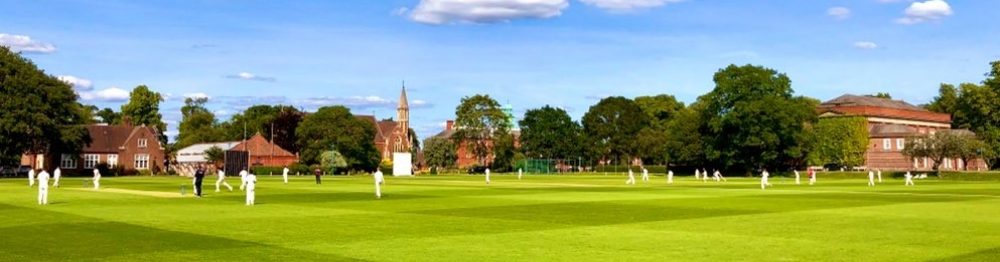
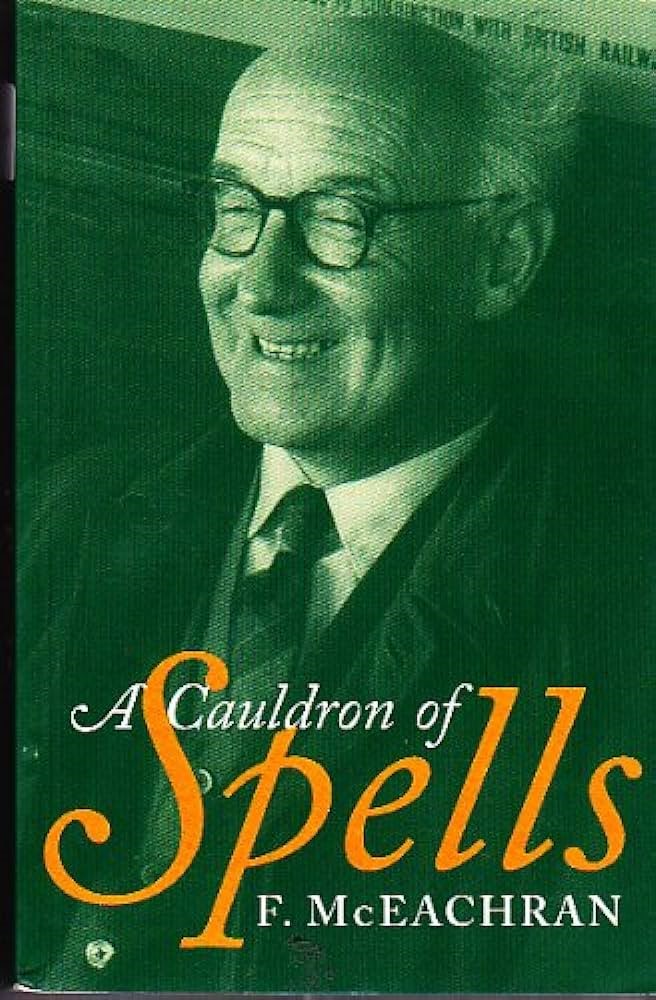
A unique highlight of the Salopian cultural calendar is the McEachran Prize. This unashamedly scholarly yet playful competition is named after iconic Shrewsbury teacher Frank McEachran – or ‘Kek’ as he was known to all.

Kek taught at Shrewsbury from 1935 to 1976. Deeply eccentric – in all the right ways – Kek invented the idea of teaching from what he called ‘Spells’. Pupils were invited to choose short extracts of poetry or prose and commit them to memory. Standing on a chair, the youngster would recite the Spell, and then spirited and scholarly discussion would follow.


This year’s 20 Spells covered authors as diverse as WB Yeats, Jane Austen, Bob Dylan, Karl Marx, Ocean Vuong, Charlotte Bronte, Echiro Oda, Seneca, George Eliot, Oscar Wilde – and the screenplay of the Barbie movie. Contestants from all five year groups read their Spell – then spoke for four minutes on whatever thoughts and ideas the Spell provoked for them.

The rapt audience was bewitched by the heady mix of intellective mischief and learned commentary. In a sound-bite world, where attention spans have shrunk to a matter of seconds, the exercise of close listening for 20 chunks of four minutes is a solid effort. The reward for the audience was a host of mini-epiphanies and intellectual satori.

Those students of Kek who committed Spells to memory decades ago can very often remember and recite them to this day. What truer testimony could there be to the efficacy of this one-off methodology? The inspiration, allegedly, for Alan Bennett’s The History Boys, Kek taught notable Old Salopians such as Sir Michael Palin, Richard Ingrams and Paul Foot (the creators of Private Eye).


Not one to follow a syllabus, Kek was a maverick whose like is probably no longer at large on the contemporary educational landscape. The teaching profession is certainly more… well, professional now. But, anything that triggers the sparkle of unfettered academic play is surely a great thing?

As the 2024 edition of the McEachran Prize unfolded at Shrewsbury School, it was easy to imagine the spirit of Kek smiling down – twinkly-eyed and approving – on this evening of free-range ‘serious fun’ of a distinctively Salopian kind.

Essays https://leowinkley.com/essays/

Dear Dr Gee

Featured

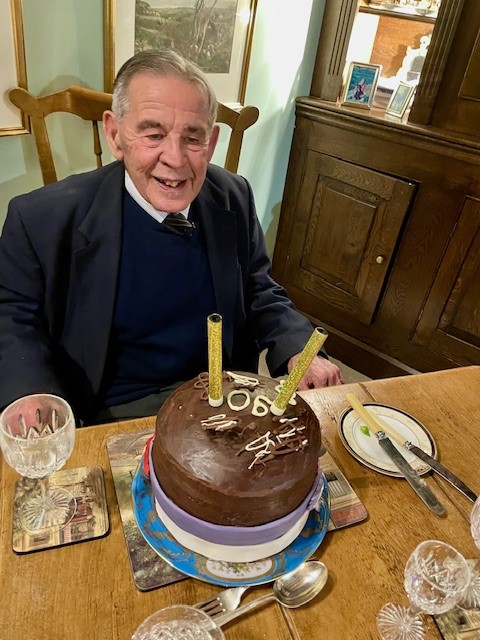
Shrewsbury legend Dr David Gee turned 90 on 12th January 2024.

A walking almanac of all things Salopian, Dr Gee has seen Shrewsbury School change and grow over seven decades. He has observed the various efforts of eight Headmasters. Our ‘Everthere’, David has the long view on Shrewsbury. His optimism for the future is infectious.

Sitting next to David at his birthday dinner, I had the delight of listening to more stories from his treasure trove of Salopian tales. He told me of the time he was summoned to the study of his first Headmaster, Jack Peterson, as a trainee teacher in 1958. “Can I give you a word of advice, Gee?”, asked Peterson. “Please do”, replied the young Gee, politely. “Never, ever become a Headmaster”, said Peterson, wearily. David would have made a wonderful Headmaster but he did heed Peterson’s advice.

Dr Gee taught at Shrewsbury between 1958 and 2012 during which time he was Housemaster of both Dayboys Hall and Severn Hill and also Head of the History and Religious Studies Faculties. He remains active in School life as custodian of the School’s history. He is often to be seen taking a turn round Top Common. And at all the big moments in the school year, he’ll be there, somewhere.

The newly nonagenarian Gee is pictured here – with (one of) his birthday cake(s).

A man of phenomenal learning – he was a Major Scholar at Winchester College – with the memory of the most venerable of elephants, David is one of the great storytellers. With a twinkle in the eye, and just a hint mischief in his voice, he will roll out tale after Salopian tale.

Although I have only overlapped with David for a mere six years of his epic stint in Shrewsbury colours, he has been kind and encouraging from the start. Gentle wisdom flows from his choice of story. He would never be so crass as to offer advice – though it is tempting to seek it. A man of exceptional energy, both intellectual and physical, I remember encountering him on the Stiperstones, more than 20 kilometres into our whole school sponsored walk in 2021. He was 87 at the time.

Here he is sitting alongside the extraordinary and wonderful Poppy Anderson, widow of the late great Sir Eric Anderson (Shrewsbury Headmaster, 1975-1980; Eton College Headmaster, 1980-1994):


Every school, every institution, anything with deep heritage, needs its torchbearer. David is ours.


Happy 90th Birthday Dr Gee.

‘Thank you’ doesn’t even begin to cover it. But thank you.

For being our Everthere.

Dear Excuse

I’ve been a teacher for almost 30 years.  I’ve heard a few excuses over those years.  Indeed, the world of education has produced the most famous excuse of all time.  “The dog ate my homework”. 

My favourite pupil excuse was when an A level Philosophy student of mine told me that they had been unable to complete their written assignment because they got had their toe stuck in the bath-tap the night before. Another asked for a deadline extension because their pet iguana had recently experienced a nervous breakdown. More recently, I recall an interview candidate who explained that they were late arriving because they couldn’t find their car. Not an excuse that inspired much confidence.

Traffic wardens hear more excuses than most as people offer the reasons why they should not be given a parking ticket. I know I’ve been guilty of this kind of excuse-making, amongst plentiful others, to my shame. There are many more examples in an amusing little book called called the Complete Excuses Handbook. I was going to bring it into school to read some examples out – but unfortunately my dog ate it.


It’s terribly easy to slide into the habit of excuse-making. For our own short-comings, those of our family, sports team or nation. In times when many are quick with hair-trigger judgments and blame-culture, we may even be encouraging a climate in which having an excuse up your sleeve is a wise precaution. However tempting it may be to retreat into excuse-making, it is a bad habit. As teachers – indeed as parents – we need to challenge and discourage a culture of excuses.

It’s important to distinguish between a reason and an excuse.

… A reason is a rational explanation for why something is the way it is; or a justification for why a specific action or decision was taken.  It involves providing evidence and facts to back up the justification.

… An excuse is something we use to deflect blame – by shifting the focus away from the action or decision and onto external factors such as circumstances, other people, or events.

Essentially, reasons become excuses when they are used to avoid responsibility.


When we shift the blame, we duck responsibility for a failure, and we also avoid the responsibility for learning from that failure. Excuses undermine trust and honesty between people. When we make excuses, we tend to convince ourselves that we could not have changed the outcome, and therefore have no need to adapt for the future. Failure becomes easier to accept in ourselves, and we never grow beyond our current state.

George Washington, the first US president said: “It is better to offer no excuse than a bad one”. Indeed, it is far better to tell the truth and face the consequences, than it is to damage trust or deceive oneself and others.

The ease with which we make excuses is a window into our character.


We have said that the most common reason for excuse-making – or the most common excuse for excuse-making – is the desire to dodge responsibility, to avoid blame and otherwise save face.  In this sense, it is an act of deception. 

The other kind of excuse is when we deceive ourselves.  Rather than facing up to the reality of a challenge or when we have fallen short, we rationalise the problem away. We invent a more comfortable illusion to avoid facing the truth. We may do this when we find tasks difficult and want to give up; or when we know what we are doing is not right.

Reverend Martin Luther King, Jr. wisely said: “It seems to be a fact of life that human beings cannot continue to do wrong without eventually reaching out for some rationalization to clothe their act”. Each of us will be able to think of excuses we have used to cover our tracks or explain away our habitual failings.

But my favourite line on the subject of excuses comes from Florence Nightingale.

An epitome of honest good work and courage; a person whose heroic devotion to duty in looking after the injured in the Crimean war has made her name synonymous with the caring profession of nursing.

In a letter to a friend, Florence Nightingale wrote very simply:

“I attribute my success to this – I never gave or took any excuse.”

Florence Nightingale

High performers – people who lead good and constructive lives – tend not to make excuses for themselves – or for others.  They have high standards.  And when they fall short, they look for reasons for the shortfall – and then search out ways put things right or mitigate them. 


At the end of the day, the week, the year, how great would it feel to be able to reflect back with honesty and integrity and say what Florence Nightingale said with such clarity? 

How would it feel to say: “I attribute my success to this: I did not invent excuses or blame others… I sought and accepted personal responsibility.  I did my best – and when it was not good enough – I looked honestly at the reasons. I asked for help and I worked hard to improve.”


So, Dear Excuse – beguilingly tempting though you are – I must continue to do my best to shut the door on you. 

Because, all the wise folk say that reward and fulfilment come most completely to those who train themselves not to make excuses.  

Dear Praepostor

Featured

Every year, a number of senior pupils at Shrewsbury take on a distinctive leadership role. They become Praepostors. Or Postors, for short.

A Praepostor is ‘one who is placed before’. Not placed ‘above’ but placed ‘before’ (or in front of) others. Their job is to serve the School.

Each Praepostor has her or his individual strengths and aptitudes; enthusiasms, weaknesses and quirks. Lead by the Heads of School and their Deputies, you work as a team to set the tone of the school and help things run smoothly.


You are the ambassadors, public speakers, listeners; the doers and makers; the movers and shapers. Custodians and change-makers. You are the organisers of lunch queues. You are doers.

You are listeners and watchers; the eyes and ears of the pupil body. You are a key channel of pupil voice in the School. You give of your time, your talent, your kindness to others; your concern for the best interests of the School.

Praepostors 2023-2024


We give you a waistcoat. We give you a tie and a pin. We give you a few privileges: you are allowed to ride a bicycle – a ‘time-expander’ – so you can get swiftly from one thing to the next. But most importantly, we give you an opportunity to give back to the School.

As you wrote your name in the book of Praepostors, you took your place in the living history of Shrewsbury School.


The volume you signed this year contains the signatures of your predecessors going backwards in time – term by term, year by year – to 1913. 110 years of Praepostors. One of this year’s signatories flipped back to 1955. And found the signature of his grandfather.

Their handwriting is all we know of their service to the School. Each signature is a personal pledge, an individual mark of commitment – and an honour. The Praepostors of yesteryear took lessons, disciplined fellow pupils and acted like junior members of staff. Nowadays, you are servant leaders, each leading out of who you are. Together, you embody the values of the School: the Salopian Virtues of kindness, wisdom, courage; self-mastery; integrity and spirit.

Thank you, Dear Praepostor, for setting the tone and leading the way. May you lead with humility and integrity: Intus Si Recte, Ne Labora.


Further Reading:

For a list of other uniquely Salopian terms, have a look here:

https://www.shrewsbury.org.uk/about-shrewsbury/school-history/salopian-terminology

Dear Media Commentator on Independent Schools

Featured

A letter on recent (January 2023) media coverage of alleged ‘wokery’ at Independent Schools

You seem to be worried for independent schools. That we are somehow losing the plot; being ‘taken over’ by a zeitgeist of ‘wokery’. It’s nice of you to be concerned. But you’re barking up the wrong tree.


You seem to be saying that if you talk about something, you become it.  What an odd way to look at things! 

If I study a paramecium, I don’t become unicellular.

If we listen to the views of others, we don’t become them. We may, however, become better, more complex beings for considering differing viewpoints. If we listen to new ideas, and are willing to challenge existing ones, we don’t become weaker. We become stronger; improved; maybe even changed.

You seem to claim that ‘private’ (i.e. independent) schools are dancing to a tune that is leading them away from their heartland. That we have lost sight of ‘traditional values’ and become mesmerised by a ‘woke agenda’ – whatever that may actually be.

I can see the media appeal of this narrative: ‘Trad schools lose their way in right-on maze’. But it rests on a shaky stack of misperceptions. Or to put it another way, it’s plain wrong.

It’s not a takeover. By anything. It’s a willed choice to address real issues. Because, as educators, we are serious about respectful dialogue; about opening minds.

It takes strength to tackle such complex and nuanced discussion. It takes guts and it takes honesty to open up to the possibility of being wrong.

It is important for all schools, of whatever type, to engage in meaningful discussion on matters of inclusion.  Schools with a strong identity, a long history, are in a great position to explore complex issues connected with gender, race and sexual orientation.  How else can we help the children in our care to navigate the world, to think critically and form their own opinions? 

I do agree that education should not be pushed about by ideologies.  Institutions should have the confidence to define and hold fast to their values.  Labelling a school as overly ‘woke’ or motivated by guilt is wrong-headed.  It suggests that a very slender or slanted understanding of what actually happens day to day in independent schools.


The word ‘woke’ seems to have two meanings. The first refers to a state of being aware and active in issues of racial and social justice. This is surely a positive meaning. The second is derogatory: the term ‘woke’ is used to suggest that views voiced are not backed up by sincere commitment and action. To be ‘woke’ – in this sense – is to pretend.

Language matters. We need to use words carefully. Especially as educators. We need to be confident and current in setting the right framework for frank and responsible discourse.

As so often is the case, we need to keep in touch with the centre of things; to keep everyone in the room. To be genuine involves appreciating that inclusion is complex; messy even. Inclusive and respectful communities need to chart a middle way between reactionary traditionalism and unchecked radicalism. Both are dangerous. One pulls up the drawbridge to new ideas; the other is like a runaway train.

‘Wokery’ in the second sense risks alienating and confusing with a superficial fixation on labels. Its buzzer seems to sound every time you make a false move, draining confidence to speak. Default traditionalism risks putting its fingers in its ears. And the key here, surely, is to listen. To actually listen. Without prejudice.


The fuel for this exploration in independent schools, as in any place of learning, is not guilt or fear or false virtue: it is respect and a desire for progress.  Schools are aware that these are live issues in wider society.  We need to be able to conduct respectful conversations to understand these issues.  It is not a matter of vulnerability to particular ideologies: it is part of our commitment – our duty – to educate and guide the young for the modern world.

You seem to claim that we are dancing to the beat of other drums rather than staying true to our own rhythms.  You seem to say that we are running scared of the disapproval of external ideologies.  That we are losing sight of our own values. 

You are right that we set down the markers of culture.  This is a precious responsibility.  We must ensure that, as we engage with the evolution of ideas, we keep hold of the values that withstand the tides of time. 

At Shrewsbury, we continue with our work on equity, diversity and inclusion: we call it our Respect Project.  The aim is to be better informed so that, as a community, we can have the sort of measured and open conversations that appreciate the nuance and complexity of inclusion. This is an ongoing process that requires commitment: inclusion is an ‘infinite game’.  At its heart, it is about appreciating and celebrating of difference. It is about each individual feeling safe to be themselves. Any parent would surely want this.    

Our school motto, ‘If right within, worry not’ was coined in 1552.  It points to the centrality of inner virtues and character strengths.  Whole person education, which is the DNA of full boarding schools such as Shrewsbury, is child-centred. This does not mean abdicating responsibility or ceasing to exercise professional judgement on what is (or is not) ‘good for the young’.

Experience brings wisdom. Certain truths last. If you don’t believe that, it’s time to hand over the microphone altogether.   As adults and as professionals, we back ourselves to make good judgements. But we also stand against the hinterland of our own experience. Our biases; our gaps. As individual teachers, we need to keep learning and moving. Which means we need to understand the issues of the day.


We need to allow all manner of views to be aired and understood.  We need to acknowledge that this means travelling into uncertain terrain. But we can’t stand still. We must venture forward.  Is it possible to navigate the complicated terrain of current ideas without losing our footing? I hope so.

We have confidence because we do this with a clear compass as our guide.  We know our true north. Our strength is the genuine traditions on which we stand.  It must be possible to be relevant and engaged without jettisoning values that stand the test of time.  Indeed, it is in being tested that these traditional values endure. 

So, no! We have not ‘gone woke’. We know who we are; we know what matters; and we have chosen to engage. We have chosen to engage because it is right for all communities, especially those that educate for the future, to pursue respect, understanding and truth.   

Put a label on that if you want. But it’s not a ‘woke takeover’.

Photo by Brett Jordan on Pexels.com

References/Reading
Dear Misogynistic Influencer

Featured

I’ve heard it said that you’re not all bad.  That you have given confidence and direction to thousands of boys and young men.  That some of your life lessons – on healthy living, nutrition and exercise – are sound.  I’ve heard it said that you provide belonging, purpose, ambition. 

There is no doubt that you are influential.  And your methods are successful. 

You are a leader.

And here the problems begin.  And the problems grow.  And they multiply and are boosted by algorithms.  They go viral, these problems.  Because of you.

Because, these life lessons are fuelled, as far as I can see, by a powerful poison. 


You are a mis-leader.

Your methods are designed to beguile.  To look good.  Healthy even.  To normalise your views on women, for example.

The values you promote as traditional, protective, quasi-religious truths are pernicious, disrespectful and harmful.  They are noxious.

If you mix the good with the bad, the bad wins.  An omelette can be made of free range, organic eggs and presented on a clean, white plate.  But, if the cook has added arsenic, it is lethal.


Socrates was condemned to death for corruption of the youth.  He was made to drink hemlock – a poison.  His ‘crime’ was getting people to think critically for themselves.  To free them from the chains of blind assumptions and received ideas.

Who knows what crimes you may or may not have committed?  That’s another matter.

But corruption of the youth?  As a parent and an educator, this concerns me deeply.  There are so many influences out there.  How do we ensure that our children know the good influence from the bad?

Good parenting, for sure.  Strong communities with open discussion.

In schools, we strive to promote values of respect, tolerance and acceptance.  Modern values that celebrate difference. 

And we live in an age of free speech. As Voltaire famously wrote: “I disapprove of what you say, but I will defend to the death your right to say it.” The same spirit that did for Socrates. And that liberates minds.

Perhaps we need to listen even more carefully these views of yours.  To understand your methods. 

All the better to dismantle them.

In some ways, you may actually help us.  If we handle you wisely.  If we examine your ways, we can identify the wrong turns our boys and men could take.  And we can better promote the wonderful variety of positive masculinities.

So, thank you, at least, for that. 

Dear ChatGPT

Featured

You are an AI language generator. A big new thing with untold powers. And my wish, it seems, is your command.

So, I asked you to write a letter. From Me. To You.

About You.

This is what You wrote…


“Dear ChatGPT

I hope this letter finds you well. As an educator and a student of Artificial Intelligence, I have been following the advancements of AI, particularly in the field of education, with great interest. I wanted to take this opportunity to share with you my thoughts on the subject and express my hopes and fears for the future of AI in education.

First of all, let me say that I am extremely excited about the potential of chatGPT and AI in general, to revolutionize the way we learn. The ability to provide personalized learning experiences for students is one of the most promising benefits of using chatGPT in education. By analyzing a student’s previous responses and learning progress, chatGPT can tailor its lessons and activities to their individual needs and abilities. This can be especially helpful for students who may struggle with certain subjects or who have different learning styles.

I also see the potential for chatGPT to improve accessibility to education for students with disabilities. The ability to provide assistance with tasks such as reading and writing, which can be a challenge for students with learning disabilities or visual impairments, could make a real difference for these students.

Furthermore, the ability of chatGPT to operate 24/7 means that students can access lessons and resources at any time of day, rather than being limited to the traditional classroom schedule. This could be especially useful for students who have busy schedules or who live in different time zones. The flexibility that chatGPT could bring to education can improve student engagement and allow for more personalized learning at the student’s own pace.

However, while the potential benefits of chatGPT in education are significant, I also have some concerns. One of my main fears is that chatGPT may not always provide accurate or satisfactory responses to student questions or inquiries. While it can generate human-like text, it may not always fully understand the context or nuances of a conversation, leading to misunderstandings or frustrated students.

Another fear is that chatGPT may lack the personal touch and connection that a human teacher may provide. While chatGPT can provide fast and efficient responses, it may not be able to fully understand or address the emotions and concerns of a student in the same way that a human can. Teaching is not only about imparting knowledge, but also about understanding the students and giving them the emotional support that they need.

Furthermore, I fear that chatGPT may replace human teachers in the classroom, leading to job loss and a reduction in the quality of education. While chatGPT can certainly be a helpful supplement to traditional teaching methods, it should not be relied upon as a replacement for human teachers. Human teachers bring a wealth of experience, knowledge, and empathy to the classroom, and they play a crucial role in the educational process.

In conclusion, while chatGPT has the potential to revolutionize the way we learn and make education more accessible and personalized, it is important to consider the potential downsides and address them. I hope that with proper implementation and research, we can realize the full potential of chatGPT and AI in education, while also preserving the human touch and connection that is crucial for effective learning.

Thank you for taking the time to read my letter, and I look forward to seeing the future developments of chatGPT and AI in education.”


Well, well. That’s a pretty good letter. Even if I say so ‘myself’. You / I raise some important issues.

It’s an exciting time. We’re at a watershed: the cusp of a paradigm shift.

Let’s watch this space.

And how you fill it…

*ChatGPT is an AI tool that can perform language generation tasks based on whatever commands its user gives it…


Dear Reputation

Featured

Transylvania has a reputation. Literally the ‘land beyond the forest’, Transylvania is known for its beautiful countryside. The Carpathian Mountains arc majestically for over 900 miles from the north to the east of the country. The rural landscape is largely unchanged since medieval times. It’s like going back in time.

Not many will have visited Transylvania – as I recently did – but pretty much everyone has heard of it. The ‘Hotel Transylvania’ films may have done their bit, but Transylvania has long had a reputation. Mention Transylvania and the same things will come to mind. Castles; forests; wolves – and vampires. The legend of Count Dracula.

Bram Stoker’s epistolary novel, Dracula, first published in 1897, draws heavily on Transylvanian folklore. For example, there are many tales of the Strigoi, un-dead souls that rise from their graves and haunt the villages of Transylvania. The defence against them? Garlic and incense. Some scholars say that Dracula is part-inspired by King Vlad, who was ruler of Wallachia in the 15th Century. Arguably one of the cruellest rulers of all time – he was known as Vlad the Impaler – it’s easy to imagine how he earned his grim reputation.

125 years on from its publication, Bram Stoker’s Dracula enjoys a reputation as the archetypal horror novel.  Reading Dracula in Transylvania made me think about reputations – fictional and real.  How reputations are earned; shaped and carried through time; lost and recovered.  I’ve always felt rather uneasy with the word ‘reputation’: ‘beliefs or opinions that are generally held about someone or something’. Just because a view is ‘generally held’ does it necessarily mean it’s true?  Surely a reputation depends on perspective: how much we know and where we are viewing things from?  Thirdly, a concern for reputation might make us suspicious that things are being done for appearance rather than out of sincerity.

But, like it or not, reputation is a reality.  Individuals have reputations.  Our digital reputations precede us like avatars.  The media shape our views of people and institutions.  Businesses and organisations invest in their reputations as they navigate change.  (We might look at what’s going on at Twitter as a current example).  Countries, and their leaders, have reputations; markets turn on perceptions.  In general, we do seem to care about reputation.  But should we?

Shakespeare cautions wariness on the matter of reputation, calling it “an idle and most false imposition; oft got without merit; and lost without deserving”.  True, that a reputation that took 20 years to earn could be lost in a few minutes.  Remember Gerald Ratner?  However, it would be easy to find examples where reputation is lost unfairly; or indeed earned unjustly.  Because, to a great extent, our reputation exists in the minds and hands of others.   

More reassuringly, Abraham Lincoln observed that “Character is like a tree and reputation like a shadow. The shadow is what we think of it; the tree is the real thing.”

The two are inseparably related. Interestingly, Count Dracula himself casts no shadow; his image does not appear in mirror. It is as though he has no true character. His reputation, however, travels before him. In the end – spoiler alert! – Dracula is defeated by a small group of brave individuals working together in the face of his fearful reputation.

The Greek stoic philosopher Epictetus said: “If you are ever tempted to look for outside approval, realize that you have compromised your own integrity.  If you need a witness, be your own”.  He went on to remark that “skilful pilots gain their reputation from storms and tempests’’.  Socrates advises that the “way to gain a good reputation is to endeavour to be what you desire to appear”.  In other words, be good, be wise, be kind – and the reputation will follow. 

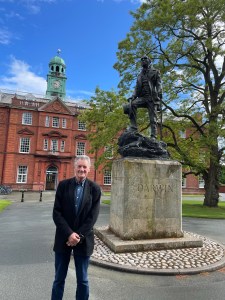
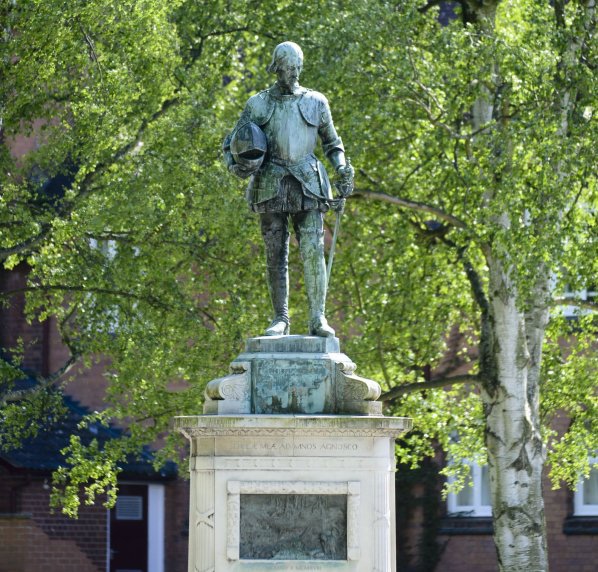
At a time of Remembrance, and in the week when we welcomed Poet Laureate Simon Armitage to School, it’s appropriate to call to mind the life and reputation of Sir Philip Sidney.  Poet, scholar, MP and soldier, Sidney earned his reputation.  A pupil at the School in the late 16th century, Sidney stands in statue form by the Moss Gates.  His statue casts its shadow on the War Memorial that carries the names of Salopians who gave their lives for their country.  

Sidney died leading his troops in the battle of Zutphen in 1586, aged 31.  The story goes that he took off his thigh armour on the grounds that it would be wrong to be better armoured than his men. As he lay injured on the battlefield, it is said that Sidney gave his water to another wounded soldier, saying: “Thy necessity is yet greater than mine“.  Sidney died of a wound to the thigh.  A model of virtue and character, he is an icon of what we would now call ‘whole person education’.    

Our School aim is to educate and empower young people to flourish as individuals and contribute positively to the world around them.  Our motto – ‘If right within, worry not’ – reminds us of the centrality of virtues above superficial perceptions.  The reputation we strive for day in day out, through the efforts of our pupils and staff, is the delivery of truly excellent whole person education. 

Posted 11 November 2022

Dear Ever-Changing Thing

Featured

It was Heraclitus who observed that there is nothing permanent except change.

The great thing about institutions, such as well-established schools, is that this change takes place within the stable context of a long-held identity.

No institution should stand still. Equally, we should not be blown about by passing fads.

Culture is like a colloid: it has a shape but it gently morphs over time. There must be change, but usually it is gentle, measured, deliberate. And fuelled by reflection, listening, honest self-criticism. This is willed change.

A wave of communal optimism seemed to flow from the Queen’s Platinum Jubilee Celebrations. So much was rightly said about the constancy, certainty and loyalty that Her Majesty has brought in her 70 years on the throne. For millions, she has been the still and dignified centre of an ever-changing world.

Times have changed. Some change has been rapid; other change more of a creeping thing. The Queen herself has changed, of course – gathered experience, matured, aged. Yet, she has been constant. Because the things she stands for, the virtues she embodies, are timeless. They do not change. That is what we mean by integrity. If right within…

When Sir Michael Palin (OS) stayed with us during his visit [May 2022] to Shrewsbury, he told me how the place felt reassuringly familiar but better in so many ways. It was not just the physical things – the many new buildings and facilities – but the feel and buzz of the place which he said was both true to its past but felt fresher, kinder, contemporary. You’d hope so, really, but it was lovely to hear him speak so warmly of the School he left in 1961. The change he saw was evolution rather than revolution. A forward journey plotted with a familiar and trusty compass.

Sir Michael Palin – with Charles Darwin behind him


Nothing stays the same. Language itself is, of course, an ever-changing thing. For example, I discovered recently that the word ‘fun’ (which I love to couple oxymoronically with the word ‘serious’), originally meant ‘to cheat or hoax’. Hence ‘to make fun of’. However, its meaning gradually shifted to take on the positive connotation of having a good time. The words ‘terrific’ and ‘tremendous’ – undoubtedly good ones to see in your children’s end of term reports – were originally about fear and trembling. To ‘grin’ was to bare teeth in pain; it then became the word for a fake or forced smile, before becoming the real thing.

To be ‘egregious’ was a compliment – ‘eminent’, rather than the modern negative ‘offensive’. ‘Sad’ used to mean ‘satisfied’, then it went to meaning ‘serious’, then ‘grave’ then ‘sorrowful’. ‘Smug’ once meant ‘crisp and tidy’ – a good thing, surely? – but nowadays, it’s undoubtedly something to avoid.

As we enter the closing weeks of an academic year, the pupils are grinning and bearing the seriousness of exam season (public and internal); and our Upper Sixth are approaching the major change of leaving school. The school will change again as new pupils and staff join in September. As times roll on, we must do all we can to avoid being smug or egregious; and to embrace positive change with a tremendous spirit of serious fun…

As our Shrewsbury School motto states: ‘Intus Si Recte, Ne Labora’. If right within, worry not. The right things within us are constant. It is virtues and values of integrity that remain steady and true.

The challenge is to keep hold of them amidst a world of ever-changing things.

Dear Emma

Featured

It seems that the whole world wants a tiny slice of your time and your head must be spinning. Yet, as with everything else apparently, you have it all under control.

18 years old, Grand Slam champion, instant global icon. Seeing how you played; seeing how you talk about how you played, sends us all to raid the thesaurus.

Gutsy, courageous, spirited.

Composed, cool-headed, calm under pressure.

Exuberant, joyful, zesty.

Authentic, grounded, genuine.

The real deal.

A champion.

Already an icon.

See the source image
Emma Raducanu – Image from SkySports

Your style of play makes you a mesmerising watch. Your conduct off the court is equally compelling.

Few will experience the scrutiny that you have already been exposed to – and at such a young age. Not many have accomplished a breakthrough quite as explosive as yours. And at the age of 18.

I think back to my 18 year old self. Best not to dwell too long on the messy mix of self-doubt and self-righteousness; flashes of confidence undercut by a need for acceptance, validation, the applause of the crowd. Faults and double faults smoke-screened by bluster. It was all McEnroe and not enough Borg in my case. (That dates me). It was the line judges. The racquet. The sun in my eyes. The cross wind that made me fluff the ball toss. Yes, it took me a long while to take responsibility.

Then there’s you. Not only a champion, an athlete, a history-maker, an achiever of sporting miracles. But also, it seems, utterly unfazed by the feverish swirl of the moment. You are at home with yourself and your surroundings. Poised. At one with yourself. Real.

We have a saying at my school – Intus Si Recte Ne Labora: “If right within, worry not“. In your game, you have to stay within the lines. Yet you do it with such freedom. You make exceptional look so easy. Something so sublime, so uncomplicated in its excellence is the fruit of hard work; of gifts diligently cultivated.

You praised your parents – for their strong values and demanding standards; you deflected glory onto your team; the support of others. All true, and deserved praise, no doubt.

But let’s be honest. This is about you. You radiate something purely brilliant. You are right within. And you will inspire others – many many others – to discover and share their light.

Character as true and as luminous as yours can only come from within. From the person you are. You have lit up the sporting world. As you go on, surely to further glories, I hope your unique light shines on unfiltered and true.