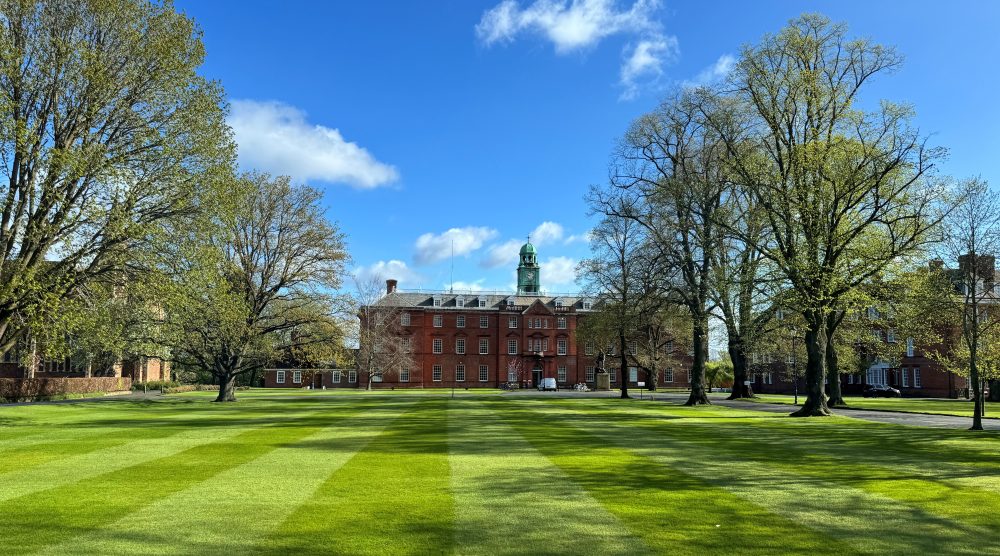
It was lovely to see you again up close. Not me, personally. But, my kind.
The Artemis II mission sent four astronauts farther away from home than any humans have travelled since 1972. They sent pictures and words back to the rest of us here on Earth. You look amazing.
Some may well question the point of spending squillions of dollars propelling humans on a slingshot round the dark side of the Moon. Others will draw inspiration from the leadership and courage of the crew; the ingenuity and teamwork of such extra-terrestrial endeavours; and the advancements that come from such boundary-pushing science. During the mission, the crew named two craters on the Moon: one after the Commander’s late wife, Caroll. (The other was called Integrity – one of our Six Salopian Virtues). It was good to have this word advanced again. We need it here on the Blue Planet.
Defenders of such lavishly expensive off-planet exploits argue that space-spending isn’t just money thrown into a metaphorical Black Hole. It is cash invested on Earth through jobs, research, engineering, universities, manufacturing and technology that eventually benefits everyone. The Artemis programme aims to help develop cleaner energy systems; advance materials science; improve medical technologies and inspire the next generation of scientists and engineers.
At the start of the Summer Term 2026, I shared some thoughts on the famous ‘Overview Effect’ experienced by astronauts who see the Earth as a singularity from space. There are no visible borders. The Earth looks vulnerable and alone. Almost uniformly, these returning astronauts talk of a life-changing shift in perspective; a deep realisation of the need to nourish our shared humanity and protect the unique environment we share. For example, William Anders (Apollo 8) remarked:
“We came all this way to explore the Moon, and the most important thing we discovered was the Earth.”
Meanwhile, back on planet Earth, we see terrifying daily examples of global leadership that is domineering, reckless and arrogant. You won’t be able to see this detail from where you are, Dear Moon. But, it’s real. Such international turmoil can feel strangely distant when viewed from Shropshire, but we can see its economic effects at petrol stations, with oil prices surging, and understandable fragility in the national mood. As educators and parents, we want our young people to be engaged in understanding world affairs. They are the voters and leaders of the future, after all. We want them to shoot for the Moon in all they do.
You are 239,000 miles away from us, Dear Moon. Only a tiny proportion of humanity will get to make such a journey, of course; but, we can all see you. When we look up at the Moon mindfully, we get a powerful sense of our finitude; and our need for one another. Perhaps, we can in some way use the Moon as a mirror; to look back on ourselves on Earth, as these astronauts have, and shift our perspectives powerfully.
Artemis II launched on 1 April – April Fool’s Day. For many, the idea of being propelled into space is deeply foolish. Others may say it is a waste of money and time. Yet for many, such exploits capture the imagination and remind us of the human appetite for breaking new frontiers.
It takes exceptional qualities – and a big dash of luck – to become an astronaut. High-grade intellectual skills; strong character; patience, courage and determination. Astronauts are rare examples of human excellence.
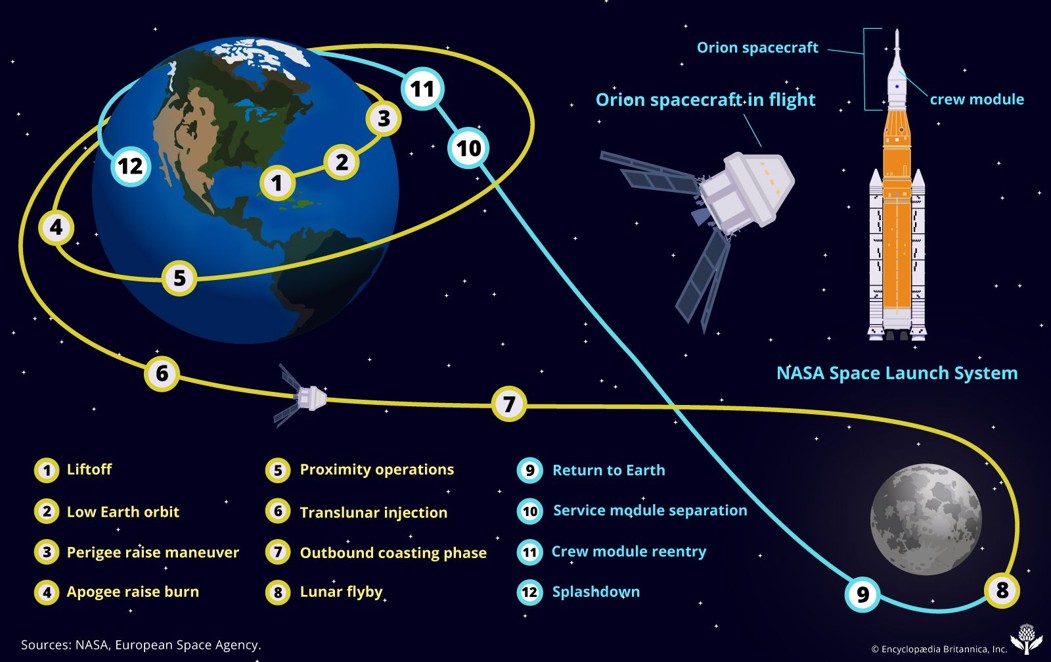
These four brave souls looped around the far side of the Moon on a “free‑return trajectory,” which basically means the spacecraft slingshots around the Moon and heads home even if the engines cut out. To be the other side of the moon – out of contact with humanity for 40 minutes – that in itself is quite a thing.
During the mission, the crew swooped within 5,000 miles of the Moon’s surface: close enough to take stunning photos, but not close enough to bump into anything. They even captured an “Earthset,” where Earth dips behind the Moon like a cosmic sunset.
———-
Why Artemis? Well, Artemis was the Greek goddess of the Moon, hunting, wilderness, and childbirth – an interesting divine portfolio. She was known as a strong, independent figure, a hunter depicted with bow and arrows – but also a protector of wildlife, representing balance between power and care. So, Artemis is a decent role model – a female icon – independent, courageous, protective. The Artemis programme aims to land the first woman on the Moon.
NASA deliberately named its modern Moon programme Artemis to link with the original Apollo Moon missions of the 1960s and 1970s. Artemis is the twin sister of Apollo, the god of the Sun, light and knowledge. I suppose the first mission was about re-uniting these heavenly twins.
Charles Darwin, our famous alumnus, would perhaps note that the first living creatures to orbit the Moon were two tortoises who went on the Zond 5 mission in September 1968. Tortoises were chosen as ideal test subjects for a risky, long‑duration flight with limited life‑support. They can survive with very little food and water, having exceptionally slow metabolisms. They cope well with stress and confinement; radiation exposure beyond the earth’s protective magnetic field; being relatively unreactive to sudden changes in environment, they dealt well with launch forces, vibration, and isolation than more sensitive animals. And, indeed, the two tortoises were apparently very ‘chill’ about the whole thing.
Thankfully, our attitudes to animal testing have moved on quite a way since the early days of space exploration. Laika, the dog, was the first living animal to orbit the earth in 1957. Sadly, it was a one-way ticket. By 1968, public reaction to launching animals to their deaths in space had grown pretty negative, for good reason. Tortoises were seen as a lower‑controversy choice, especially since scientists believed they had a good chance of surviving.
The Zond 5 tortoise mission showed that living organisms could survive a lunar journey, paving the way for Apollo 8 just three months later, when humans orbited the Moon for the first time.
Back to the Artemis mission, four humans safely came home as the Orion capsule hit Earth’s atmosphere at nearly 25,000 miles an hour (360 x the national speed limit!). Temperatures around the capsule soared to 2,760°C, hot enough to melt steel. After a 13‑minute descent, parachutes deployed and the capsule splashed down in the Pacific Ocean off San Diego.
What might upbeat messages might we take from Artemis II, I wonder? Four things, at least:
- Curiosity is powerful. The mission happened because people asked, “What’s next?”. Human curiosity drives progress.
- Teamwork matters. NASA, Canada, Europe, and countless engineers worked together. Big goals require big teams. We can apply this on our everyday level. I hope my beloved Arsenal do, for example…
- Diversity strengthens exploration of all kinds. Better results come from listening to different perspectives. Groupthink is sterile. Diverse minds bring more interesting solutions.
- Risk is part of growth. Carefully managed, of course, but a spirit of adventure will see us grow. Standing still, we fix and become statues of ourselves. This term will provide another opportunity for growth – for all of us.
At Shrewsbury, as we enjoy the relatively safe and lucky land of opportunity that is Salopia, we are acutely aware of the need to honour our good fortune by making the most of every day. Together, we pursue the biggest educational project of becoming good humans who contribute positively to the world around us. True, not many of us will become astronauts: but it is my fervent belief that every Salopian will, in their life’s work, do good things not just for themselves but also for others. We should never underestimate our individual capacity to do good – immediately and locally, in how we look after others and radiate active kindness – and to affect progress on a bigger scale.
I leave you, Dear Moon, with these words from that inimitable earth-dweller Oscar Wilde:
“With freedom, books, flowers, and the Moon, who could not be happy?”
Thankfully, we have plentiful access to these good things, and more besides, in our blessed patch of the Earth. Let’s make the most of it. And remember how we look from the Moon.
Floreat Luna! Floreat Salopia!

