Dear Bean

The humble bean is, intrinsically, all about potential.  For anyone working in education, icons of potential are irresistible fodder.  If all is right within the bean, we need not worry: it will grow magnificently, in the right conditions. 

The Humble but Glorious Bean

Outwardly, a bean is a very simple thing from which many good things come. Coffee; chocolate; baked beans (wrongly named but still delicious).  Beans are great wholesome foods full of plant-based protein and fibre.  Admittedly, they can bring some gusty after-effects, but nothing is perfect.

The bean has, for centuries and across many civilisations, been the preferred medium for learning to count.  Beans are mathematical icons. The abacus would have been strung with beans.  Although accountants with a tendency to pedantry are sometimes referred to pejoratively as bean counters, the humble bean is a positive symbol of accuracy and diligent learning.
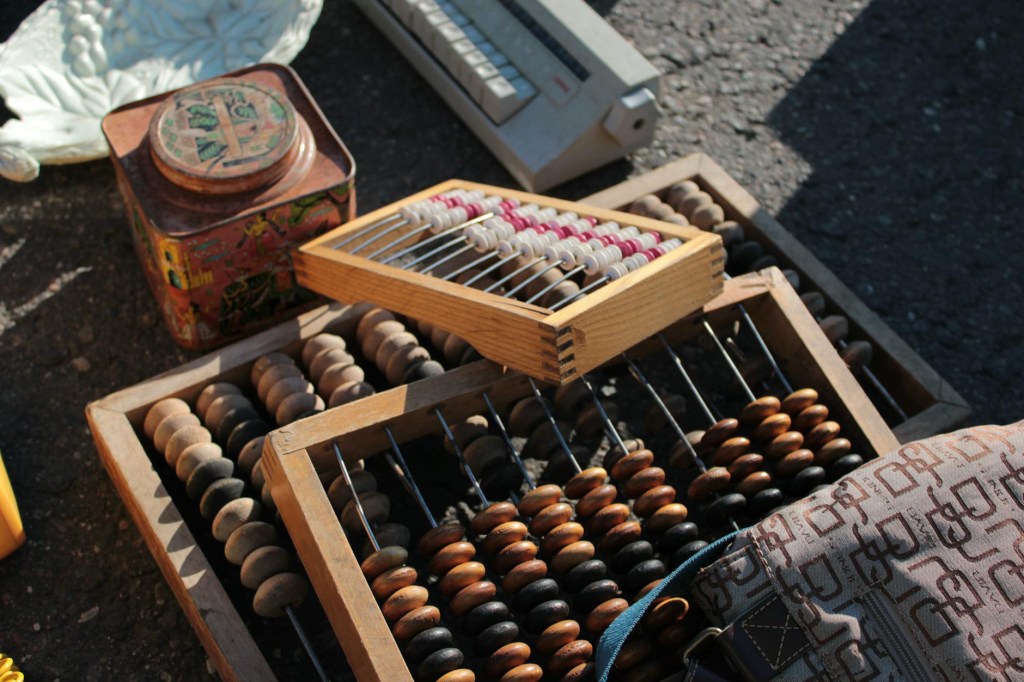
Bean Counters

In ancient Greece, beans were instruments of democracy. The practice of using beans for voting dates back to the city-states, where citizens gathered to make decisions on public matters. Voting was often conducted in a way that preserved secrecy and fairness, and beans provided a simple, practical solution.  Typically, two types of beans were used: white beans for approval and black beans to reject. Citizens would cast their vote by placing a bean into a jar or urn.
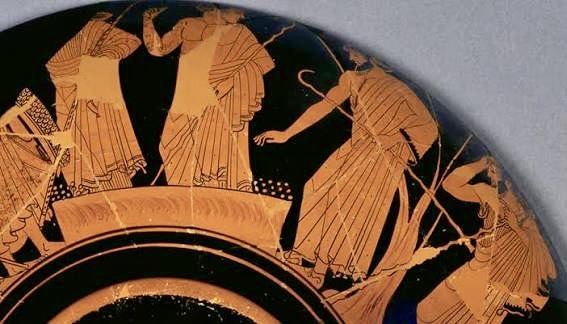
Casting Votes with Beans in Ancient Greece

The symbolism was powerful: a single bean could determine a person’s fate or influence the direction of a city-state. This system emphasized equality—every citizen’s bean counted the same, regardless of wealth or status. It was an early example of participatory governance, showing how simple objects could uphold democratic principles and civic participation.  So, the bean is a symbol of democracy – respect for individual opinions – and the right to privacy. The phrase ‘to spill the beans’ comes from this ancient democratic context.


The English fairy tale, ‘Jack and the Beanstalk’, is a standard in the festive Panto season in the UK.  Jack, a poor country boy, trades the family cow for a handful of magic beans, much to the dismay of his widowed mother.  However, the beans grow into a massive beanstalk reaching up into the clouds. Jack climbs the beanstalk and finds a road that leads to a big house, with a tall woman standing outside. He asks for breakfast and she gives him some, but warns that he might become breakfast himself if he is not careful, as her husband is an ogre with a savage appetite.   While Jack is eating, the ogre comes home.  The woman tells Jack to hide in the oven.
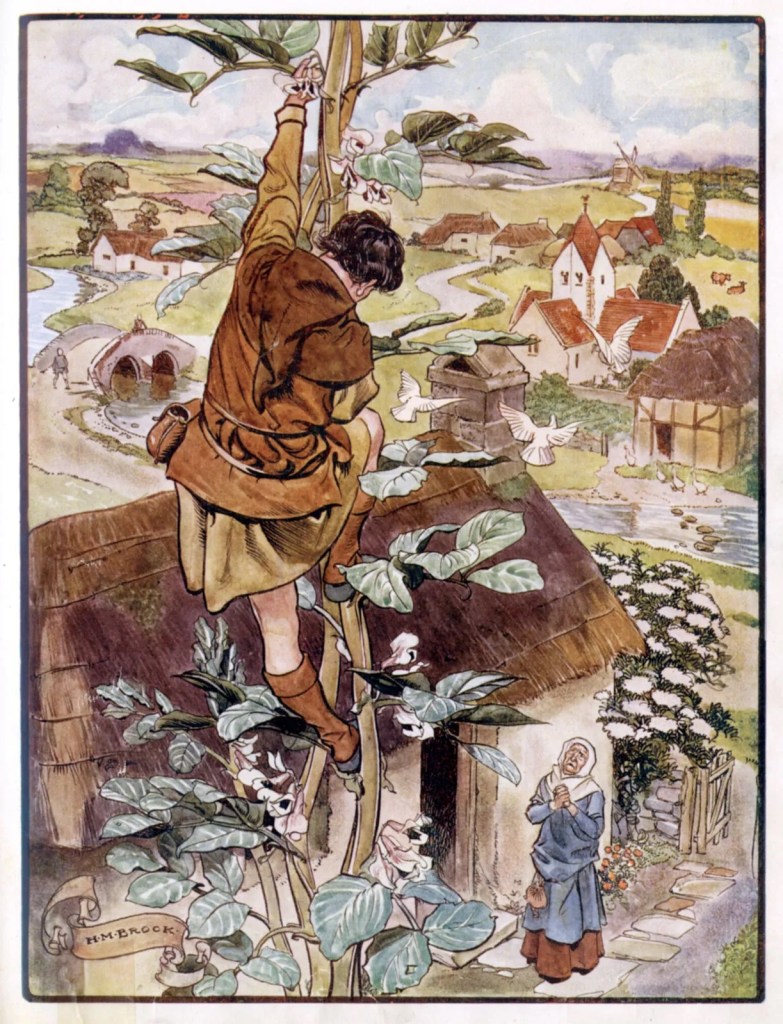
Jack Climbs the Beanstalk

Sensing the boy’s presence, the ogre cries his famous “fee-fi-fo-fum”.  However, the ogre’s wife, who has rapidly formed a liking for Jack, distracts her giant husband with a lavish breakfast of three broiled calves.  Afterwards the ogre takes out some bags of gold. Counting the gold, he falls asleep. Jack creeps out of his hiding place, takes one of the bags, and climbs down the beanstalk. He gives the gold to his mother, who is very happy. They live well for some time, until it is almost used up.

Jack decides to try his luck once more and climbs up the beanstalk. Again he meets the woman at the doorstep and asks her for breakfast. While he is eating, the ogre returns and Jack quickly hides in the oven. Again the ogre suspects that somebody is there, but again his wife deceives him, allowing Jack to hide.  After breakfast, the ogre asks his wife for “the hen that lays the golden eggs”. He says “Lay!” and the hen lays an egg of pure gold. The ogre falls asleep, and Jack takes the hen and climbs down the beanstalk.

Though Jack and his mother now have an inexhaustible source of golden eggs, Jack is not content. He climbs the beanstalk for the third time. He avoids the ogre’s wife, slipping into the house unseen and hiding in the wash-house boiler.  When the ogre comes home, he once more cries out “Fee-fi-fo-fum”, suspecting someone is there. His wife, rediscovering her marital loyalty, suggests that the little rogue that stole both his gold and lucrative hen may be hiding in the oven. But when they find the oven empty, the ogre eats his breakfast, then asks his wife to bring him his golden harp which sings beautifully when he orders it to “Sing!”

Once the easily-fatigued ogre has again fallen into a post-prandial slumber, Jack takes the harp and starts to leave, but the harp is a talking harp, loyal to the ogre, and calls out “Master! Master!” The ogre wakes up and sees Jack running away and pursues him. Jack nimbly climbs down the beanstalk, then asks his mother to bring an axe. He chops down the beanstalk and the ogre falls to his death. Jack and his mother are now very rich. They live happily ever after, which includes Jack’s inevitable fairy tale ending: marrying a princess. 


Magic Beans?

The positive spin on this story is that Jack’s adventure is all about the rewards for curiosity, courage and ambition. Jack dares to take a risk, trading the cow for mysterious and allegedly magic beans, and that bold choice leads to extraordinary opportunities. His climb up the beanstalk symbolizes striving for something greater, reaching beyond the ordinary. Jack’s resourcefulness and bravery in facing the giant suggest that challenges can be overcome with grit and determination. That small beginnings (like a bean) can lead to big outcomes.

However, the story is problematic.  Should we really admire Jack’s daring gamble in swapping a cow for some magic beans?  Should we actually celebrate his craft in stealing from the ogre in the land above the magical beanstalk?  Or should we view him as reckless and greedy?  Is the ogre, in fact, just misunderstood? 

The tale rather glosses over the morality of Jack’s actions. Jack steals from the giant: gold coins, a hen that lays golden eggs, and a magical harp. While the giant is portrayed as fearsome, we don’t get his side of the story – what it’s like to be an ogre whose space is invaded and possessions taken; he’s an ogre, a giant who, we are expected to say, deserves to be outwitted because he is different and threatening – even when you break into his house and sweet-talk his wife.   This tale suggests that cleverness and daring justify dishonesty, which is a problematic lesson.   

We might also question the loyalties of the ogre’s wife which sway rather easily to favour the young lad from the land below.  Or, we might view her as a victim too – of unhealthy masculinity of different types.  Or what about the post-colonial lens?  Jack, the imperial conqueror plundering treasures from foreign lands; the ogre the ignorant savage.


Should we, in fact, admire Jack?  Would it not be more admirable if Jack’s success had come through integrity, not exploitation and deception.  We might also worry that the story romanticizes risk without considering consequences.  Jack acts impulsively, and things could have ended very differently.

Should we fear and vilify the ogre?  Ever since the appearance of Shrek, ogre PR has been on the up.  However, this tale suggests that anything non-human and strange is not to be trusted.  Even if it’s minding its own business when you come bundling into its domain.

Now, you might say, it’s just a fairy story – a Christmas panto – and I’m being a boring killjoy labouring over the meaning of the tale.  But… the stories we tell shape the way view the world.  The accounts we accept (fictional or real), without critical reflection become our world; the heroes we promote and the villains we push away.  

Later versions of this fairy tale add some previous villainy to the giant’s rap sheet – eating oxen and little children – to make us feel more comfortable with Jack’s actions.  Although Jack is essentially a vigilante on the make, it seems much more acceptable that he robs and kills an ogre who has himself been wicked.  But, in the original, he is really targeted for being big, different, well-off and from another land.  Not the best justification for stealing his livelihood and ultimately knocking him off.


Jack’s tale might urge us to dream big and take a few risks.  No bad message as we start a new year, I suppose.  Reflecting with a more critical eye, it may also suggest that we temper our ambitions, and pursue them with a more measured and collaborative spirit, with honesty and responsibility.  Good things come through effort as much as through daring. 

Surely, it is better to accomplish our aims through collaboration and hard work, rather than shortcuts and deceit. In climbing our various ‘beanstalks’, we should pursue our goals boldly, but with fairness, kindness and respect for others.  

In other words, just as ‘Beanz Meanz Heinz’, being fully human means being fully humane beans.


Notes

This letter was written on 6 January (The Feast of Epiphany, a time of gifts).  It was a kind of epiphany to learn that there’s a day set aside especially for celebrating the bean in all its many, simple glories.  6 January is also National Bean Day.  

The iconic advertising slogan ‘Beanz Meanz Heinz’ was created in 1967 by copywriter Maurice Drake.  There are more than 57 Heinz varieties, but founder Henry J Heinz, who formed the company in 1896, thought the number 57 had a good feel to it – and it combined his and his wife’s ‘lucky numbers’.

Dear Football

This is a love letter. To the ‘Beautiful Game’, as they call you.

We’re certainly in love with you at Shrewsbury.  Salopians had a hand in drafting the original rules of the game.  Blackburn Rovers took their colours from Shrewsbury School. 

We’re in a long-term relationship: it’s a faithful marriage that is also a love affair.


History records that only four schools have won both the English Schools’ U18 FA Cup and the Independent Schools FA Cup.  Shrewsbury is one of them.  Having reached the final of the ESFA in 2023, our boys went one better the following year, winning the Cup in a thrilling final at the Bet365 stadium (home of Championship side Stoke City) in May 2024.

Football – like all competitive sport – feeds on hope.  It brings so many of life’s emotions into its rectangle of grass.  At its best, it creates meaning, belonging, joy. Moments of shared disappointment and despair too. Controversy. Disputed decisions. VAR…

The exquisite simplicity of the scoring system amplifies this commotion of emotion.


Defeat stings. The last minute goal. The dip in form. The injury list. The dodgy signing. The clean sheet sullied. The open goal missed. The penalty fluffed.

And the penalty saved!

Because always, it seems, the wellspring of hope is refreshed. The love flows again.

Moments of individual brilliance. The training ground move that clicks. The team goal. The giant-killing. The comeback. The eerie silence, all eyes fixed, breath held, as ball heads toward net. The 98th minute winner. The ecstasy!


At its worst, of course, it can attract jingoism, tribalism, ugliness, violence.  Dissent and disagreement. Disrespect for authority. There are times when we might wish for more ‘rugby-style’ respect for the ref. There are times when we might feel the game is going to the dogs. That money, TV rights, and all the trappings of fame, the daily media circus, have made the game lose its way.

Football is a results business, as the coaches, managers and pundits often say. The ability to grind out wins may trump playing the game beautifully. But, it is the way we play that really matters – surely…? (Tell that to Shrewsbury Town, currently rooted to the foot of the League 1 table [12 December 2024] with 11 points from 18 games….).


All the more significant then, that at Shrewsbury School, it is not so much the results that we celebrate – though there is much to cheer in both our girls’ and boys’ programme.

Rather, and above all, it is the culture on and off the pitch that makes me rejoice.  The values upheld by the coaching staff.  The loyal but respectful support of the crowd.  The commitment to passionate but fair play.  The attitude to training. 

The beautiful fact is that everyone, at whatever level, boy or girl, junior or senior, can always improve.

And so, we stay in love with the beautiful game.

Shrewsbury School crowned ESFA U18 National Champions | News | Shrewsbury School

Afternote:

All games are beautiful to me! See Dear Cricket. And others to follow…

Dear Charles – on the origin of ‘On the Origin…’

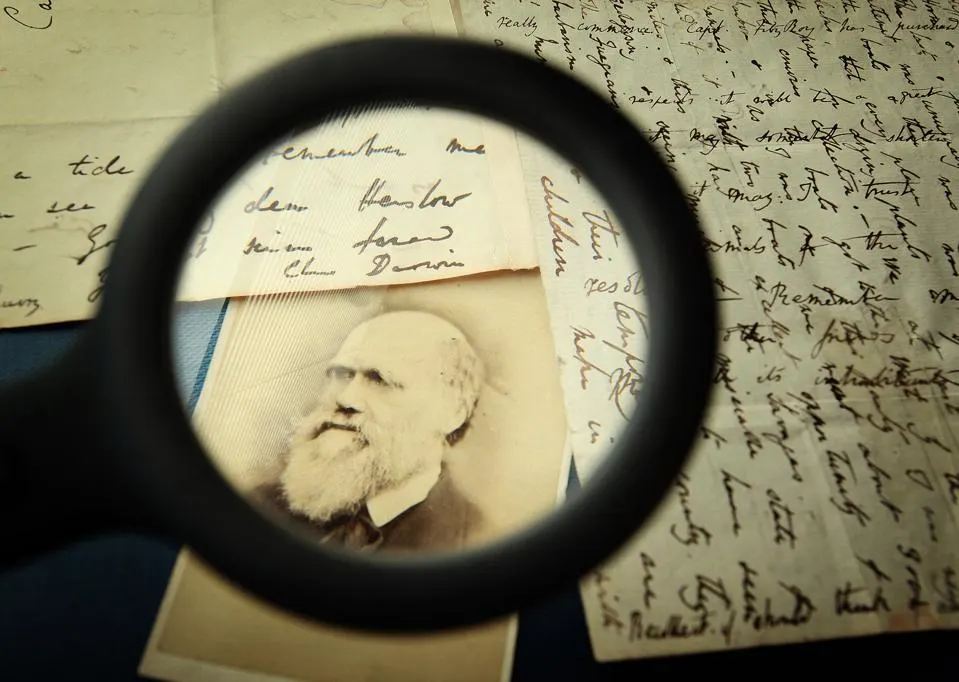
On the 166th anniversary (24 November 2025) of the publication of the world’s most famous science book (what are the other serious rivals for this title?), a few short reflections on the work that made your name a global badge of courageous learning.

Firstly, the title: it’s something of a mouthful.

‘On the Origin of Species by Means of Natural Selection, or the Preservation of Favoured Races in the Struggle for Life’. I think I read that you (and your publisher, John Murray) toyed with at least seven different options. Nowadays, many will refer to your book as ‘the origin of species’. Not many will have read its title fully – never mind its contents. And yet, the ideas created new worlds of thinking.

Secondly: the ‘great delay’.

Famously, you waited 20 years to publish. Two decades. Was this a matter of deliberation? ‘Should I? Shouldn’t I?’ Was it a matter of fear? Or was it a scholarly commitment to getting it right? Commenting on the effect of this lengthy keeping under wraps, you said you didn’t regret holding it back. Indeed, that it was all the better for the waiting.

In these times of instant, unfiltered communication, the astonishing length of this wait strikes me yet harder. And the risk too, surely – as others were also onto these ideas – Alfred Russell Wallace, for example. Others could have eclipsed you, Charles. How did you hold onto something so explosive for so long?!

Thirdly: the courage.

This surely relates to the delay. You knew that what you were proposing was seismic. You knew that when it was finally released, it would catapult you into unquantifiable territory. This third thing then, is a thing of courage. To travel, to gather evidence, to consider and ruminate, and write new worlds. And to have the courage to publish.

Fourthly: your own origins. At Shrewsbury School.

Although it is said that you found your school days at Shrewsbury hard going (too much Latin, not enough free thinking), I like to imagine that you would relish the contemporary whole person education on offer today. You would love the ‘serious fun’, the dialogue, the championing of the individual. As it was, the educational grounding you were given provided the boundaries and limits against which you ultimately pushed. Perhaps the relative confinement of formal education back then was essential to your origins as a thinker?

Storms followed you. Billions of words have been written and said about your masterwork. I add these tiny droplets to this vast ocean. 166 years on, I celebrate the ground-breaking power of the 20 year-delayed 150,000 words that set sail under your epic title:  ‘On the Origin of Species by Means of Natural Selection, or the Preservation of Favoured Races in the Struggle for Life’.

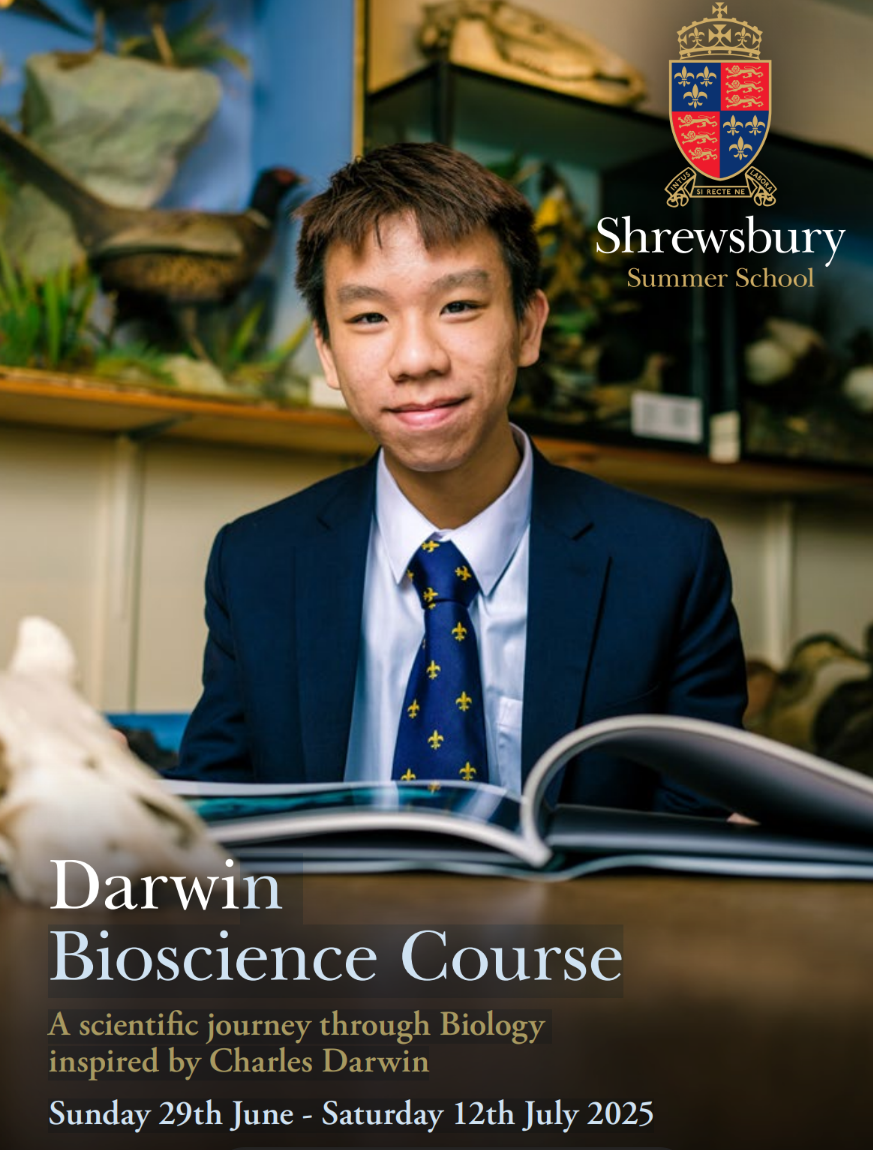
166 years on, children from all around the world can come to Shrewsbury School to find our more – and visit our unique collection of Darwin-related items. Including first editions of your most famous work…


2025 Edition

Dear Emma

Featured

It seems that the whole world wants a tiny slice of your time and your head must be spinning. Yet, as with everything else apparently, you have it all under control.

18 years old, Grand Slam champion, instant global icon. Seeing how you played; seeing how you talk about how you played, sends us all to raid the thesaurus.

Gutsy, courageous, spirited.

Composed, cool-headed, calm under pressure.

Exuberant, joyful, zesty.

Authentic, grounded, genuine.

The real deal.

A champion.

Already an icon.

See the source image
Emma Raducanu – Image from SkySports

Your style of play makes you a mesmerising watch. Your conduct off the court is equally compelling.

Few will experience the scrutiny that you have already been exposed to – and at such a young age. Not many have accomplished a breakthrough quite as explosive as yours. And at the age of 18.

I think back to my 18 year old self. Best not to dwell too long on the messy mix of self-doubt and self-righteousness; flashes of confidence undercut by a need for acceptance, validation, the applause of the crowd. Faults and double faults smoke-screened by bluster. It was all McEnroe and not enough Borg in my case. (That dates me). It was the line judges. The racquet. The sun in my eyes. The cross wind that made me fluff the ball toss. Yes, it took me a long while to take responsibility.

Then there’s you. Not only a champion, an athlete, a history-maker, an achiever of sporting miracles. But also, it seems, utterly unfazed by the feverish swirl of the moment. You are at home with yourself and your surroundings. Poised. At one with yourself. Real.

We have a saying at my school – Intus Si Recte Ne Labora: “If right within, worry not“. In your game, you have to stay within the lines. Yet you do it with such freedom. You make exceptional look so easy. Something so sublime, so uncomplicated in its excellence is the fruit of hard work; of gifts diligently cultivated.

You praised your parents – for their strong values and demanding standards; you deflected glory onto your team; the support of others. All true, and deserved praise, no doubt.

But let’s be honest. This is about you. You radiate something purely brilliant. You are right within. And you will inspire others – many many others – to discover and share their light.

Character as true and as luminous as yours can only come from within. From the person you are. You have lit up the sporting world. As you go on, surely to further glories, I hope your unique light shines on unfiltered and true.

Dear Cricket

Featured

This is a love letter.

You know the old saying: ‘Out of sight, out of mind”?  Well, that couldn’t be further from the truth for me.  The longer you are away, the more I miss you.  Every saying has its opposite.  With you, it’s definitely a matter of ‘Absence makes the heart grow fonder’.

It’s just not the same without you.  Summer is on its way and the stage is set.  And yes, of course, I completely understand why you can’t be here.  It’s not your fault.  You are a stickler for the rules and are rightly taking your responsibilities seriously.  I know we need to do the right thing and stay apart.

My head tells me this.  Of course, it does.  But my heart?  It longs for you.

I miss the sight of you.  The theatre of green in which you play out your many acts.  The drama of each moment, rich with potential, as something might happen, or not, with the very next ball.  The eager mobilisation of the players, white-clad on the green grass, at the end of the over.

I miss the sound of you.  The thud of ball on ‘deck’; the solid ‘thock’ of willow on leather that sets off a soothing ripple of applause.  The charged, low rev, anticipatory silence between balls.  The slow-moving silence of quiet overs, where sleep seems just around the corner.  The eruption of a wicket.  The sporting greeting of seeing a new adversary to the crease.  The push and pull of players calling to each other.  ‘Come on buddy’.  ‘Next ball’.  ‘Nice areas’.  You can be quite noisy too.  Remember Saturdays at Headingley.  Quite the party animal…

I miss the shape of you. Whether it’s the Friday night friskiness of T20 or the sedate Sunday best of a test.  Or on your days off, casually attired in the back garden.  You look great in anything, really.  I was looking forward to seeing you in your new Hundred get-up. 

I miss the smell of you.  Cut grass.  Linseed oil.  The occasional waft of beer or ice cream on a gentle summer breeze.  Other people’s fancy picnics.

I miss the way you talk.  All stats and facts; and poetry and jokes and random diversions; the idle chat; the shared speculation. 

And, your greatest charm: uncertainty of outcome.

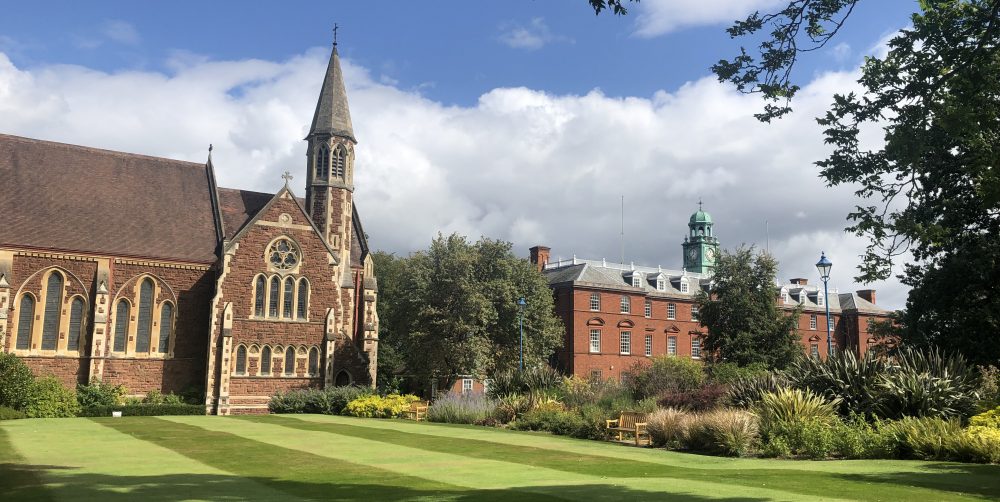
View of the playing fields at Shrewsbury. A perfect setting in which to watch and play cricket.

It’s true, I’m remembering the very best of you.  The perfect days we had together.  You do have your moments: rainy days when the covers stay on and you refuse to come out to play; dull days when you can’t find a way to make life interesting.  Honestly, though, those grey days don’t linger in the memory. 

And until you do, I’m going to read your old love letters.  I shan’t dwell on the difficult days.  I’m going to look at photos and films of what we did last summer.  Lord’s, then Headingley.  Wow.  Or our trips to Australia – say, Melbourne 2010?  Other happy times at home: Edgbaston or Old Trafford in 2005.  Or back again to Headingley, in 1981, when we were just starting out together.  Ah, those early days… 

And so on, I’ll keep playing back the memories until you’re back here by my side.

A summer without you?  It’s just not cricket.  So, please, come back soon. 


[Written during the first COVID-19 Lockdown of 2020. A summer when there was no cricket in England – even though it is a game well-suited to social distancing!]