Dear Invigilator

Featured

Like excellent waiters and the best referees, you are scarcely noticed. Only ever heard when absolutely necessary.  You are watchful: you judge your interventions with expert knowledge of the rules of the examination game.  You are mindful of the one-take-movie pressure bearing down on all those young heads that are earnestly bowed over their examination desks.  You emanate a calm and enabling control.  You invigilate.

In schools across the land, the sports halls, gyms and assembly rooms have undergone their annual springtime metamorphosis. The Public Examination season is underway again. Desks have been lined up at regulation distance.  Institutional clocks have been synchronised.  Notices have been posted.  ‘Silence please – exams in progress’.

And with all this annual examination activity, you appear: a seasonal creature, with beady eye and soft step. It’s your time to shine. Or rather, it’s your time unobtrusively to enable the candidates to shine. Examination conditions apply. And it is you who applies them. The examination invigilator.

When I was doing exams, it was mostly the teachers that did the invigilating.  And some were more vigilant than others. A few did their marking whilst shooting the occasional glance across the exam room.  Others were noisy prowlers, coughers, fidgeters.  You sensed their presence and a corner of your mind had to deal with them: there was a nagging awareness of their movements. 

Not so now. The invigilator is a specialist. And rightly so. Not only because teachers have lots of even better things they could be doing with their skills than patrolling exam halls, but because invigilation is an art. Maybe even a calling.

Invigilators are masters of silent observation.  Noiselessly gliding with rubber-soled stealth up and down the aisles of countless exam halls. Cat-like, you slink down the lines, paws poised to make a corrective tap.  Ready to pounce with a treasury tag; an extra booklet of paper; a moment of expert assistance. An intervention.
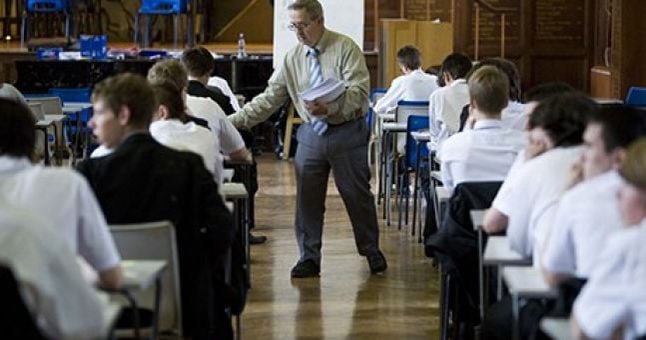
Easy, perhaps, for the candidate to think lowly of the invigilator.  Maybe some perceive you as a troubling part of the examination challenge; a minor menace in the labyrinth; a grim-faced bearer of the examination paper.  Those reckless foolish few bent on misdeeds may view you as referee to be gamed.  Or, perhaps it’s easier not to think of you at all. 

This would be to undervalue and misunderstand the role of the invigilator.  She or he is the person in the examination room immediately responsible for upholding the integrity of the external assessment process.  Integrity: an evocative value word – what word appears above integrity in the pantheon of virtues?  Not many.  This is a noble responsibility.  And it is much more than patrolling. 

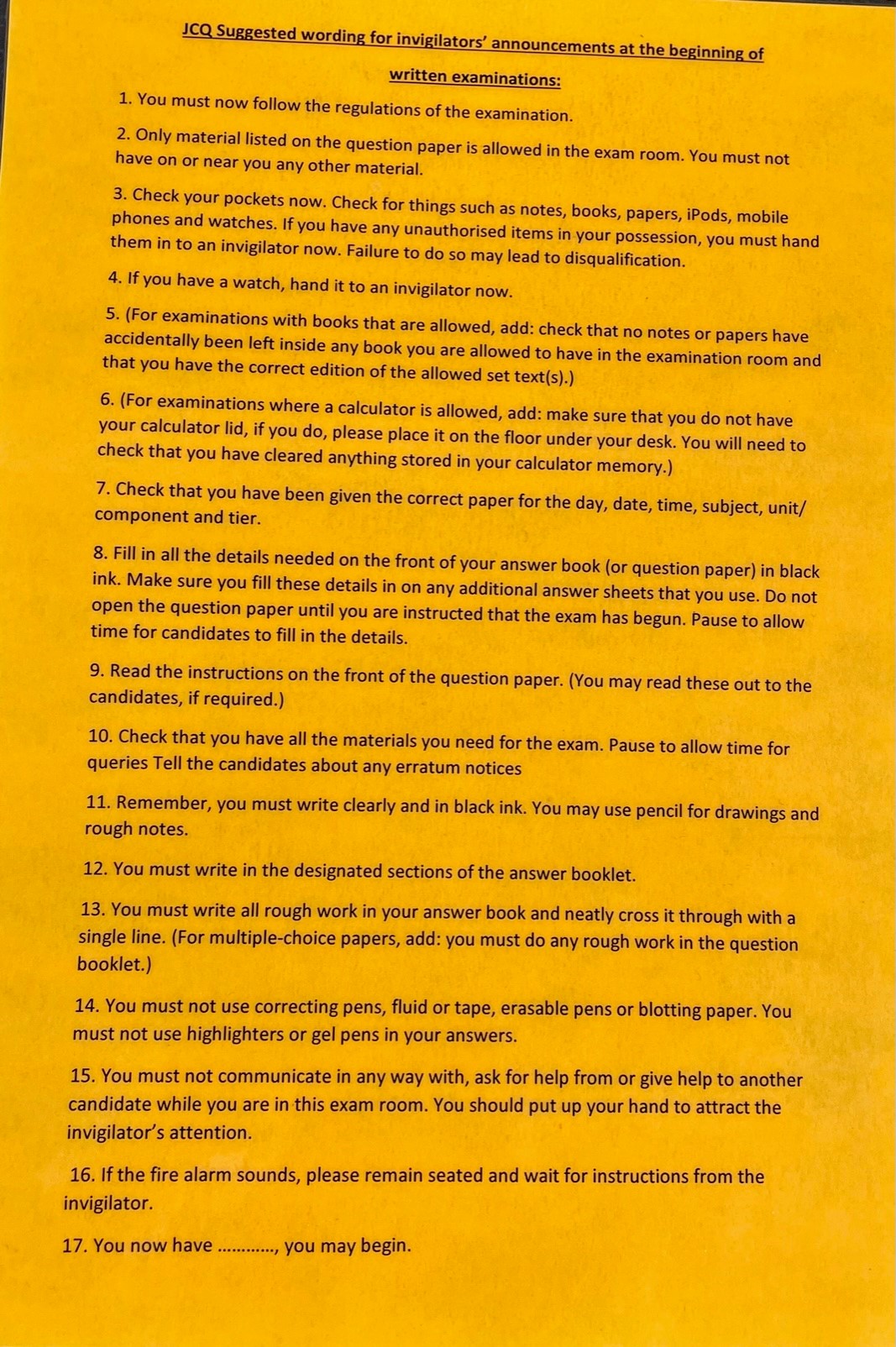
The Joint Council for Qualifications* (JCQ) details the invigilator’s role as: ensuring all candidates have an equal opportunity to demonstrate their abilities; ensuring the security of the examination before, during and after the examination; preventing possible candidate malpractice; preventing possible administrative failures.

Malpractice is incredibly rare – because schools take their duties seriously; and because invigilators are professionals. As the invigilator’s eagle-eyes scan the examination hall, these duties are her professional creed. Fairness; equal opportunity; ensuring things go as well as they can for the candidates.
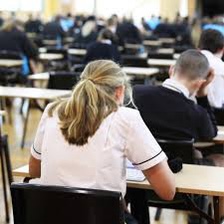
So, dear invigilator, as you survey the room, I wonder what noble thoughts fill your mind. Do you recite the creed of your occupation like a mantra? Do you compose shopping lists or make travel itineraries? As you share and curate silence, what thoughts to do have?

The great meditators of Buddhism repeat to themselves a simple wish: ‘May all beings be happy!’.  What would be the mantra of the examination invigilator?  As the candidates sit at their desks, we would hope that they are in a state of flow.  The invigilator must, of course, be neutral, a silent beacon of integrity. A sentinel.  

I know you have to keep your mind on the job.  But the watchman’s mind is always free to think its thoughts.  And as you do, I harbour the hope that some aspect of your mind’s power is given to a general emanation of goodwill to the young minds you are overseeing.

May all examination halls be well invigilated.  Under examination conditions.  And with kindness. 


*The Joint Council for Qualifications is a membership organisation comprising the eight largest providers of qualifications in the UK. The JCQ provides a single voice for its members on issues of examination administration and, when appropriate, qualification and wider education policy.
Dear 2022 Leaver

Featured


Always pass on good advice.  […] It is never any use to oneself.’   So said Oscar Wilde.  Another legendary wit, PG Wodehouse, similarly observed: ‘I always advise people not to give advice’.  Which gives at least two good reasons to ignore everything else that follows… 

Yet, it’s my solemn duty, as a headmaster, as a parent, as a person of 50 odd years – some of them very odd – to take this opportunity to offer a final volley of advice to you – our leavers – today.   

And the theme, irresistibly, is that of the journey.  ‘Oh, the places you’ll go!’ 

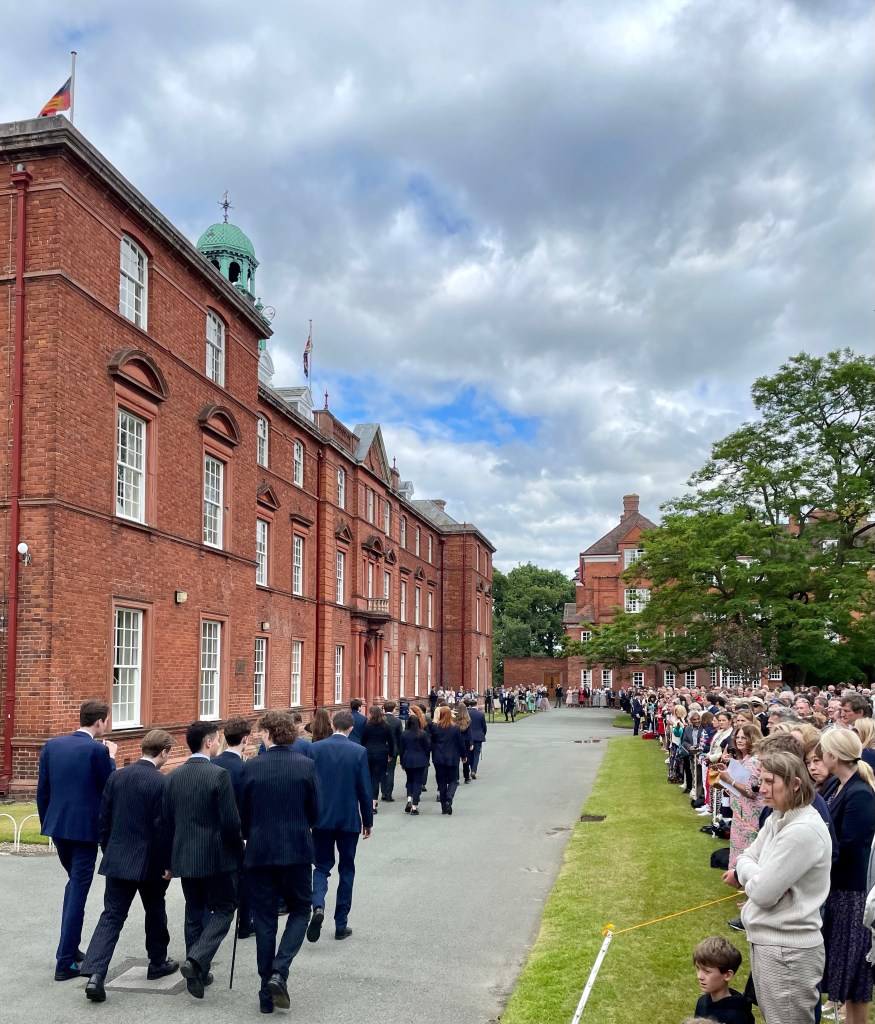
Because today is about departures.  175 of them – each individual, each full of hope and dazzling potential.  Each journey preciously unique.  Some of you know exactly where you’re heading – ‘you’ll head straight out of town’.  Others are going to see where the winds take you.   All of you will go out into the world and make a difference.  Because:

You have brains in your head.
You have feet in your shoes
You can steer yourself
Any direction you choose

+++

Cue another inevitability: a final reference to our most famous Old Salopian…

In August 1831, Charles Darwin rushed home from a geology trip to Wales to find a letter from his Cambridge professor and mentor J. S. Henslow. It contained a chance of a lifetime: an invitation to go on a trip around the world on the HMS Beagle. Darwin was elated—he was longing to travel and explore natural history in tropical lands.

His father, however, threw cold water on the idea. It was time for Charles to settle down, he said, not go dashing off on some “wild scheme.” The plan was reckless, dangerous and unfitting for a future clergyman. Despondent, Charles turned down the invitation. But his father had left one ray of hope: “If you can find any man of common sense who advises you to go, I will give my consent.” No one was more sensible and respected by his father than Charles’s uncle Josiah Wedgwood. Fortunately Josiah sided with Charles, collaborating to craft a point-by-point response that changed his father’s mind – and Charles Darwin’s future.

When Darwin began the five year Beagle voyage, he was green and inexperienced.  He returned a seasoned naturalist.  He grew from a wide-eyed observer into a profound analytical thinker.  Darwin knew himself better – and he had the beginnings of a theory that changed the world.

+++

Leaving school is a defining moment of self-determination.  Today, your ships set sail.  We parents and staff are standing on the harbour wall.  We will wave you off with final words of advice and high hopes that your journey is full of adventure, full of discovery.

Final Callover

What advice can we give?  Perhaps this simple instruction:  “Be who you are and say what you feel: because those who mind don’t matter; and those who matter don’t mind”.  Not the words of Mahatma Ghandhi; nor Michelle Obama; nor our own Charles Darwin.  Theodore Geisel.  Better known as Dr Seuss whose words are on the inside of our order service today.  Five years of a Shrewsbury education, and the Headmaster quotes Dr Seuss! 

For me, Seuss was a genius.  A professor of serious fun.  Running through all the eccentric nonsense, there is a golden thread of humane and kindly wisdom. 

Dr Seuss’ stories always affirm our individual integrity to be who we are, and confidently so.  He reminds us that whilst we will always care what others think of us – we should not fear judgement. 

You’re off to Great Places!
You’re off and away!

Albert Einstein – another professor of serious fun – said that “Life is like riding a bicycle: to keep your balance, you must keep moving”.  The journey again.  This time on a bike.  Sometimes we will spot the potholes and be resourceful in riding round them; other times we will need the resilience to ride through them.  Keep moving.

This is ‘Good Advice’.                                                  

+++

Just a few weeks ago, I gave the eulogy at the funeral of my 98 year old step-grandmother, Marie.  Her life’s journey had taken her from the blitz years in London, to mobster life in Brazil, through motherhood into grand and great grandparenthood.  We called her the Old Bat. 

In one of my last conversations with her, Marie passed on her top bits of advice.  “Leo”, she said, “You should always be early; and you should always say thank you.  And whatever you do, you should always give 100% – unless you’re giving blood”.  She cackled merrily.  Her journey almost over, the Old Bat still had joy in her heart.

Listening to people talking about their memories of Marie, it struck me that nobody mentioned her qualifications – or lack of them; how much she did or didn’t earn.  No-one spoke about her CV.  After a long, eventful life, people remembered Marie’s virtues – the kindness she showed to others. 

Much of the time, entirely understandably, we focus on the accumulation of skills; the accrual of aptitudes – qualifications – passports to the next port of call; tickets to ride.  Yet, in the final analysis, whilst our successes may be praiseworthy and our accomplishments noble, it is how we treat other people that is the true measure of a life.  And, as Philip Larkin concludes in his exquisite poem ‘An Arundel Tomb’: “What will survive of us is love.”

As you leave school, I hope your journey is a long one, full of adventure, full of discovery.  In our reading, Constantine Cavafy channels Homer’s epic poem The Odyssey.  After fighting the Trojan Wars, our hero, Odysseus, takes 10 years to get back to his homeland, the island of Ithaka.  On his journey, he endures endless obstacles and distractions; alluring sirens and seducers; intoxication; various terrifying monsters, storms and shipwreck.

The poet suggests that it is the manner in which we pursue our goals – the ‘how’ of our lives – that will truly define us.  As we each pursue our own personal Ithakas, it is the voyage that makes us.  Looking further, we see that Ithaka – our intended destination – is not an external thing; it is self-knowledge.   We remember, the two-word message at the oracle in Delphi: ‘Know Thyself’.

Photo by Pixabay on Pexels.com

The legendary physicist and another exponent of serious fun, Professor Richard Feynman, shrewdly observed: “The first principle is that you must not fool yourself — and [that] you are the easiest person to fool.”  It seems extraordinary – but it is all too easy to mislead ourselves. 

We’re living in the post-truth era, where thoughtful reflection, tolerance and civility are so often side-lined by knee-jerk ‘boo-hooray’ rhetoric and cancel culture; where truth – shaped by algorithms – reverberates in the echo chamber of our personal timelines.  It has never been more important to think for ourselves; to be honest with ourselves.  “If right within”.  

You are in a wonderful position to go out there, in the wide open air, and make good things happen. 

Not by accident, then, do we place kindness at the heart of the Salopian Way.  Our Six Virtues, which we hope you embody and enact in life, promote the survival of the kindest.  Ways of gentleness.  Paths of peace.

Finally: weather is the accompaniment to life’s journey.  Maya Angelou exhorts us always to put a rainbow in someone else’s cloud.  Because kindness changes other people’s weather. 

Better than advice, I offer a time-weathered wish, a blessing resonant with hope for your journey:

‘May the road rise to meet you;

may the wind be ever at your back;

may the sun shine warm upon your face;

and the rain fall soft upon your fields.’

These are moving words.  Yet, we know, of course, that the road will not always rise to meet us.  Sometimes it will be bumpy, rough or unmarked.  The wind will as likely blow full in the face.  The sun will often disappear behind clouds.  The rain will sometimes fall in wasteful torrents or fail to appear when we need it most.  As with Odysseus, this blessing addresses the truth that we can decide, even in adversity, how we see the journey ahead of us.  Whilst we cannot make the weather, we can choose the clothes we wear. 

So, as you set out for your Ithakas, for the places you’ll go, I hope that you clothe yourselves with eulogy virtues – wisdom, courage, kindness.  Love.  Keep a faithful heart and your thoughts raised high.

I wish you good friends to share your marvellous journey; wisdom to find your purpose; resilience to deal with the wrong turns; love and hope to fuel the journey; and kindness to extend to all those you meet along the way.

And until we meet again, may God hold you ever in the palm of his hand.

+++

Words shared with our 175 Upper Sixth Leavers – and their parents – as they became Old Salopians on 2 July 2022.

Leo Winkley, Headmaster