Like excellent waiters and the best referees, you are scarcely noticed. Only ever heard when absolutely necessary. You are watchful: you judge your interventions with expert knowledge of the rules of the examination game. You are mindful of the one-take-movie pressure bearing down on all those young heads that are earnestly bowed over their examination desks. You emanate a calm and enabling control. You invigilate.
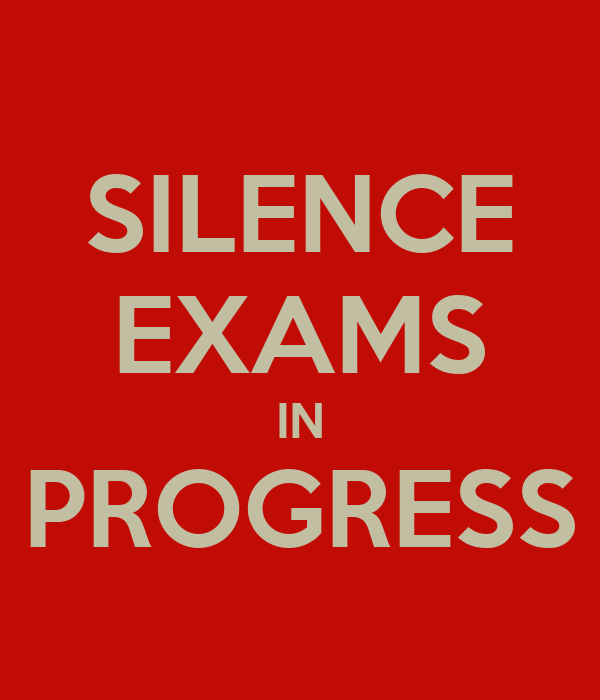
In schools across the land, the sports halls, gyms and assembly rooms have undergone their annual springtime metamorphosis. The Public Examination season is underway again. Desks have been lined up at regulation distance. Institutional clocks have been synchronised. Notices have been posted. ‘Silence please – exams in progress’.
And with all this annual examination activity, you appear: a seasonal creature, with beady eye and soft step. It’s your time to shine. Or rather, it’s your time unobtrusively to enable the candidates to shine. Examination conditions apply. And it is you who applies them. The examination invigilator.

When I was doing exams, it was mostly the teachers that did the invigilating. And some were more vigilant than others. A few did their marking whilst shooting the occasional glance across the exam room. Others were noisy prowlers, coughers, fidgeters. You sensed their presence and a corner of your mind had to deal with them: there was a nagging awareness of their movements.
Not so now. The invigilator is a specialist. And rightly so. Not only because teachers have lots of even better things they could be doing with their skills than patrolling exam halls, but because invigilation is an art. Maybe even a calling.
Invigilators are masters of silent observation. Noiselessly gliding with rubber-soled stealth up and down the aisles of countless exam halls. Cat-like, you slink down the lines, paws poised to make a corrective tap. Ready to pounce with a treasury tag; an extra booklet of paper; a moment of expert assistance. An intervention.
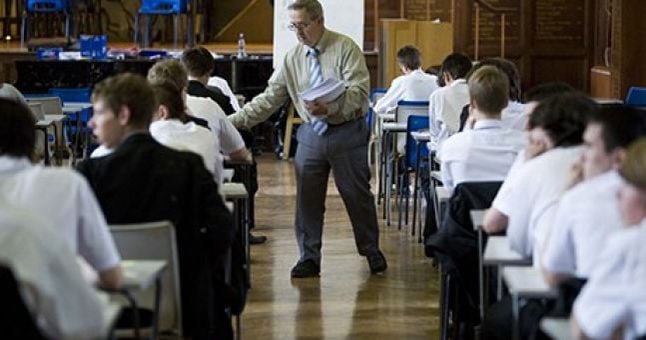
Easy, perhaps, for the candidate to think lowly of the invigilator. Maybe some perceive you as a troubling part of the examination challenge; a minor menace in the labyrinth; a grim-faced bearer of the examination paper. Those reckless foolish few bent on misdeeds may view you as referee to be gamed. Or, perhaps it’s easier not to think of you at all.
This would be to undervalue and misunderstand the role of the invigilator. She or he is the person in the examination room immediately responsible for upholding the integrity of the external assessment process. Integrity: an evocative value word – what word appears above integrity in the pantheon of virtues? Not many. This is a noble responsibility. And it is much more than patrolling.
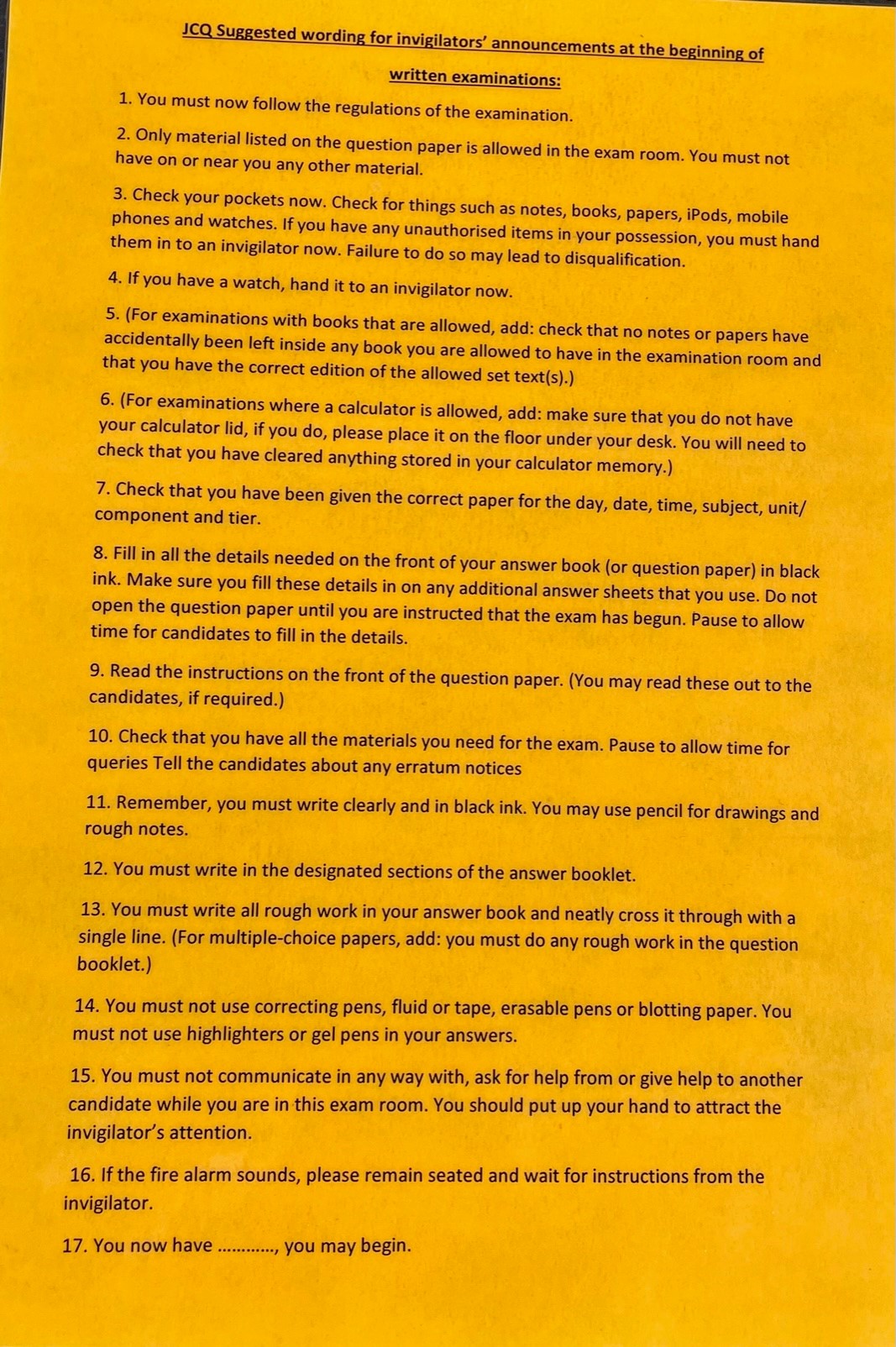
The Joint Council for Qualifications* (JCQ) details the invigilator’s role as: ensuring all candidates have an equal opportunity to demonstrate their abilities; ensuring the security of the examination before, during and after the examination; preventing possible candidate malpractice; preventing possible administrative failures.
Malpractice is incredibly rare – because schools take their duties seriously; and because invigilators are professionals. As the invigilator’s eagle-eyes scan the examination hall, these duties are her professional creed. Fairness; equal opportunity; ensuring things go as well as they can for the candidates.
So, dear invigilator, as you survey the room, I wonder what noble thoughts fill your mind. Do you recite the creed of your occupation like a mantra? Do you compose shopping lists or make travel itineraries? As you share and curate silence, what thoughts to do have?
The great meditators of Buddhism repeat to themselves a simple wish: ‘May all beings be happy!’. What would be the mantra of the examination invigilator? As the candidates sit at their desks, we would hope that they are in a state of flow. The invigilator must, of course, be neutral, a silent beacon of integrity. A sentinel.
I know you have to keep your mind on the job. But the watchman’s mind is always free to think its thoughts. And as you do, I harbour the hope that some aspect of your mind’s power is given to a general emanation of goodwill to the young minds you are overseeing.
May all examination halls be well invigilated. Under examination conditions. And with kindness.
*The Joint Council for Qualifications is a membership organisation comprising the eight largest providers of qualifications in the UK. The JCQ provides a single voice for its members on issues of examination administration and, when appropriate, qualification and wider education policy.



 Leo Winkley: Letters From Shrewsbury