Dear Bean

The humble bean is, intrinsically, all about potential.  For anyone working in education, icons of potential are irresistible fodder.  If all is right within the bean, we need not worry: it will grow magnificently, in the right conditions. 

The Humble but Glorious Bean

Outwardly, a bean is a very simple thing from which many good things come. Coffee; chocolate; baked beans (wrongly named but still delicious).  Beans are great wholesome foods full of plant-based protein and fibre.  Admittedly, they can bring some gusty after-effects, but nothing is perfect.

The bean has, for centuries and across many civilisations, been the preferred medium for learning to count.  Beans are mathematical icons. The abacus would have been strung with beans.  Although accountants with a tendency to pedantry are sometimes referred to pejoratively as bean counters, the humble bean is a positive symbol of accuracy and diligent learning.
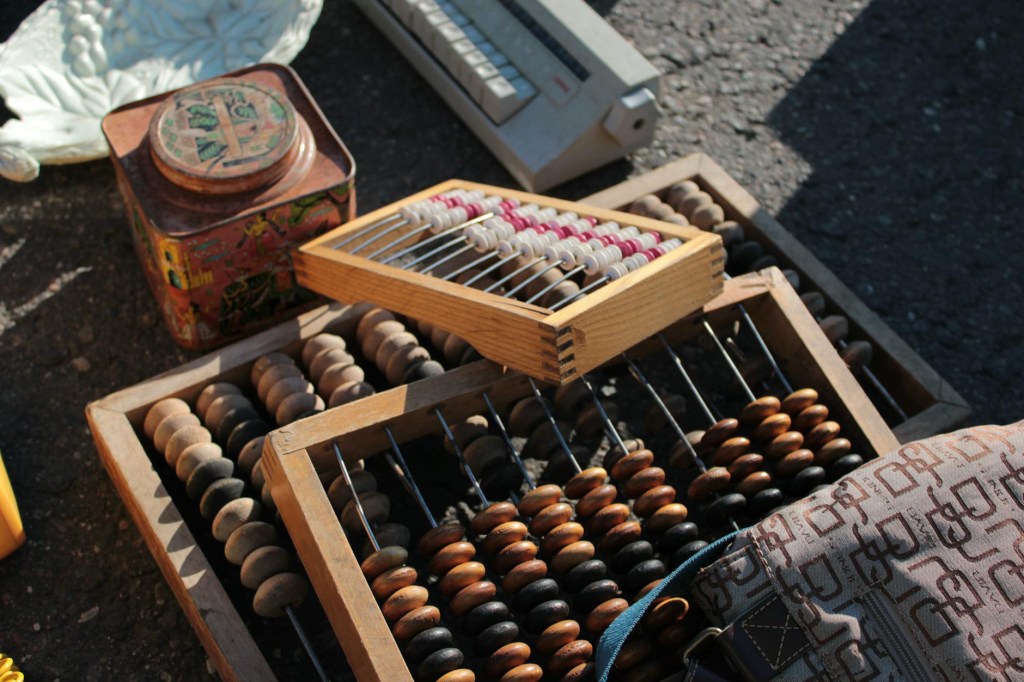
Bean Counters

In ancient Greece, beans were instruments of democracy. The practice of using beans for voting dates back to the city-states, where citizens gathered to make decisions on public matters. Voting was often conducted in a way that preserved secrecy and fairness, and beans provided a simple, practical solution.  Typically, two types of beans were used: white beans for approval and black beans to reject. Citizens would cast their vote by placing a bean into a jar or urn.
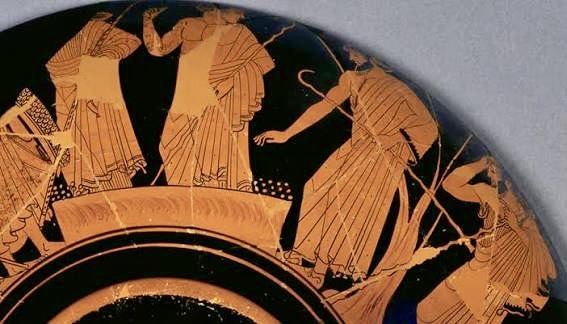
Casting Votes with Beans in Ancient Greece

The symbolism was powerful: a single bean could determine a person’s fate or influence the direction of a city-state. This system emphasized equality—every citizen’s bean counted the same, regardless of wealth or status. It was an early example of participatory governance, showing how simple objects could uphold democratic principles and civic participation.  So, the bean is a symbol of democracy – respect for individual opinions – and the right to privacy. The phrase ‘to spill the beans’ comes from this ancient democratic context.


The English fairy tale, ‘Jack and the Beanstalk’, is a standard in the festive Panto season in the UK.  Jack, a poor country boy, trades the family cow for a handful of magic beans, much to the dismay of his widowed mother.  However, the beans grow into a massive beanstalk reaching up into the clouds. Jack climbs the beanstalk and finds a road that leads to a big house, with a tall woman standing outside. He asks for breakfast and she gives him some, but warns that he might become breakfast himself if he is not careful, as her husband is an ogre with a savage appetite.   While Jack is eating, the ogre comes home.  The woman tells Jack to hide in the oven.
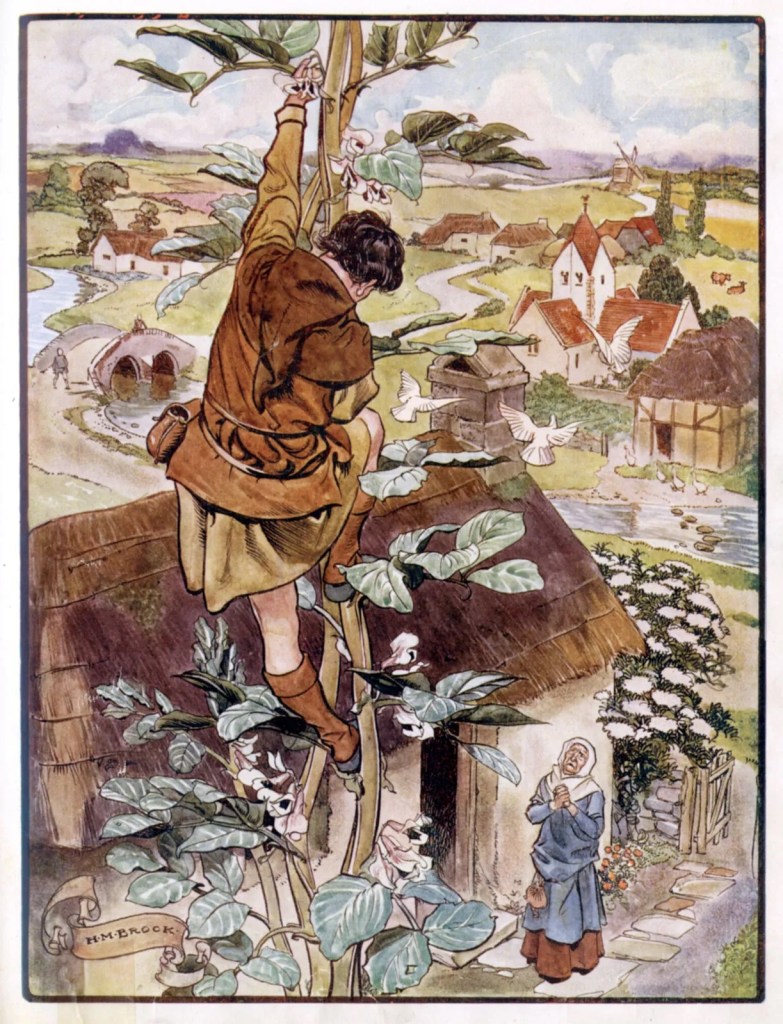
Jack Climbs the Beanstalk

Sensing the boy’s presence, the ogre cries his famous “fee-fi-fo-fum”.  However, the ogre’s wife, who has rapidly formed a liking for Jack, distracts her giant husband with a lavish breakfast of three broiled calves.  Afterwards the ogre takes out some bags of gold. Counting the gold, he falls asleep. Jack creeps out of his hiding place, takes one of the bags, and climbs down the beanstalk. He gives the gold to his mother, who is very happy. They live well for some time, until it is almost used up.

Jack decides to try his luck once more and climbs up the beanstalk. Again he meets the woman at the doorstep and asks her for breakfast. While he is eating, the ogre returns and Jack quickly hides in the oven. Again the ogre suspects that somebody is there, but again his wife deceives him, allowing Jack to hide.  After breakfast, the ogre asks his wife for “the hen that lays the golden eggs”. He says “Lay!” and the hen lays an egg of pure gold. The ogre falls asleep, and Jack takes the hen and climbs down the beanstalk.

Though Jack and his mother now have an inexhaustible source of golden eggs, Jack is not content. He climbs the beanstalk for the third time. He avoids the ogre’s wife, slipping into the house unseen and hiding in the wash-house boiler.  When the ogre comes home, he once more cries out “Fee-fi-fo-fum”, suspecting someone is there. His wife, rediscovering her marital loyalty, suggests that the little rogue that stole both his gold and lucrative hen may be hiding in the oven. But when they find the oven empty, the ogre eats his breakfast, then asks his wife to bring him his golden harp which sings beautifully when he orders it to “Sing!”

Once the easily-fatigued ogre has again fallen into a post-prandial slumber, Jack takes the harp and starts to leave, but the harp is a talking harp, loyal to the ogre, and calls out “Master! Master!” The ogre wakes up and sees Jack running away and pursues him. Jack nimbly climbs down the beanstalk, then asks his mother to bring an axe. He chops down the beanstalk and the ogre falls to his death. Jack and his mother are now very rich. They live happily ever after, which includes Jack’s inevitable fairy tale ending: marrying a princess. 


Magic Beans?

The positive spin on this story is that Jack’s adventure is all about the rewards for curiosity, courage and ambition. Jack dares to take a risk, trading the cow for mysterious and allegedly magic beans, and that bold choice leads to extraordinary opportunities. His climb up the beanstalk symbolizes striving for something greater, reaching beyond the ordinary. Jack’s resourcefulness and bravery in facing the giant suggest that challenges can be overcome with grit and determination. That small beginnings (like a bean) can lead to big outcomes.

However, the story is problematic.  Should we really admire Jack’s daring gamble in swapping a cow for some magic beans?  Should we actually celebrate his craft in stealing from the ogre in the land above the magical beanstalk?  Or should we view him as reckless and greedy?  Is the ogre, in fact, just misunderstood? 

The tale rather glosses over the morality of Jack’s actions. Jack steals from the giant: gold coins, a hen that lays golden eggs, and a magical harp. While the giant is portrayed as fearsome, we don’t get his side of the story – what it’s like to be an ogre whose space is invaded and possessions taken; he’s an ogre, a giant who, we are expected to say, deserves to be outwitted because he is different and threatening – even when you break into his house and sweet-talk his wife.   This tale suggests that cleverness and daring justify dishonesty, which is a problematic lesson.   

We might also question the loyalties of the ogre’s wife which sway rather easily to favour the young lad from the land below.  Or, we might view her as a victim too – of unhealthy masculinity of different types.  Or what about the post-colonial lens?  Jack, the imperial conqueror plundering treasures from foreign lands; the ogre the ignorant savage.


Should we, in fact, admire Jack?  Would it not be more admirable if Jack’s success had come through integrity, not exploitation and deception.  We might also worry that the story romanticizes risk without considering consequences.  Jack acts impulsively, and things could have ended very differently.

Should we fear and vilify the ogre?  Ever since the appearance of Shrek, ogre PR has been on the up.  However, this tale suggests that anything non-human and strange is not to be trusted.  Even if it’s minding its own business when you come bundling into its domain.

Now, you might say, it’s just a fairy story – a Christmas panto – and I’m being a boring killjoy labouring over the meaning of the tale.  But… the stories we tell shape the way view the world.  The accounts we accept (fictional or real), without critical reflection become our world; the heroes we promote and the villains we push away.  

Later versions of this fairy tale add some previous villainy to the giant’s rap sheet – eating oxen and little children – to make us feel more comfortable with Jack’s actions.  Although Jack is essentially a vigilante on the make, it seems much more acceptable that he robs and kills an ogre who has himself been wicked.  But, in the original, he is really targeted for being big, different, well-off and from another land.  Not the best justification for stealing his livelihood and ultimately knocking him off.


Jack’s tale might urge us to dream big and take a few risks.  No bad message as we start a new year, I suppose.  Reflecting with a more critical eye, it may also suggest that we temper our ambitions, and pursue them with a more measured and collaborative spirit, with honesty and responsibility.  Good things come through effort as much as through daring. 

Surely, it is better to accomplish our aims through collaboration and hard work, rather than shortcuts and deceit. In climbing our various ‘beanstalks’, we should pursue our goals boldly, but with fairness, kindness and respect for others.  

In other words, just as ‘Beanz Meanz Heinz’, being fully human means being fully humane beans.


Notes

This letter was written on 6 January (The Feast of Epiphany, a time of gifts).  It was a kind of epiphany to learn that there’s a day set aside especially for celebrating the bean in all its many, simple glories.  6 January is also National Bean Day.  

The iconic advertising slogan ‘Beanz Meanz Heinz’ was created in 1967 by copywriter Maurice Drake.  There are more than 57 Heinz varieties, but founder Henry J Heinz, who formed the company in 1896, thought the number 57 had a good feel to it – and it combined his and his wife’s ‘lucky numbers’.
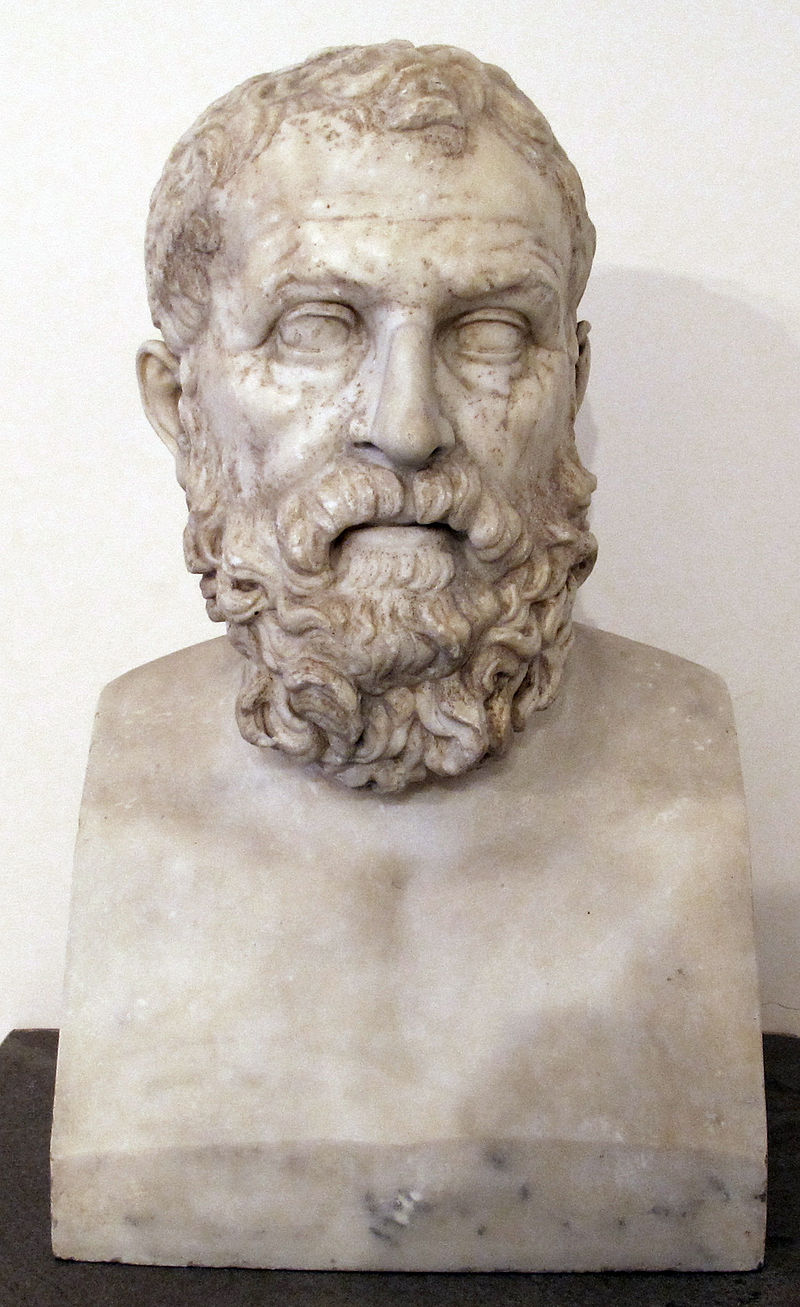
Dear Solon The Lawgiver

Featured

When I first heard of you, I thought you were from Star Trek or Game of Thrones. How wrong I was!

You were one of the seven great sages of ancient Greece. A real human being who lived and breathed – and whose name has endured through the ages. More than 2,500 years on, your leadership legacy is rattling in my modern mind. You sowed the seeds of democracy; of giving power to the people; of equality before the law. You enabled social mobility.

Back in 594 BCE, Athens was a city state on the verge of collapse. Athens was polarised between the wealthy high-born few and the low-born many in their debt. The laws of the infamous Draco prevailed. He who made Draconian laws – capital punishment for pretty much everything from murder to petty theft. The few lived well; the many lived short lives of privation and worse.

Then came Solon The Lawgiver. Called to power for a year – chosen because of your wisdom; your poetic prowess; your noble birth balanced with real-world skills and feeling for your fellow man.

You made laws: dismantling the grim and bloody regime of Draco. You sought to reconcile the elite with the common people. You cancelled all debt. No longer could the impoverished be sold into slavery to extract payment of their dues. You opened the assembly to all – well, all but women and slaves… You took what were radical steps towards making all equal before the law.

Looking back through the ages, from my tiny point in a future that not even your giant mind could imagine, your leadership is inspiring. Your sense of fairness. Your willingness to remake the world around you. To include and empower – or at least to raise up.


Leadership Learnings From Solon

Two things particularly strike me about your leadership, dear Solon.

Firstly, unlike the tyrants before and after you, it was clear that you could sense the corrupting power of… power. You told your city that you would rule for one year and one year only. You would then disappear for 10. Rather than being drawn in by the trappings of power, you removed yourself.

Secondly, you recognised the fundamental inevitability of failure in the situation of your political leadership. You knew that you could not win; but, equally, you knew that you could improve things. Centuries before Enoch Powell’s famous pronouncement about the unavoidable fate of all political careers, you knew that truth. Even in great success, even when you enjoyed apparently universal admiration as a ruler, you knew that you would be criticised. For not doing enough to empower the poor; for doing too much to limit the wealthy. As a reconciler, you would please and disappoint both and all.

So, it is said, that you remarked: “Everyone hates me: I have succeeded!”. As a reconciler, perhaps this was the inevitable truth that only your wisdom could immediately grasp. Until, perhaps, Lydgate’s famous line was fed to Abraham Lincoln. “You can please some of the people, all of the time; you can please all of the people some of the time; but you can’t please all of the people all of the time.“.

You were asked:

“Did you give the people the best laws?”.

You replied:

“I gave the people the best laws they would receive.”


They didn’t hate you, Solon. They admired you. And they needed your skill for reconciliation; your practical wisdom.

What price such wisdom now?


If you’d like to find our more about Solon The Lawgiver, have a listen to this:

https://www.bbc.co.uk/programmes/m001k7wb

Dear 2022

Featured

Your family has been hard to love of late. 

I wrote to your younger sibling, 2020, in her infancy – when she was only a few days old.  I made wishes for her.  And, almost as soon as I had written, I felt ashamed at the presumptive folly of my wish-making.  Yet here I am again.  Full of hope.   

Back in 2020, following a poet’s lead [Philip Larkin: ‘Born Yesterday’), I wished your sister dull.  I wished 2020 the blessing of being ordinary; for her to be about the gradual spreading of ordinary happiness.  I had in mind the steadiness of contentment, rather than the mercurial fireworks of ecstatic highs. 

We all know that 2020 was anything but dull.  And contentment a rare thing. Yet, contentment for all sentient beings must surely be the worthy (if unreachable) endpoint for our biggest hopes.  

My own hopeful thoughts – always infinitesimally tiny in the noisy ocean of possibilities ahead – evaporated as soon as they were voiced.  Hopes are ethereal.  Yet they persist. 

And I can’t help but have high hopes for you, 2022. 


No-one could call a pandemic dull or ordinary.  As well as craving safety, shelter, wellbeing; our species sought certainty, direction, leadership; and we hoped for normality.  2020 gave us little, and her sibling 2021 less.  Lockdowns, limitations and restrictions carried their share of dull.   But these years have been full of extremes.  And they have taken so many on earth to the darkest of places and beyond.  The despair, the suffering, the confusion of 2020 extended into 2021, joined by a stark sense of inequity across and within nations.  Gaps opened further between regions where vaccination programmes surged into life and those where people were left exposed.  The images remain; the suffering continues.

It is really not my place to comment, from the privileged comfort of my protected patch of the world.  Human beings across the globe have felt the awful power of this virus.  In many ways, this reality calls for the absence of words: sombre, shared silence is the only authentic response.  Words are hollow bubbles. 

And yet, like thoughts – like hope – like bubbles, indeed – words float up again out of the silence. 


2020 and 2021 were very, very rough for so many, and in so many ways.  This fact colours everything. 

But, there have been positives.  Shared hardship elicits waves of compassion.  Fellow-feeling flows from the levelling effect of a common threat.  The extraordinary kindness and devotion of so many individuals and organisations, to good causes, to the protection of others.  These are incalculable, potentially paradigm-changing pluses.  We could become more caring, more empathetic, more kind through all this. 

The collective force of human ingenuity has saved millions of lives, enabled continuity, and opened new possibilities. Our thirst for equity has been sharpened: calls for social justice have been voiced more passionately; heard more clearly; actioned more purposefully. Our duties to the natural world have never been more prominent, nor more urgent; lockdowns have caused the small shoots of regeneration; big (though perhaps not big enough) environmental pledges have been made.

Is there a more urgent desire to make the world a better place; to emerge together to a fairer post-pandemic world. Is that to be your thing, 2022?

So, 2022, I wish you kind.  Kinder than your forebears.  And, from time to time, a bit of dull wouldn’t go amiss.

Dear Donald

Featured

You prefer a DM, but here’s a letter. Maybe I’ll send it to your Washington, DC address.  And hope it catches you before the removal crew arrives.

Yes, you’re leaving: moving out of the White House.  The American people who put you there in 2016 have now served notice.  Of course, you’re challenging the landlord.  But you must know it’s time to leave, if not leave quietly. 

The people who put you there knew that you were going to be unconventional.  They knew that you were going to blast your way through all the normal codes.  They wanted you to do just that. They wanted you to speak unfiltered; to appeal to the gut; to give voice to the millions who felt voiceless.   To those whom you championed, you could do no wrong. 

They did not elect a statesman; someone who would unite in victory.  They chose a divider.  A slash-and-burner.  Someone who would become more and more convinced of his invincibility, insulated by a boo-hooray bubble of loyal support; enabled by a street-smart entourage and a legal team on steroids. 

You have given the world something truly special: self-authenticating, fact-free correctness.

In the end, when it came to bidding for a second term, too many people were put off by your aggressiveness.  Your stoking of tensions.  Your deliberate expansion of the differences between those whom you rated and those you slammed.  The badmouthing of traditional allies finally tired.  Your rapt admiration for the world’s authoritarian strongmen.  You acted as if the handbook for global statesmanship was the plotline of ‘Despicable Me’.

History will show that your tenure was a wild, fantastic aberration, won’t it?  Right from the jaw-dropping moment four years ago when the impossible happened, it’s been a four-year episode of The Simpsons.  Fiction made fact; fake news made real. Right?

Photo by Joshua Miranda on Pexels.com

But I am wrong. 

As wrong now as I was then – in 2016 – when I went to bed knowing that it would be Hillary. 

You were never impossible.  You were inevitable. 

I lacked the insight to see your power.  Insulated by my middle-class, old-world attitudes; cosy in my comfortable liberalism; doped by my total lack of understanding of the United States; blind to the frustrations that now erupt from the volcanic inequality of our times.

The wise saw you coming a mile off.  They knew your power before it was real.  The Real Donald Trump.  Destined to be number 45.  You captured millions of votes.  You were properly elected through a properly democratic process.  Free of any skulduggery or intervention from other powers – so far as I know, anyway.  It was a fair win in 2016 – narrow, but fair. 

People saw something in you.  You timed a wave; your words chimed with people who felt marginalised; untouched and under-represented  by politics; unheard; airbrushed out.  You were real to them.  You promised some kind of inversion, turning the old certainties on their heads.     

I am absolutely no expert.  And you won’t read this, it goes without saying.  It seems to me that the version of politics that you invented was all about you.  Like everything else: the foreign policy. The pistol-fired tweets. The weakness for guns. The furious golf. The manic orange glow of self-belief. The anti-COVID bleach you urged into your people’s veins.

It was all you.  Your peculiar populist genius.  The Donald. 

Now, as 2020 enters its final weeks, you are ending as you arrived.  Calling foul with a puckered pout and blow-torching any still-standing norm of decency that has miraculously evaded your fire so far.

It’s been box office, for sure.  Fascinating to see the dignity of office debased.  Iconoclasm is compelling viewing, it seems.  The world has got used to the bombastic, capitalised salvos; the apparent lack of regard for logic, evidence, fact. These are displaced by the fire of emotion, conviction and sheer bloody will. 

Never mind the politics. What kind of example have you set? Really? What have you done for leadership, dignity, democracy?

I can only hope that your actions have equal and opposite reactions in the years ahead. A change of tone to a gentler, kinder, more factful leadership. It will take a long time to heal the divides and rebuild the trust. I hope the next guy in finds a way to reframe the way democracy talks to itself. It’s time to seek proper greatness. 

LW

A Letter From Shrewsbury. Serious Fun. My views only.

Back to your tower.
Photo by Priya Karkare on Pexels.com