Dear School Photo

Every couple of years, like most schools across the land, we carve out a little chunk of time for a major collective manoeuvre: the whole school photo.  Why do we do it? 

This is a question that the Senior Deputy Head may ask themselves as the meticulous hours of planning add a further metaphorical crease-line to their nobly furrowed brow.  It is a major piece of choreography to manage successfully.  And an investment of around 100,000 minutes of collective time. (Multiply the time taken to get ready, lined up, loaded on the staging, photographed, safely down and back into lessons by the number of pupils and teaching staff in the school).  All those hours to prepare and yet, as was the case in our recent whole school photo, it is all over in just over an hour.

Why do we do it?  Well, we do it because it’s important.  And curiously uplifting!


It’s important to capture a moment in communal time.  Schools are places of belonging.  A whole school photo is one of those most tangible expressions of collective belonging on the fullest scale.  Team photos, house photos – these too capture vital parts of the whole.  But, the whole school photo is every pupil and every teacher.

Marketing teams rightly get twinkly-eyed at the opportunity to send up the drone to follow this rare gathering from above.  Time-lapse footage fascinatingly accelerates the intricate process of loading up the multiple tiers of the staging.  Colleagues parade like peahens and peacocks in magnificent flowing gowns and technicolour hoods. 

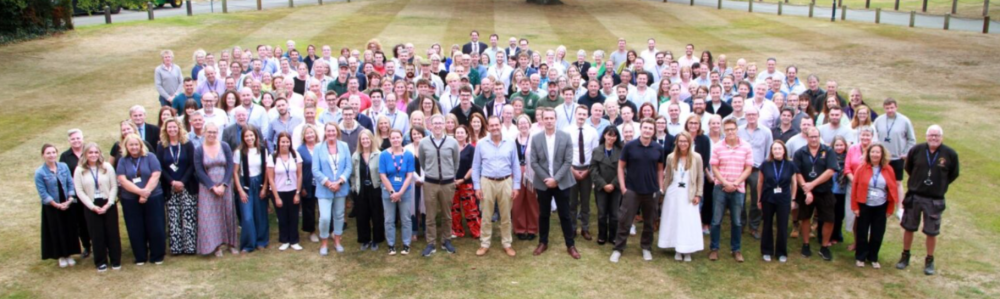
It’s a barometer of school culture.  Can you get 850 teenagers to stand cheerfully, obediently in a confined and unusual formation; can the photographers capture the moment when all 1000 humans are at their personal bests.  Can we ensure every single name is rightly attached to every single individual pupil and colleague involved?  Can we get everyone in?  Can we get everyone up, set and down – and how long will it take? Last time round we managed to complete the whole process in 59 minutes – this time, with a few more pupils on the roll, we crept just over the hour mark.


And a key question for a Head… Do I take a selfie with the whole school massed behind me?  Some do; some don’t!  It’s certainly an opportunity…  Fair play to those more extrovertive Heads who have the necessary ‘riz’, the hutzpah, to take a selfie in front of the assembled whole school photo.  For me, it doesn’t quite feel like a moment for one individual to stand out in front of the rest.  Maybe I lack the gumption to take that shot.  And, admittedly, the Head does get the centre spot – there is some expression of hierarchy.  But, above all, it’s a total community moment.  It’s about us.  So, selfie opportunity declined on this occasion.  Maybe next time?

Parentally, a whole school photo is a lovely thing to have – to keep – to revisit.  For the family.  As a Shrewsbury parent myself, I can see the special smiling speck in the throng of Salopians that is my own.  It something that, years on, will be looked at by children, friends, future partners, grandchildren and on through the generations.  It is a formal record of school days – the formative years of an individual life. 


Institutionally, the whole school photo is an archival snapshot.  Set side by side, tracking back through the decades, you can see the shape of the school.  You can trace trends in hairstyles – the ignoble rise of the mullet in the 2020s; the shaggy locks of the 1970s; the apparently mandatory whiskers of the teaching staff in the 1860s.  In our case, school photos record the journey from all boys’ school; to co-educational in the Sixth Form (2008), to fully coeducational in 2015; to being over 40% girls in 2025.  In this way, the whole school photo helps chart the progress and nature of the school.

——-

When I was at junior school, in the late 1970s and early 1980s, the whole school photo was a wholly different creature.  In those days of black and white, the camera would roll slowly from left to right to complete the image.  In those tensely elongated seconds, we all held still.  But, before the dawn of photo shop and instant capture, many things were possible.  The gust of wind raising a fringe comically aloft.  The eyes momentarily shut at the crucial instant.  The joker who looked sideways, upwards, or crossed eyes and ejected a tongue.  The prankster whose fingers made ears for the person in front. 

And the ultimate caper – if you were reckless and bold enough – and situated on the far left of the view…   To detach yourself after the camera had swept past your section, run around the back of the tiered block and appear, magnificently duplicated, on the right hand side of the image.  A friend of mine achieved this feat in 1983.  He enjoyed a hostile reception from the Headmaster and a week at home for his adventures.  And immortality.


Nowadays, of course, such exploits are not possible.  And, as has been our experience at Shrewsbury, folk rather enjoy getting it right together.  If, in the unlikely event that any minor moment of madness occurs, photo-shop will come to the rescue.  Knowing this, we all tend to behave ourselves!  And anyway, it’s a fundamentally innocent, joyful and good thing to get together and have a photo.  Why disrupt something so simple, so carefully organised?

When I was Deputy Head at Bedales School, I had the biennial pleasure of organising the school photo.  Bedales was the first co-educational boarding school.  As a progressive community, with no uniform and famous for individual self-expression, this was not an easy gig.  However, we struck a deal.  If the ‘formal photo’ was done well and in good order, we then reconvened in half an hour for an ‘informal photo’.  In that 30 minute gap, remarkable creative transformations occurred.  The Bedales informal photo [2010] sits on my wall at home.  Someone brought a horse; dogs, cats, babies (including my own youngest) were assembled, along with banners, fancy dress and personal totems of various kinds. 

The ‘formal’ one, which was a model of relative order, is not on my wall – I do have it somewhere.  However, the immaculate order of the Cheltenham Ladies’ College 150th anniversary photo [2003] sits proudly alongside the St Peter’s School 3-18 foundation photo of 2018.  I have a box of other school photos in the loft.  They sit alongside photos from the school days my father and mother, now no longer here, but their youthful selves look out hopefully at me.  You never throw school photos away, even if theirs is simply to sit quietly in the cellar, in a neat roll, waiting for their time.

I’ve said much about the whole school photo – but, in fact, I need to correct myself.  Whilst a photo of all the pupils and all the teachers is indeed whole in lots of ways, a truly whole school picture would include the hundreds of colleagues who work in support of the school day in, day out.  A true whole school picture would include Governors.  Arguably, it would include current parents, grandparents, guardians, carers, Old Salopians – the Shrewsbury Family of Schools.  All these people are part of the whole school in its fullest sense.

 In 2027, we will be 475 years old.  The perfect opportunity for an even more whole school photo.  Time to get planning… 

However, for the moment, it was challenging enough to get 1000 people in one space on Central, in golden September sunshine, for our ‘whole’ school photo 2025.  And the result is a lovely image of the school at the start of an academic year. 

To be stood together, all facing the same way, looking towards the tiny eye of the camera lens, smiling; a thousand souls, a thousand minds with individual thoughts, hopes and fears; a thousand bodies neatly packed together, dressed in our finest threads of belonging; chatting, joking, clapping, then falling silent for a charged moment of still and shared attention. 

It always gets me – the school photo.  I feel a surge of wellbeing; togetherness; a potent pang of love and hope for all the individuals and all the people to whom they are important. 

A deep sense of what it means to be seen – and to belong.

Applause at the Shrewsbury School Whole School Photo 2025

Dear India

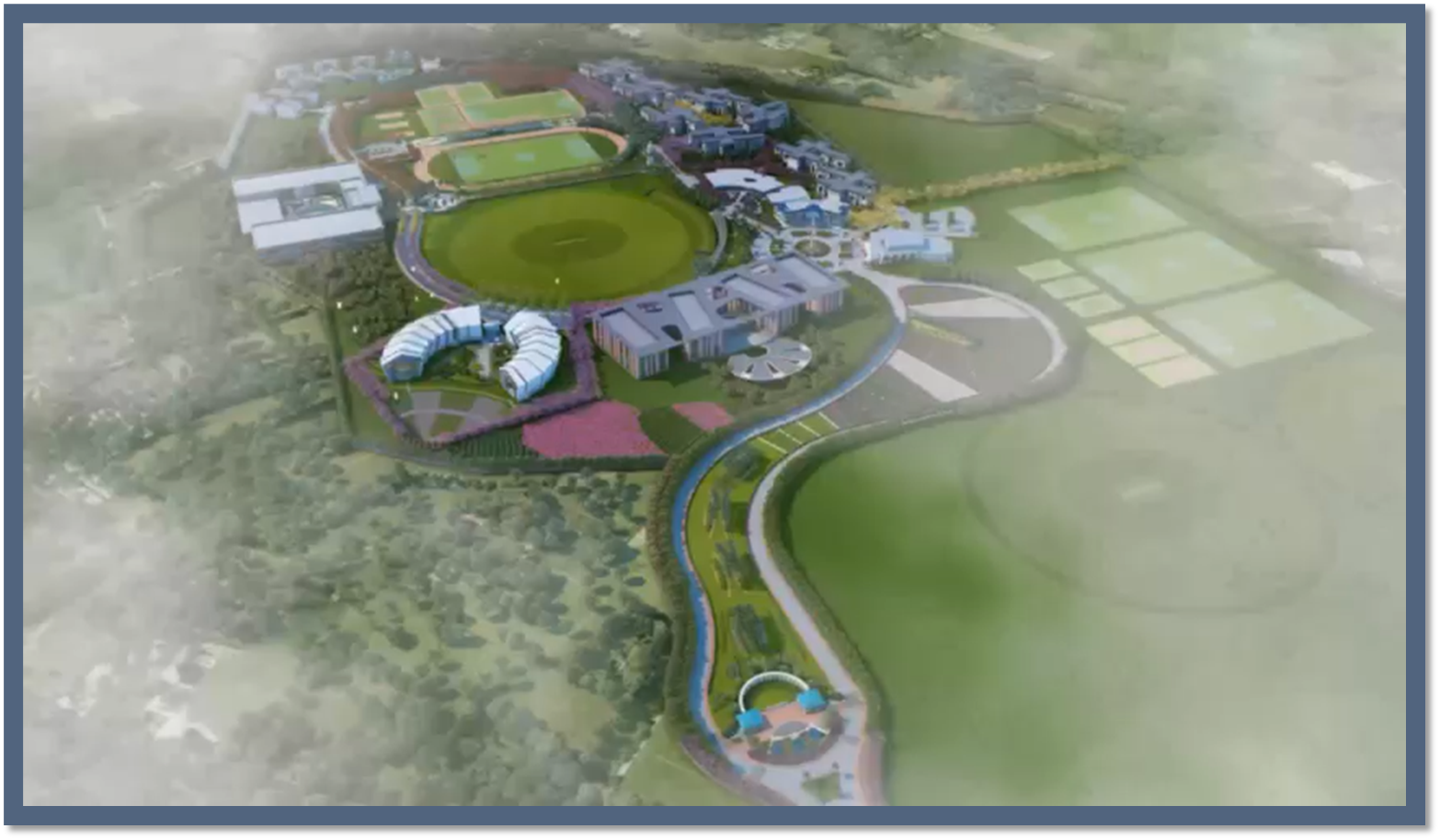
How exciting to get to know you – just a little – with so much more to learn about your deep culture, your long history, your bright and exciting future. And to be a small part of that future as we move towards the opening of Shrewsbury International School India in August 2025. A co-educational, full boarding school in Madhya Pradesh, in Bhopal, the city of lakes, right in the heart of India.

My first visit to India in February 2025 coincided with the birthday of Charles Darwin and the 473rd anniversary of the founding of Shrewsbury School by Royal Charter in 1552. Shrewsbury International India has embraced the long heritage of Shrewsbury School. Our partners, the Jagran Social Welfare Society, have great expertise in opening schools and universities in India. Our shared educational values and close alignment provide a wonderful foundation for the adventure ahead.

During my visit, I enjoyed the legendary warmth of hospitality – as well as the numerous culinary delights on offer. Most importantly, it was abundantly clear that India is a nation that loves and values education. Shrewsbury International School India will bring Salopian whole person education, our unique Floreat model, and day-to-day ‘serious fun’ to India.

With a population of almost 1.5 billion, an entrepreneurial spirit, combined with a profound and vibrant culture, India is a nation on the move. We are excited to be part of this journey of growth.

Set in a beautiful 150 acre site, world class facilities will provide inspiration for pupils and staff. Over 500,000 trees have been planted. The ambition and commitment to excellence of our partners is astonishing. This will be a wonderful environment in which to live and learn.

As the days tick by towards the formal opening in August 2025, we wish all our friends in India well as the journey begins.

Floreat!

Dear Misogynistic Influencer

Featured

I’ve heard it said that you’re not all bad.  That you have given confidence and direction to thousands of boys and young men.  That some of your life lessons – on healthy living, nutrition and exercise – are sound.  I’ve heard it said that you provide belonging, purpose, ambition. 

There is no doubt that you are influential.  And your methods are successful. 

You are a leader.

And here the problems begin.  And the problems grow.  And they multiply and are boosted by algorithms.  They go viral, these problems.  Because of you.

Because, these life lessons are fuelled, as far as I can see, by a powerful poison. 


You are a mis-leader.

Your methods are designed to beguile.  To look good.  Healthy even.  To normalise your views on women, for example.

The values you promote as traditional, protective, quasi-religious truths are pernicious, disrespectful and harmful.  They are noxious.

If you mix the good with the bad, the bad wins.  An omelette can be made of free range, organic eggs and presented on a clean, white plate.  But, if the cook has added arsenic, it is lethal.


Socrates was condemned to death for corruption of the youth.  He was made to drink hemlock – a poison.  His ‘crime’ was getting people to think critically for themselves.  To free them from the chains of blind assumptions and received ideas.

Who knows what crimes you may or may not have committed?  That’s another matter.

But corruption of the youth?  As a parent and an educator, this concerns me deeply.  There are so many influences out there.  How do we ensure that our children know the good influence from the bad?

Good parenting, for sure.  Strong communities with open discussion.

In schools, we strive to promote values of respect, tolerance and acceptance.  Modern values that celebrate difference. 

And we live in an age of free speech. As Voltaire famously wrote: “I disapprove of what you say, but I will defend to the death your right to say it.” The same spirit that did for Socrates. And that liberates minds.

Perhaps we need to listen even more carefully these views of yours.  To understand your methods. 

All the better to dismantle them.

In some ways, you may actually help us.  If we handle you wisely.  If we examine your ways, we can identify the wrong turns our boys and men could take.  And we can better promote the wonderful variety of positive masculinities.

So, thank you, at least, for that. 

Dear Camel – to the Class of 2021

Featured

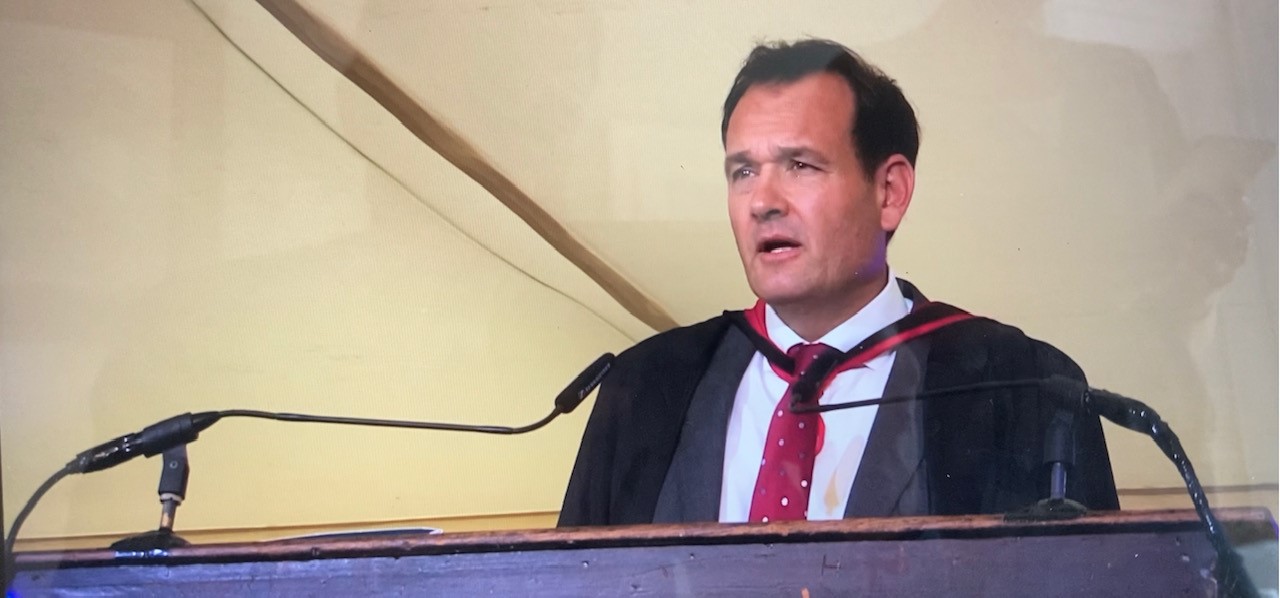
Speech to the Leavers of 2021, 3 July 2021

My father once told me the story of the baby camel who kept asking its mother questions.

“Mummy, why do we have these wide, spongey feet?” – Well, dear, it’s so that we can walk over sand dunes without sinking.  “And what about these extra-long eye-lashes?” – Those are to protect your eyes during sand storms.  “Ah. And why do we have these huge fat lumps on our backs?”  – Those are humps, dear.  They store energy for extended journeys across the desert.  

“Oh.  Right….”

“Mummy – what are we doing here in Chester Zoo?”


Mummy, what are we doing in Chester Zoo?


Zoos are places of containment.  Schools are, ultimately, all about escape. 

During their time with us, whether it has been a 2, 4 or 5 year stay, I hope that we have enhanced your children’s natural talents and added new passions and experiences.  And that they are prepared for life; equipped with the skills and aptitudes – the spongey feet and absorbent humps – with which to cross through life’s undulations.  I hope that they will travel the sands of time with inner confidence and a steady set of values.  I hope that they seek out oases. And create them for others.

In recent times, we have all felt the confinement of life during a pandemic.  The defensive bars of separation have caused isolation.  Motivated by a desire to protect, control measures have brought limitations and caused inevitable frustrations.  The national policy on isolating children who are close contacts has become monstrously disproportionate.  This must surely change. 

No community is immune to the insidious impacts of the pandemic.   Parents and educators alike worry about the impact of these times on the health and well-being of the young.  However, despite – and in some cases because of it all, we applaud the adaptability, the resilience, the sheer luminous brilliance of the young in our school – this year group in particular.  This is cause for celebration, hope and expectation.  

A full boarding school community is a magnificently intricate, complex and dynamic ecosystem of which to be a part – whether as a pupil or a member of staff.  Each individual is important.  Each person’s character and behaviour alters and affects the equipoise and flourishing of the whole. 

Shrewsbury strives to be an accepting community that embraces individuals on the basis of who they are.  All communities need to do more on issues of equality, diversity and inclusion.  We have work ahead on this, but I do like to believe that the natural state of Salopia is one of symbiotic co-operation and the celebration of difference.

Although we have been sometimes apart, sometimes at a distance, shared adversity has brought schools, parents and pupils closer together.  Recent times have seen artificial constraints and barriers introduced into the system. The very notion of a remote boarding community is oxymoronic: a contradiction in terms. And yet we made it happen together.  

When we resumed on-site learning, we embraced creatively and inventively the systems of control that put distances between year groups, houses, pupils and staff. The Salopian spirit filled the gaps.  We found a way to connect and make things happen as fully as possible. 

The experience of living with COVID has triggered and accelerated positive adaptations and evolutionary step changes.  Much more inventive use of technology in teaching and learning, for example.  We have also embraced the brave new world of virtual parent consultations.  The challenge of balancing cups of tea and maintaining a polite smile whilst trying to keep a place in a queue have been replaced by privacy and the focusing effect of a countdown timer.  Virtualisation has been an enlivening challenge for us all. 

Despite the significant gains made, concerns over excessive screen-time, and the darker influences of the digital multiverse, have underlined all the more sharply, the deep value and purpose of whole person communal education. 

Education is not a transaction; whole person education cannot be done through a screen.  The education that you parents chose – this distinctive Shrewsbury education – relies on a community of individuals who share a common spirit.  Our kind of education is about co-travelling; shared experience; wide opportunities; inspiration and challenge.  It is about serious fun.

A school is a learning community.  What have our leavers learned, I wonder?  And what have we learned from them?

I hope that we learn, every day, to delight in the uniqueness of each human being.  Whilst we live in times of control and civic responsibility, the human spirit leaps up and refuses to be reduced.  I hope that our leavers embody the virtues of practical wisdom; courage and kindness.  These things are not learned; they are absorbed gradually over time spent on the Salopian Way.

https://www.shrewsbury.org.uk/sites/default/files/Shrewsbury%20School%20Ethos%20and%20Educational%20Philosophy_0.pdf

What do I hope for, when I look out at our Upper Sixth?  In times when people are quick to outrage, I hope for tolerance and understanding.    In times when Government appears to set education policy in an echo chamber, I hope for respectful dialogue across all the professions. 

In times that have never been more complicated for our children to grow up, I hope for kindness and places of safety.  In times when change is needed, I hope for the righteous indignation and moral purpose of the next generation.  In times of isolation and growing nationalism, I hope for a global mindset. Across society, we see evidence of a crisis of identity.  We need people who can connect and join; rather that divide and separate.  We need people who try to find solutions to local, national and international problems.  People with giant ventures in mind.

In times when the waves of a pandemic sweep across the world; I hope that the waves of fellowship follow.

The former Governor of the Bank of England, Mark Carney, suggested that times of crisis identify the hoarders and the sharers.  We need to be amongst the sharers.  And as we come out of the pandemic and learn to live responsibly with COVID, we have a chance to treasure, enhance and deepen the way we use our returning freedoms.

Our leavers are on the cusp of new adventures.  Of course, we will them brilliant futures. When the animals escape from the zoo we want them to be dispersing widely, into new habitats that challenge and inspire them.

Photo by Frans Van Heerden on Pexels.com

So, where are they headed?  The Upper Sixth have firm offers to go to 51 different universities worldwide.  Three quarters of those offers are at Russell Group universities.  All being well, 38 Salopians – that’s a fifth of the year group – will head to one of the World Tops 20 universities in the Autumn.  Just over a quarter will be taking a Gap Year, a significant and understandable increase. International destinations are, expectedly, a little down this year but pupils hold offers from University of California (San Diego), Georgia Institute of Technology, Tilburg University in the Netherlands, City University of HK and Florence, Italy.

Salopians will go on to study courses-  in order of frequency – in Business; medicine and medical-related courses; Politics and International Relations; History, Geography, Sport, English, Economics, Philosophy (all 7).  Four will be studying Architecture; and others hope to study Fashion Journalism and Content Creation; Infection and Immunity; Psychology;  Renewable Energy Engineering and Climate Science.  Our leavers have offers at the Royal College of Music; scholarships to the Guildhall School of Music; places at the Guildford School of Acting.  Four students off to do an Art Foundation Course.  One is off to do an Army Gap Year; one to professional sport.  What a diversity of destinations! 

Incidentally, we were delighted to hear on Thursday that our careers advice and guidance programme – which we call Futures – led superbly Mr Wain and Mr Percival – has been shortlisted for a national Independent school award for best Student Careers.  This follows on from being named Independent School of the Year for 2020 and Best Community Outreach programme 2020. 

We’re proud of this collective recognition and thank all pupils, teaching and support staff, parents and governors for combining to create an award-winning community.

Today, is the point of departure – a kind of escape.  As they depart the friendly confines of Shrewsbury, we celebrate our leavers’ resilience, and brilliance, in times of transilience. (I confess I had to look up the third word in that rhyming trio – transilience means ‘abrupt change or variation‘, apparently.  We’ve certainly had plenty of that of late.

For our Upper Sixth leavers – the camels of 2021 with their magnificent spongey feet, their luxurious eye-lashes and their well-stocked humps – this is the day when the gates of the zoo are flung wide open.


Upper Sixth Leave-Taking 3 July 2021

International day of the girl

Benazir Bhutto was a Pakistani politician who served as prime minister of Pakistan from 1988-1990 and again from 1993-1996. She was the first woman to head a democratic government in a Muslim majority nation.  Ideologically liberal, and a secularist, she was a controversial figure in Pakistan, feared and revered in equal measure for her modernising views and charismatic leadership.

Bhutto’s political life is far too complex to do justice to in just a few minutes, dogged as it was by controversy and accusations of bribery, nepotism and corruption; Bhutto was ousted from power through a rigged election. After a period of time in opposition, she came to power again.  Although her efforts at reform and liberalisation were thwarted, her name was synonymous with democracy and she became a global icon of women’s rights.  Bhutto was respected in the west as a stateswoman of global reach and significance.

After losing elections in 1997 and 1998, Bhutto went into self-exile in Dubai from whence she continued to lead her party through proxies. She returned to Pakistan in 2007 to contest the 2008 elections.  She knew well her return to Pakistan put her own life at risk.  Bhutto was assassinated in a suicide bomb attack in Rawalpindi.  Al Qaeda claimed responsibility, although the Pakistani Taliban were widely suspected as being behind the attack that ended her life at the age of 54.

Spool forward half a decade. On the 9th October 2012, Malala Yousafsai was climbing onto a bus in Taliban-ruled North Western Pakistan.  She was 14 years old.  As she boarded the bus, a gunman appeared, asked for her by name, and shot her in the head.  She was left for dead.  Miraculously, however, Malala survived the attack.  She and her family were flown over to the UK and settled in Birmingham.  The reason for the attack, for which the hard-line Taliban claimed responsibility, was an open diary that Malala has been writing and publishing, under a pen name, arguing and campaigning for the rights of women and, in particular, for the right for girls to receive an education.

The story of her recovery – from delicate surgery at a Pakistani military hospital to further operations and rehabilitation in the UK, was widely covered in the media. Malala was discharged from hospital in January 2013 and her life now is unimaginably different to anything she may have envisaged when she was an anonymous voice chronicling the fears of schoolgirls under the shadow of the Taliban.

Malala has become an international symbol for, and advocate of, the fight to improve girls’ literacy around the world. She is iconic of the power of human will to overcome brutality and marginalisation.  In 2014, Malala became the youngest person ever to receive the Nobel Peace Prize.  This year she was made the youngest ever UN Messenger of Peace.

Earlier this week, exactly 5 years to the day that she was shot, Malala began a course in PPE at Oxford University. She is at Lady Margaret Hall, the same college that Benazir Bhutto had attended, and following the very same course.  In Bhutto’s day it was an all-women college (as it was when my mother was there); in Malala’s, it is a mixed college (as it was when I was at the same college): co-education has become very much the norm in our part of the world.

Indeed, we live in a part of the world where the idea of equal access to education is taken as read; a given. Lucky us.  The world still has a long way to go, even in our supposedly enlightened times, before we have a society where girls and women enjoy equality and fairness.

A BBC article published on 10th October listed the 10 toughest places in the world for girls’ education.  9 of the 10 countries listed are in Africa.  In the Central African Republic there is one teacher for every 80 pupil; in Niger only 17% of women between the ages of 15 and 24 are literate.  Only 1 in a 100 girls Burkina Faso completes secondary school.  In Ethiopia, over 40% of girls are married before the age of 18 – this applies across all of sub-Saharan Africa.

Yesterday (11th October) was international day of the girl.  And with over 130 million girls still out of school, the global campaign for the right of access to schooling and education for girls is as urgent as ever.  Icons such as Malala, following in the footsteps of her own hero Benazir Bhutto, can influence and draw attention to the host of issues that affect girls and women across the world: poverty, disempowerment, lack of education, sexual and physical abuse.

Who knows what things Malala will go on to achieve in her life? Because she has been exceptionally brave; because she has been exceptionally fortunate to escape an attempt on her life; because she is using her extraordinary voice to change the world; and because she knows the liberating power of a good education.