Dear Sweden – on AI, Lagom and Fika

Featured

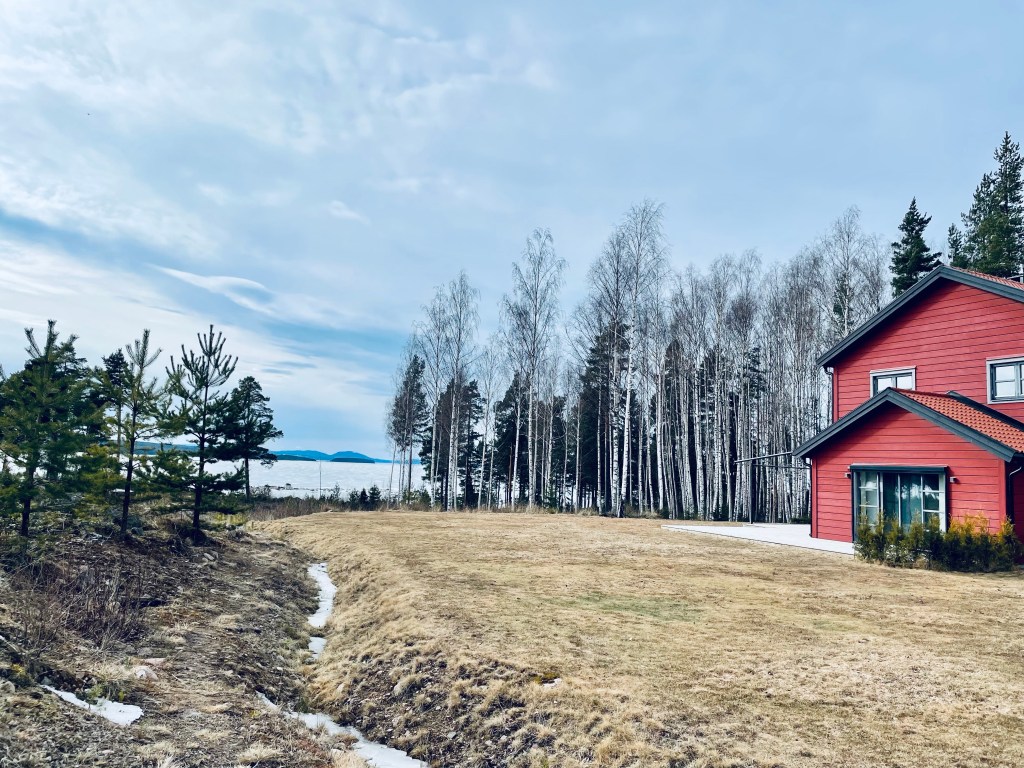
Swedes famously love their space. And they have lots of it. A population of around 10 million is dispersed across a country twice the size of the UK. When the two metre rule was relaxed during the Covid pandemic, Swedes were said to be relieved to revert to their preferred social distancing of seven metres! With over 95,000 lakes, it is a country of big skies and vast forests, inhabited by wild bears, elk, moose, reindeer… and interesting people.
Meeting and talking with our excellent hosts in Sweden, I sensed an unusual mix of conformity, privacy and respect for communal values with a spirit of egalitarianism, individualism and innovation. Not only has this small nation produced Abba, IKEA, Spotify and Bjorn Borg, but I discovered that it was Swedes who invented the cell phone; GPS; the adjustable wrench; the computer mouse; paper cartons; dynamite – and safety matches.

In April 2023, I spent five days in Sweden for the G30 schools conference. It’s a lovely honour to fly the flag as one of three UK schools in membership of this international group of independent schools which includes educators from India, China, the US, Canada, Australia, South Africa and various European countries. The group enjoys fellowship, idea-sharing and exploring future trends in global education.

This time round, as well as gaining an insight into Swedish culture, we spent five days discussing and engaging with experts on global themes in education. As educationalists, and as parents, our overriding concern for schools is to provide the best possible educational experience and preparation for life. Top of the discussion agenda was the rapid development in Artificial Intelligence and what opportunities and challenges this entails for schools, for learners and teachers, for families. What does AI mean for the schools of the future? For the role of the teacher? The role of the learner? How might AI enhance (or threaten?) the extraordinary value of in-person learning in a full boarding school.
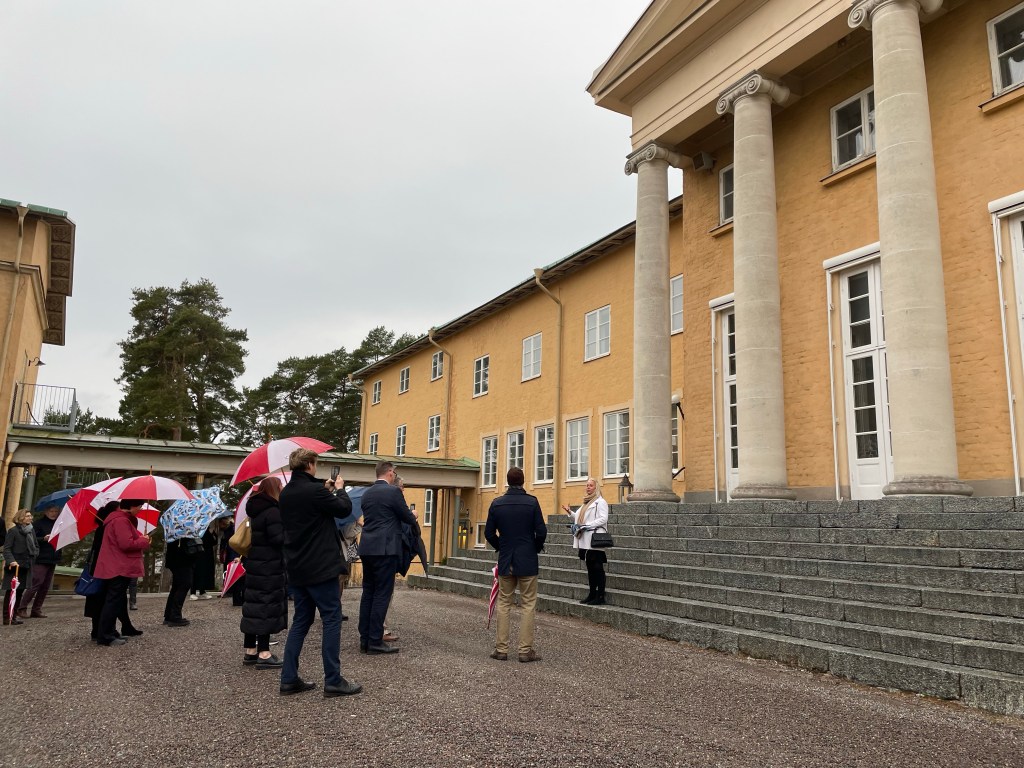
G30 Heads at Sigtunaskolan Humanistika Laroverket, Sigtuna, Sweden

Back at school after the conference, I shared with colleagues and pupils some of my impressions of Sweden (and dodgy Swedish pronunciation) and the uniquely human skills that drive innovation – above all, curiosity. With AI innovation racing ahead at a phenomenal pace, pushing into new territory every day, it’s vital that we work out what human processes and values we want to prioritise, protect and preserve. We need the machines to free us to be more fully human. At Shrewsbury, we have started conversations with colleagues and pupils on how we keep pace with – and benefit from – this fast-changing digital world whilst holding strongly to the specialness of human interaction.

The Swedes are said to embrace the concept of ‘Lagom’. This involves a habit of moderation; the avoidance of extremes – what we might call the Goldilocks principle. Or (if you prefer higher brow references) Aristotle’s Golden Mean or the Middle Way of the Buddhist Dharma. We live in times of increasing polarisation in the media and public narratives. Boo to this! Hooray to that!

Human beings contain multitudes and our identities are complicated. The ability to listen and hold a variety of ideas in tension – these are vital high order skills. In fast-moving times, when so many things trigger outrage and blame, it is important to have the presence of mind to pause. To find space to consider our thoughts and check where we stand. Most things in life are nuanced, complex, subtle.

Which brings me to another striking feature of Swedish culture. Fika. This is the delightful custom of making time for a coffee and a treat with friends. Daily. Or even several times a day. This habit brings people together in a shared pause. It reinforces bonds; lifts moods and aids perspective. And fuels the phenomenal coffee and confectionary industries in Sweden!

Fika – the power of the coffee pause. And cake.

Taking time to pause is important on a human level. It is also important – at the risk of sounding high-minded – important on the level of civilisation. Just because we can do something, for example with technology, doesn’t mean we necessarily should. Fika needs to be built into our rapidly-moving conversations on AI. We need time and space to deliberate.

That said, I am excited and optimistic about the future of education. Especially whole person education in our seven day boarding model. We know that the ‘power skills’ (sometimes called soft skills) our children develop transcend digital simulation (so far). Persuasion, creativity, curiosity, collaboration, emotional intelligence, adaptability. And we know the power of our fully human values to guide our intention and action. No human community does this better, in my opinion, than the British full boarding school. And so, onwards we go!

Education is all about travelling from childhood to adulthood: and enjoying the serious fun of this journey. As they grow, we need our children to appreciate nuance; to take their time to form and challenge viewpoints; to have principles but avoid being strident or – as they might say – ‘judgey’. Most of all, we need them to think for themselves, rather than sponge up the norms of the echo chamber. We need them to be critical and reflective, rather than parroting the views of their algorithms.

Being true to ourselves is important, but so is belonging to something bigger – and accepting that this communality sometimes means compromise. Having a cause and caring about things – this is important; but so is the ability to detach and keep some perspective. For this, we need to allow ourselves space.

To aid this gentle cycle of connection, detachment and re-connection, I’ll be trying hard to channel my newly-discovered, inner Swede. Whatever the pace of change, whatever the issue of the moment, there should always be a space and time for Lagom and Fika.
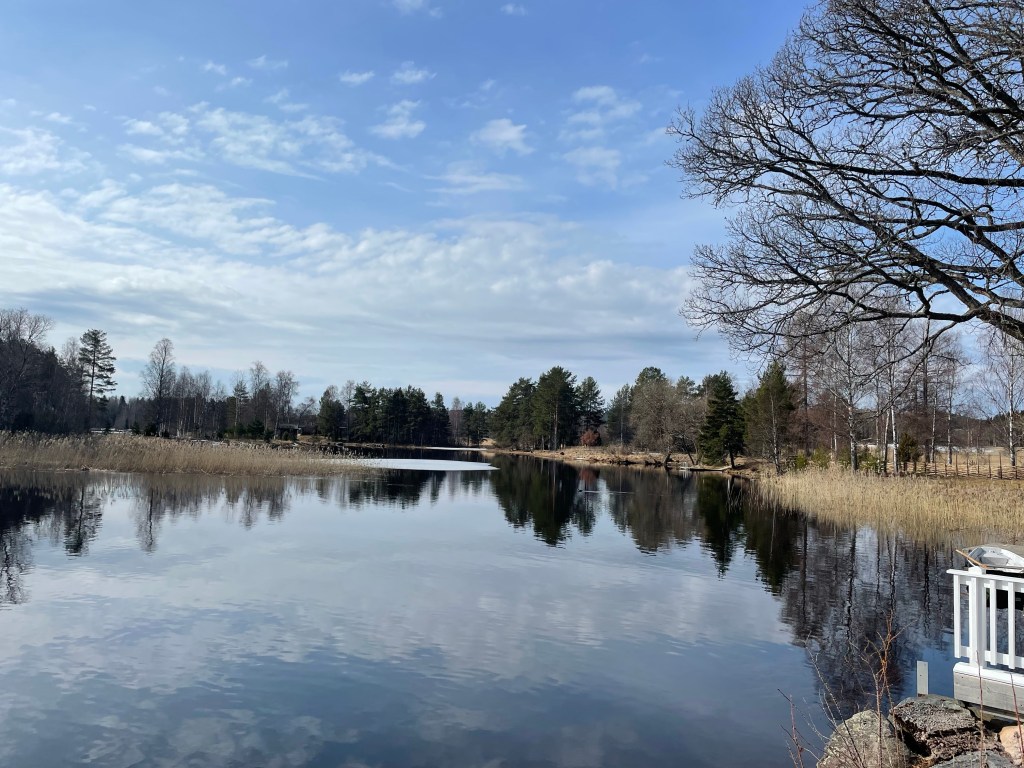
Lake by the house of artist, Carl Larsson

Dear (Independent State) Education Partner

Featured

A few months ago, I discovered the location app what3words. Many will be aware of this ingenious system for finding any 3 metre square location in the world, using a unique combination of three words for pin-point accurate directions. Clicking on the app a few days ago, I discovered some uncannily appropriate word trios for various locations around our site in Shrewsbury. The Bursary is near a square marked: ‘rewarding slim spends’. The door to the building where my leadership team is based is: ‘cool order landed’. And the Headmaster’s house? ‘Blend jobs stir’ – not a bad description of school leadership!

This is my fourteenth year as a Head. I know my way around reasonably well by now, yet the job continues to delight, test and reward. I’m in the right place: an inspiring setting, surrounded by interesting people, working with young people. If you asked me to summarise the work I find the most profoundly rewarding – just three words – ‘partnerships’ would be in that trio.

When I was Head of St Peter’s School in York, I had the honour of chairing the City of York Independent State School Partnership. The collaborative programme offered a dazzling array of academic masterclasses, as well as twilight Latin and Astronomy GCSE, History of Art and Russian A Level – all provided free of charge for the children of the City of York. Teachers from each of the 11 partner schools (3 independent, 5 academies, 3 state comprehensive) came together to design courses and share CPD opportunities. We were a loosely structured federation, short on stodgy bureaucracy and constitutional guff, long on imagination and collective will to pool resources to extend opportunity together. Brilliantly led by a salaried project co-ordinator, paid from a collective kitty, the City of York ISSP soon became a model that was copied, adapted and improved in numerous other parts of the country.

In 2013, I gave evidence to the House of Commons Education Select Committee about what makes for successful cross-sector school to school collaboration.  Looking back, I was only just beginning to appreciate the power of partnerships.  A shared mission; proximity of location; openness to listen and learn together; the commitment of headteachers; starting with a clearly defined project and then scaling up and out.  The City of York ISSP thrived because trust between all the partners grew.  And because we were united around a desire to bring children together, from different walks of life, and give them experiences none of us could offer alone. https://yorkissp.org/

Moving to Shrewsbury in 2018, the word ‘partnerships’ was secure amongst my top three priorities.  The existing programme was good, with a unique century-old link with The Shewsy, our youth and community club in Liverpool.  Over the past 4 years, we have worked with 45 state schools, creating over 40 new partnerships across music, dance, sport, careers since 2019.  We were honoured to win a national award for Community Outreach and be named Independent School of the Year 2020.  Many of my colleagues are now Governors in state schools where they learn as much as they contribute.  In lots of settings, the pandemic reinvented, rather than halted, partnership work – the possibilities of online partnership are exciting.  But, getting people together in person is surely the best way.  

Working with dedicated advocates of partnership working on the Schools Together Group over several years, my overriding learning is simple: if you can get expert and passionate professionals in a room together, good things will happen. ‘Blend jobs stir’…  Opening the doors can be a challenge; even if the will is there, state school partners are unerringly busy contending with a range of issues, never more so than with current financial pressures.  The independent sector has plenty to think about too.  However, we simply must keep partnerships in our top three.

Most recently, alongside 24-7 boarding life of Shrewsbury, it has been an enormous professional pleasure to work with passionately committed state and independent sector colleagues to create a new cross-sector partnership charity: the School Partnerships Alliance (S.P.A.). These three words carry game-changing potential for all who care about partnership work across schools. https://schoolpartnershipsalliance.org.uk/

With the support of the Department for Education, and the whole-hearted endorsement of the member associations and affiliates of ISC, not least HMC itself, SPA will support schools, and the education sector, in identifying and encouraging effective models of partnership working that benefit all types of schools and pupils.  This is important work that will help grow educational opportunities and joint working across education in the UK.  The membership is growing every week, with state and independent schools keen to further the power and impact of partnerships.

I am a passionate advocate of an ‘open system’ approach to education.  The increased pluralism of school models (academies, free schools, grammar schools etc) has broadened our educational minds and opened new doors.  It is a lazy, pernicious falsehood to claim that independent schools are self-interested bastions of privilege.  At our best, we are engines of excellence: and this excellence must be shared.  And there is much excellence in the state sector on which we can draw through co-working and idea-sharing.  No independent school is the same and we each connect and pursue our partnership work in ways that work for us.  What is not in doubt is the absolute centrality of partnerships to our identity and purpose.  All HMC schools get this.

In all schools that are sincerely engaged in partnership work, it is not window-dressing; it is not superficial or tokenistic; nor is it patronising morsels ceremoniously proffered from the ‘rich man’s table’.   Proper partnership work comes from sincerely held values.  It flows from the understanding that this activity benefits our pupils and staff as much as those with whom we share.  Rather than obsessively digging at its roots, this vital aspect of the work of the independent education sector should be judged – and nurtured – for its fruits.

Finally, back to the method of my recent technological discovery, What3Words. How would I locate the spirit of partnership working in just three words?  It would be these three:

‘mutually beneficial collaboration’.

There is so much new ground to discover as we navigate the exciting and impactful territory of school to school partnerships. That’s worth celebrating – and seeing where we can end up together.    

Most of this letter was published as an @hmc_org blog on 7 October 2022 to coincide with the Edinburgh Open Education Conference

The map and the territory: avoiding educational Sat Nav

In my car we have a battered old map from 2006.  I really should get a new one.  Friends have suggested I should get a Sat Nav. 

I refuse to as a matter of principle.  Why? What’s wrong with a Sat Nav? I did ask myself that recently when I was lost in south London trying to find a house to collect a piece of furniture I’d bought on e-bay.  But, I do prefer to read a map.  Indeed, I wouldn’t set off on a journey without one.  Handy though the Sat Nav would have been on that particular trip; and indeed convenient though they are, I don’t like the idea of being told what to do by a disembodied voice, however silken and beguiling its simulated female tones. I prefer to think for myself. even if that means the journey is less certain for it. 

I think that when you’re on a journey, when you’re driving, you should be alive to everything around you; sure, you need guides, you need people to point you in the right direction if you take a wrong turn; you should benefit from the experience of those who travelled the route before.  But, not to think for yourself about where you’re going, and how exactly you are getting there; that seems to me to be sleep-walking through life.

My famous name-sake, the Russian author, playwright and philosopher Leo Tolstoy, led an interesting life, often rejecting the obvious path, ending his life living extremely humbly and spurning his aristocratic inheritance.  Famous for his novels, such as Ware and Peace and Anna Karenina, he also wrote a lot of essays and philosophical reflections. One such was this: he wrote that “The two most powerful warriors are patience and time”.  He elaborates that “Patience is waiting. Not passively waiting. That is laziness. But to keep going when the going is hard and slow – that is patience.

 I wonder whether the appeal of Sat Nav technology is tied up with our desire for the fastest routes through things; with a lack of patience; with laziness.  Please understand me – I’m not having a go at technology – progress is good; technology empowers and liberates people.  This is good.  But, my question is whether the quickest route is always the best.  And whether sometimes it is better to make choices for yourself rather than accept the wisdom programmed into a computer. 

Indeed, there are some hilarious – and also rather disturbing stories – about the extent to which people will hand over their free will to their Sat Nav, trusting them despite all the evidence of their senses. I love the true story about the group of bank workers on a Christmas shopping beano to France who were taken to the wrong country after a sat nav blunder diverted their coach seven hours off course.  The office outing was scheduled for the French city of Lille; they were diverted 98 miles away to a village of the same name across the border in Belgium.

Staying with Belgians (nothing personal against them of course), a Belgian truck driver blamed his electronic way-finder after leaving a £20k trail of destruction in his wake in Wadebridge, Cornwall.  Directed by his sat nav into an unsuitable cul-de-sac, the hapless trucker put his foot down in a panic, ending his turning manoeuvre by ploughing over a mini roundabout, getting a car trapped under his lorry, and destroying five more vehicles.

And what about the story of the cab driver taking Earl Spencer’s daughter Katya to a Chelsea football match ended up 146 miles off course in Yorkshire after  the driver’s sat nav directed him to the tiny village of Stamford Bridge.  They missed the Blues’ 2-1 victory over rivals Arsenal.  Good thing too (as an Arsenal fan).

Clearly, it’s not the fault of the machines, but the mindlessness of their users.

Schools shouldn’t give their pupils a Sat Nav; we mustn’t allow our youngsters to slumber brainlessly as they are led by educational GPS. The learning journey is about discovery – the map and the territory;  it should be enlivening; it should not always be comfortable; it should challenge us.  Certainly, we do not want to be paralysed by fear of the unknown; we want to feel secure and at ease – and we all need occasional reassurance that we are on the right path.  But, there are many ways to get to where you’re going.  Our job, as teachers, is to provide maps to guideour youngsters over the ancient ways; the job of the pupils is to read the maps for themselves.